IBC 1000 L accessories


 Heating jackets
 Fittings

 Drums, jerrycans & fittings

 Seeds
Seeds 
 Plant protection & biocides

 Garden


 Green spaces & municipal
 Barbecue, fire pit & fireplace
 Cleaning & care
 Refrigerants & air conditioning

 Watering

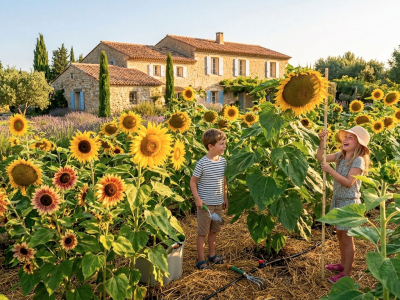
How to successfully sow sunflowers? Complete Guide 2026
Who hasn't been dazzled by the majesty of a field of sunflowers waving in the summer breeze? The sunflower (Helianthus annuus) is much more than just a flower: it's a feat of nature, a machine that transforms solar energy into record biomass. In just a few months, a seed the size of a fingernail can give birth to a three-metre giant, capable of supporting a flower head weighing several kilos. At the end of March 2026, as the earth slowly shakes itself, it's time to plan your own solar festival. Whether you have a vast country plot or a simple urban balcony, the sunflower has a gift for adapting, nurturing and protecting. Let's dive into the art of sun cultivation together.
Heliotropism: the secret of the flower that follows the sun
The name "Sunflower" owes nothing to chance. This plant possesses a fascinating biological faculty known as heliotropism. During its growth phase, the sunflower's stem twists to orient the flower towards the sun throughout the day. This mechanism is driven by growth hormones (auxins) that accumulate on the shaded side of the stem, making it grow faster than the exposed side, thus bending the plant towards the light.
Once the flower has reached maturity and fertilization is complete, the sunflower stops moving and generally faces east. Why do they do this? To catch the first morning rays, which warm the flowers and attract more pollinators. Understanding this cycle will help you choose the best location for your future plants to maximize their visual spectacle from dawn onwards.
Giant and dwarf catalog: which variety to choose?
Thanks to the selection work of Vilmorin, the diversity of sunflowers today is immense. Your choice of seed will define the architecture of your garden. If your aim is to break height records and impress your neighbors, our Giant Flower Sunflower is the undisputed champion. It's the darling of children, who love to compete with it every week.
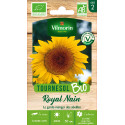
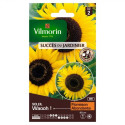
For those seeking a more nuanced aesthetic, the Beauté d'Automne variety is a pure marvel. Unlike the classic yellow, it unfurls petals in shades of chocolate, purple and bronze, ideal for creating end-of-season bouquets. If you're short of space, Royal Nain Bio or Waooh sunflower are miracles of compactness: they offer large flowers on stems of no more than 80 cm, perfect for pots or vegetable garden borders.
Soil preparation: A king's bed for your seeds
Sunflowers are what we call "voracious" plants. To build such a robust stem in such a short space of time, it draws heavily on the soil's resources. In March, start by preparing a well-exposed area (at least 6 hours of direct sunlight a day). The soil should be loose and rich.
Using your hand tools, aerate the soil and mix generously with a universal potting soil rich in organic fertilizer. If you opt for potted sowing, make sure the container is deep enough (at least 30 cm), as sunflowers develop a powerful taproot that needs to be firmly anchored to resist wind.
The art of sowing: broadcast or in pots?
At the end of March, the soil can still be fresh. Ideally, you should start your seedlings in pots under cover. Place a seed (or two, to keep only the most vigorous) 2-3 cm deep. As soon as the frosts are over (mid-May), you can transplant them into the ground.
If you prefer direct sowing in May, be sure to protect your seeds from greedy birds and slugs, which love tender young shoots. One trick is to place half a plastic bottle upside down over the seedling to create a protective mini-greenhouse until the plant reaches 10 cm.
Strategic watering: the secret of vigor
A thirsty sunflower will never be a giant sunflower. The plant perspires enormously through its broad leaves. In summer, a mature plant can consume several liters of water a day. The classic trap is superficial watering, which only wets the surface: this forces the roots to stay on top, making the plant very unstable.
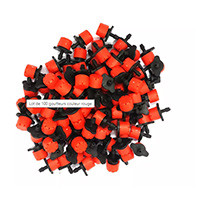
The professional solution for optimizing growth while saving water is micro-irrigation. By installing drippers at the base of each stem, you maintain constant humidity deep down. This encourages the roots to reach deep into the soil for water, creating a natural anchorage that can withstand summer storms without bending.
Did you know? The sunflower is a depolluting plant. It has the incredible ability to extract heavy metals (lead, arsenic, zinc) from the soil through its roots. It's a "phytoremediator" plant. All the more reason to love it in the garden!
Gardening with children: A life-size lesson
If there's one plant that can get a child hooked on gardening, it's the sunflower. It's visual, it's fast, and it's rewarding. Create a "giant's logbook" with them. Every Sunday, armed with a tape measure, measure the growth. You'll be surprised to see that during some weeks in June, the sunflower can grow more than 10 cm! It's the perfect opportunity to explain to them the cycle of life, from seed to flower, and then from flower to seeds that will feed the school's birds.
The end of the season: Harvesting for winter
The show doesn't end when the petals fall. Once the back of the flower has turned yellow-brown and the seeds have bulged, you have two options. You can cut off the heads, dry them upside down in a dry place to eat the seeds (after toasting them) or store them.
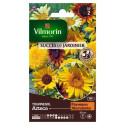
But the best thing you can do is leave the flowers standing. During the months of October and November, your garden will become a rallying point for all the local birds. Chickadees, with their incredible agility, will cling to the flowers to extract the seeds of oil-rich varieties like the Azteca Sunflower. It's a wilderness spectacle you'll never tire of.
Conclusion
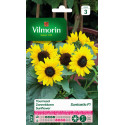
Sunflowers are the most profitable investment of your spring 2026. For the price of a bag of seeds Vilmorin, you get a natural privacy screen, a source of pollen for your bees, a pantry for birds and a source of pride for the whole family. From Suntastic F1 dwarfs to majestic giants, there's no excuse not to sow a little light this week. To your transplanters, and may the best giant win!
Where would you like to plant your sunflowers?
Share this content