



 Accessoires IBC 1000 litres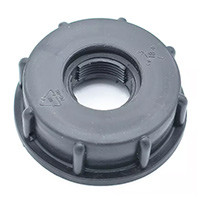
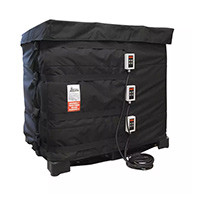
 Couvertures Chauffantes
 Raccords Plomberie
 Bidons / Futs et raccords
 Semences
 Produits Phyto
 Jardin

 Espaces Verts

 Barbecue - Braséro - Cheminée
 Entretien
 Fluides & Climatisation
 Arrosage
Hydrocarbon refrigerants
Chemically speaking, a hydrocarbon [HC] is an elemental compound of hydrogen and carbon that occurs naturally and is found in high concentrations in crude oil. Used as a modern refrigerant, non-toxic hydrocarbons are an environmentally friendly alternative to CFC/HCFC/HFC fluorocarbons linked to ozone depletion and global warming.
Hydrocarbons belong to the group of natural refrigerants and have a zero ODP and a negligible GWP.
The relative cost of a system using hydrocarbons depends largely on the application. In lightweight home and commercial applications, the cost of the system is similar to that of systems with HFCs. In commercial and industrial refrigeration applications, systems with HC tend to be relatively expensive due to the need for explosion-proof housings for electrical equipment, although for chillers placed outdoors, the additional cost for safety is more modest.
MULTICOOL hydrocarbon refrigerants, however, will never contain R1270 or R1150.
Hydrocarbons are highly flammable and must be handled with care. If used responsibly, hydrocarbons can be used in a variety of refrigeration and air conditioning applications.
Hydrocarbon refrigerants include:
- R50 (methane)
- R170 (ethane)
- R290 (propane)
- R600 (butane)
- R600a (isobutane)
- R1150 (ethylene)
- R1270 (propylene)
- E170 (dimethyl ether)
In addition, our products are completely sustainable: they do not contain chlorine or fluorine, which are considered the most harmful substances for the environment by the Montreal and Kyoto protocols. Our products are considered environmentally friendly because they have a global warming potential (GWP) of 3 and an ozone depleting potential (ODP) of zero.
Hydrocarbons are highly flammable and must be handled with care. If used responsibly, hydrocarbons can be used in a variety of refrigeration and air conditioning applications.
In order to ensure safety, hydrocarbon applications are governed by various international, regional and national standards and by strong regulations. Hydrocarbons may present a risk of explosion only if the concentration is between the lower and upper flammability limits. Safety standards are developing rapidly nowadays, which is necessary to fully exploit the potential of these refrigerants.
The main industry standards are IEC 60335-2-40, IEC 60335-2-89, ISO 5149 and EN378. MULTICOOL also complies with ISO9001 and UN1950 regulations.
When you meet safety standards, the leaking refrigerant concentration will not exceed the LFL where ignition sources can ignite it, even in extreme situations. The necessary safety precautions and system design depend on the refrigerant load. In general, ignition sources inside the application should be avoided. Most hydrocarbons are non-toxic, the main safety risk being due to their flammability, although gaseous hydrocarbons are heavier than air and move air into the lungs.
Saving Our Environment
MULTICOOL hydrocarbon refrigerants have an atmospheric lifetime of less than one year without adverse effects on the ozone layer and do not contribute to global warming. In addition to these important properties, MULTICOOL products have proven to be an extremely efficient and reliable choice for most (if not all) air conditioning and refrigeration systems.
Our products are completely sustainable: they do not contain chlorine or fluorine, which are considered to be the most harmful substances for the environment by the Montreal and Kyoto protocols. Our products are considered environmentally friendly because they have a global warming potential (GWP) of 3 and an ozone depleting potential (ODP) of zero.
The depletion of our planet's natural resources and the damage caused to the environment are widely debated in society.
Companies can no longer ignore calls for environmentally friendly business operations and are quickly forced to make sustainable choices to minimize their negative impact. With the obligation to save the planet's climate for our future generations, political and popular pressure increases exponentially.
MULTICOOL is ready to meet the global demand for hydrocarbon-based organic refrigerants and will actively contribute to saving, preserving and improving our fragile ecosystem by informing and educating both the end user of its products (consumers) and distributors and resellers higher up value chain.
Technical Compatibility
The equipment currently used for existing refrigerants does not require any modification or alteration to be loaded with MULTICOOL refrigerants. Since no upgrade is required, MULTICOOL refrigerants are the perfect solution for any system that previously used gases such as CFC R12, HFC R134a, HCFC R22, R502, R11 and others.
Because of this compatibility, it is easy for companies to move away from the harmful and destructive products they use today and start reducing their environmental impact.
Decrease in Energy Consumption
MULTICOOL organic refrigerants consume much less energy than their chemical counterparts in refrigeration and air conditioning systems, but also in car air conditioning systems. This translates into factual electrical energy savings of up to 40%.
- Reduced overall operating costs (increased profits)
- Decrease in compressor loads
- Extend component life and minimize leakage
- Minimized consumption of fossil hydrocarbons
- Ozone-friendly and ecological - sustainable but still very efficient
Enhanced Security
The safety of MULTICOOL refrigerants is ensured, provided that their application complies with all relevant and applicable industry safety standards.
MULTICOOL refrigerants have been the subject of detailed studies and analyses by various organizations, including:
- INFRAS - Chennai, Puducherry, India
- SwissContact SMEP - Indonesia, India, Sri Lanka
- European Transitional Council on Natural Refrigerants
- Arthur D Little - Risk Assessment Study Engineers
- Granherne P/L - Risk Assessment Study Engineers
- Maclaine-Cross, IL., Usage and Risk of Hydrocarbon Refrigerants in Motor Cars for Australia and the United States, June 2004, International Journal of Refrigeration, Volume 27, No. 4, pages 339-345.
The findings of these organizations support the use of MULTICOOL refrigerants. Scientific papers published by various organizations in Belgium, Australia and other countries frequently attested to the efficacy and safety of hydrocarbon refrigerants in a wide range of their applications, under difficult and extremely heavy conditions.
MULTICOOL products have a higher moisture resistance. No acid is formed due to water and moisture. Some products are manufactured using special technology that ensures optimal lubrication for new and existing compressors.
Increased Thermal Conduction
The unique formula of MULTICOOL hydrocarbon refrigerants produces a 30% to 50% increase in the efficiency of heat conductors, compared to other refrigerants. In practice, this means that MULTICOOL refrigerants release heat faster and have a lower boiling point than fluorocarbon refrigerants.
For example, Coca Cola or Pepsi drinks refrigerated shelves that use MULTICOOL refrigerant instead of HFC, cooling cans to the desired temperature about 15% to 30% faster. In the summer, with higher traffic in stores, this is a definite advantage for store owners, as well as for the manufacturers of the products sold.
Decrease in Gas Consumption
MULTICOOL hydrocarbon refrigerants have a unique advantage in that each kilogram of our refrigerant replaces three kilograms of fluorocarbon refrigerant.
This means that you only need a third of the refrigerant by weight.
This offers a big advantage and extends the life of the equipment while simultaneously increasing its performance. Ultimately, this will also have a positive impact on your company's financial results.
SUSTAINABILITY AND IMPACT STUDY
THE GREENFREEZE PROJECT
Initially, chemical companies developed HFC refrigerants to replace CFCs to solve the problem of ozone depletion, but they still contained gas mixtures that had a high impact on the global warming process. In fact, they turned out to be poor substitutes for performance under extreme operating conditions.
In addition, the strong contribution of HFCs to global warming coupled with the unacceptable volume of greenhouse gas emissions released during manufacture and their adverse effects on human health have made it necessary to eliminate them as quickly as possible.
HFC refrigerants have proven to be a poor substitute for CFC refrigerants because their application has required significant modifications or even the replacement of existing systems and facilities. Modernisation is a very expensive procedure.
Various industries are now looking for alternatives to remain compliant with increasingly stringent regulations and legislation. Growing global concern and rising grassroots awareness movements are putting considerable pressure on businesses and businesses to move towards ecological and biological solutions in order to significantly reduce their negative impact on the environment.
MULTICOOL products are not only more efficient and cost-effective, but they are also more efficient than all the alternatives available on the market
MULTICOOL products do not require any modifications to your existing installations and are completely safe to use.
For more than twenty-five years, Greenpeace has been promoting the use of hydrocarbon-based refrigerants under the name "Greenfreeze Technology".
A thorough study of each refrigerant replacement application showed that a hydrocarbon refrigerant proved to be the perfect alternative for the environment.
As a result, in 1991, a small German company specializing in refrigerators was sponsored by Greenpeace to develop a small refrigerator that used the best possible solutions for refrigeration systems. This project has gained momentum in the face of the challenges faced by manufacturers and distributors of fluorocarbon refrigerants. In August 1992, a German company placed an initial order for 20 000 refrigerators Greenfreeze.
In just three months, the quantity of orders exceeded 50,000 units.
At the end of 1993, after the acceptance of Greenfreeze technology, most of the major German refrigerator manufacturers announced that their production lines would be adapted to hydrocarbon technology quickly.
In 1996, almost 100% of the refrigerators produced for the German market were designed with Greenfreeze technology.
Due to this fact and other positive changes, the number of refrigeration systems loaded with MULTICOOL refrigerants is constantly increasing. The combination of high-end products and environmental responsibility has strongly stimulated the demand for MULTICOOLrefrigerants.
MULTICOOL's unique production technology combined with a developed distribution network allows the company to remain a leader in the hydrocarbon refrigerant market. Tailor-made technological solutions allow a high and consistent yield of quality products, each batch being tested to ensure compliance with strict standards.
The processing and packaging of all orders is done in-house and products are shipped using efficient distribution systems, ensuring timely delivery. We can provide safe natural refrigerants of superior quality, regardless of your location.
MULTICOOL can provide top quality natural refrigerants, regardless of your location.