IBC 1000 L accessories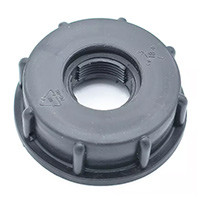
 Heating jackets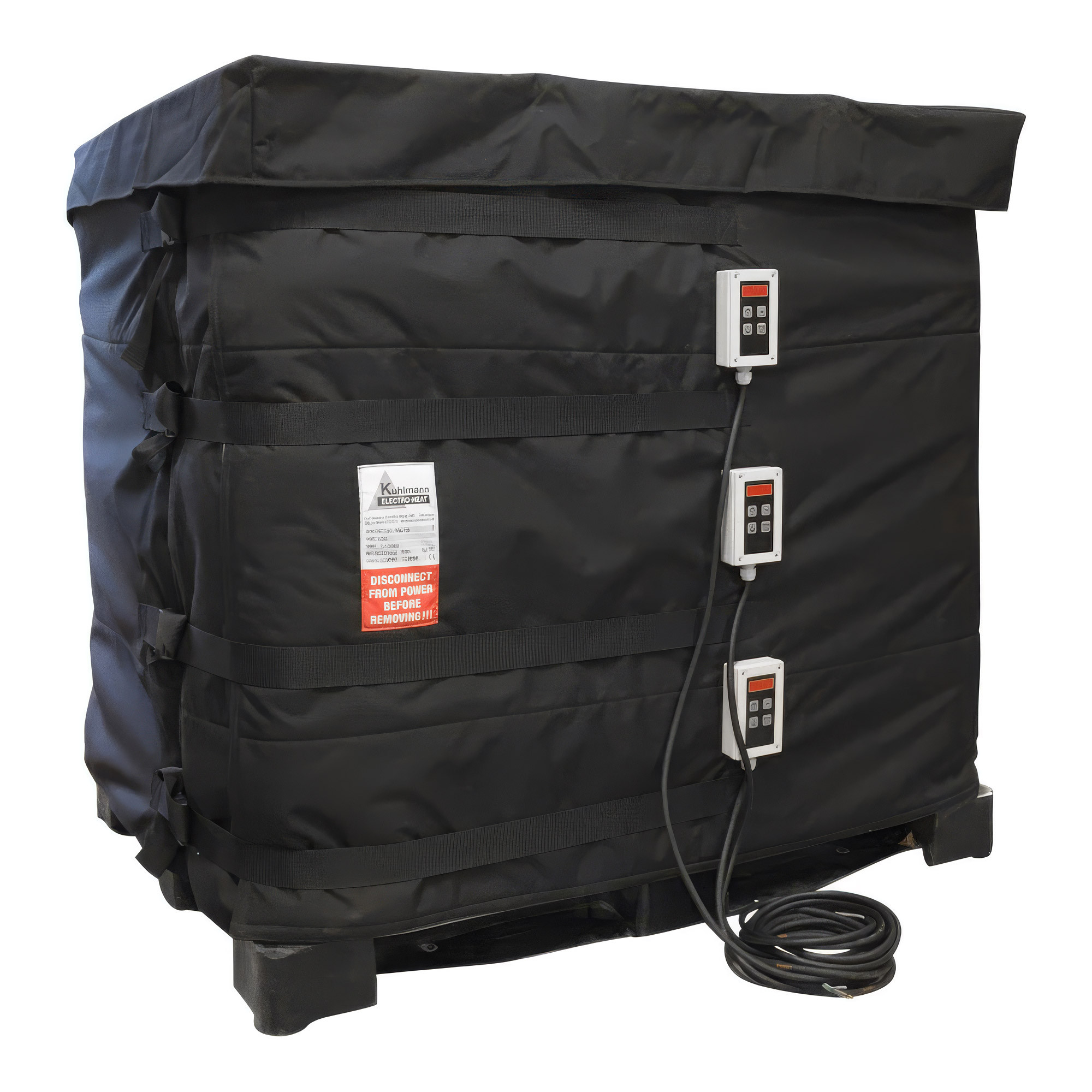
 Fittings
 Drums, jerrycans & fittings
 Seeds
Seeds 
 Plant protection & biocides

 Garden
 Green spaces & municipal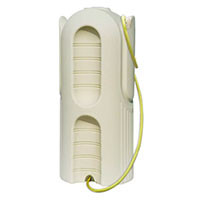
 Barbecue, fire pit & fireplace
 Cleaning & care
 Refrigerants & air conditioning
 Watering
Automating IBC Tank Vegetable Garden Watering: Complete Guide 2026
March 2026: the earth is waking up, but the spectre of summer droughts is already looming over our gardens. If you own a 1,000-litre IBC tank, you're holding a treasure trove of resilience in your hands. However, most of these reserves end up languishing or are painstakingly emptied with a watering can, a chore that quickly becomes unbearable when the heat is on. What if, this year, you were to step up a gear? Automating the watering of your vegetable garden from a tank doesn't just give you peace of mind on your vacations, it also means adopting expert management where every drop of rainwater is distributed effortlessly and to the millimetre. At Multitanks, we've designed the perfect connectors to transform your inert tank into a high-performance irrigation system. Take a technical plunge into the art of water autonomy.
Our tool finds the fitting that goes with it — IBC tank, plumbing, garden — in 3 clicks, with live prices and stock.
THE MASTERPIECE: THE S60X6 CONNECTOR MULTITANKS
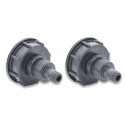
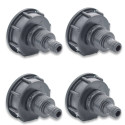
Every automation project starts with a clean, watertight outlet on your tank valve. The industry standard IBC is the S60x6 thread (60 mm outside diameter with a 6 mm thick thread). This is the starting point for your entire micro-irrigation installation. To connect a programmer, you need to use a classic "gas thread" (20x27).
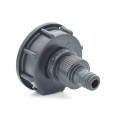
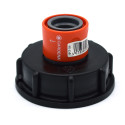
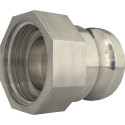
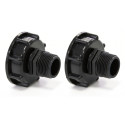
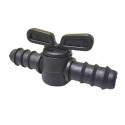
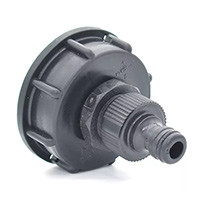
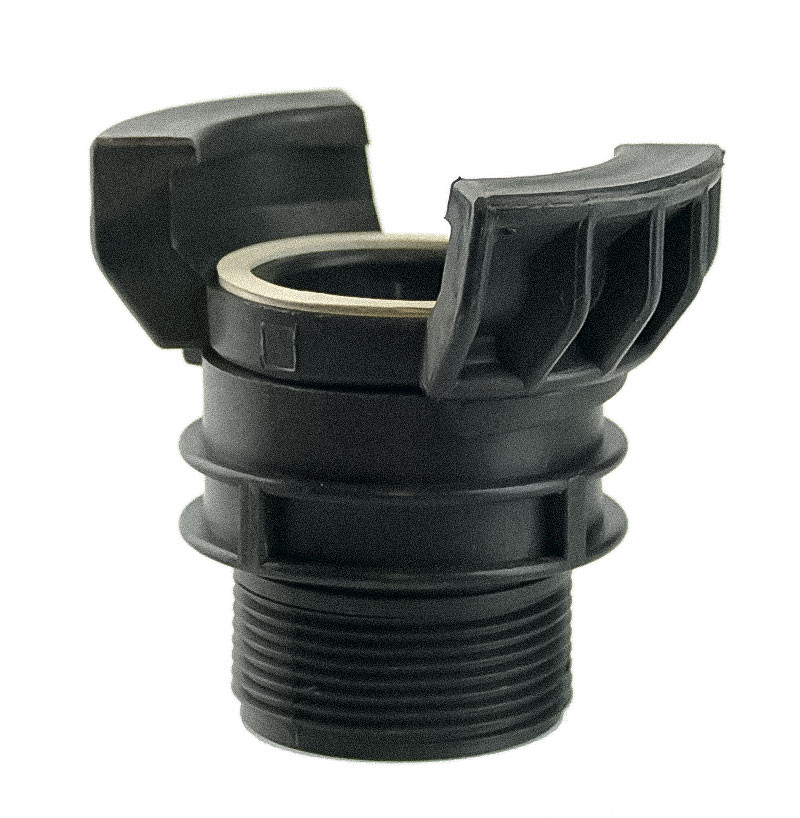
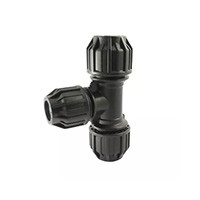
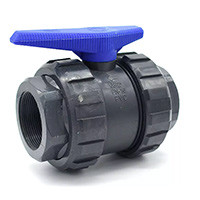
You have two main options at Multitanks. Our recommendation for a durable, fail-safe installation is the S60x6 female to 3/4" high-strength male fitting. This is the most robust model in our catalog, designed to support the weight of a programmer without the risk of cracking or warping over time. For a more standard but equally effective alternative, our specific 3/4" male variant adapts perfectly to all standard valves. If your project doesn't require a thread, but a direct hose connection, our straight hose fittings allow you to attach your distribution pipes directly.
THE BRAIN OF THE SYSTEM: THE LOW-PRESSURE PROGRAMMER
It's the number-one mistake made by beginners: using a conventional irrigation programmer designed for mains water. In the domestic network, the pressure is around 3 bars, which forces the solenoid valves to open. In a IBC tank, pressure is generated solely by gravity. Unless your tank is 10 meters high, pressure will be almost non-existent.
You therefore need a low-pressure (or "zero-bar") watering programmer. This type of programmer uses a motorized valve that pivots mechanically, allowing water to flow freely even without pressure. Programming short cycles (15 to 20 min) very early in the morning or very late in the evening is the secret of a vegetable garden that doesn't suffer from water stress in July. This avoids immediate evaporation and allows the plant to absorb moisture before the sun hits too hard.
FILTRATION: PREVENTION RATHER THAN CLOGGING
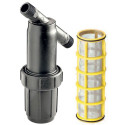
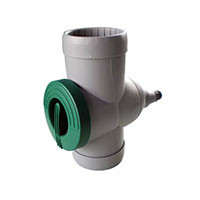
Rainwater is never 100% pure. It runs off your roof, carrying with it dust, moss, bird droppings and tile debris. These impurities make their way down your gutter and inevitably end up clogging the tiny holes in your micro-drainers. For trouble-free automation, it all starts upstream with a 3P filter collector with stainless steel grid.
This intelligent system doesn't just divert water into the tank; it also has a "cleaning" function that ejects leaves and coarse dirt into the downspout, letting in only clean water. Without this upstream filtration, you'd have to spend your summer weekends manually unclogging every gutter in your network. A minimal investment for royal peace of mind all year round.
MICRO-IRRIGATION: INTELLIGENT DISTRIBUTION
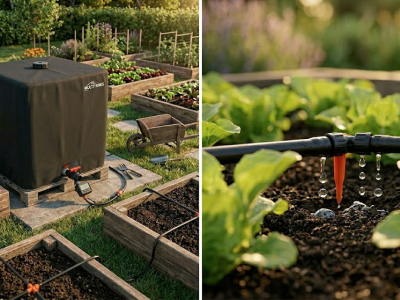
Once the water has come out of your tank cleanly, it needs to be delivered to your plants. Micro-irrigation is the only solution really compatible with the low pressure of a tank. The idea is to create a "backbone" of 16mm tubing that runs through your vegetable patches.
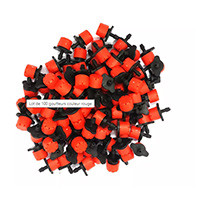
From this master pipe, you "prick" your drippers as close as possible to the roots. Each plant has its own specific needs: tomatoes and zucchinis love individual drippers (2L/h or 4L/h), while herbs such as basil and parsley prefer a porous hose that diffuses gentle, continuous moisture. Don't forget to use a universal potting soil Or Brun: its organic richness and natural water-holding capacity work in concert with your automatic system to keep the soil lively and supple, even during heatwaves.
THE SECRET AGAINST ALGAE: THE PROTECTIVE COVER
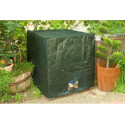
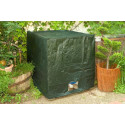
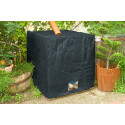
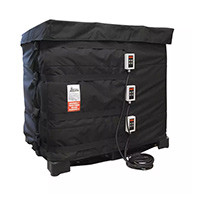
Here's the worst-case scenario: your installation is perfect, but after two weeks in the sun, the water in your IBC tank turns green. Microscopic algae have formed through photosynthesis. This "green soup" will clog your filters and drippers in record time. The solution is simple and radical: our protective cover for IBC 1000L.
By plunging your tank into total darkness, you kill algae formation at source. What's more, the cover protects your tank's plastic (often sensitive to UV rays) from cracking and premature whitening. It's the essential accessory for anyone wishing to automate their watering system in a durable, professional way.
| Component | Utility Critical | Tip Multitanks |
|---|---|---|
| Fitting S60x6 (235) | Programmer adapter | The reinforced model for greater safety |
| 3P filter collector | Debris protection | Clean stainless steel grid in March and October |
| Black cover IBC | Anti-algae protection | Keeps water cool (less evaporation) |
| Micro-droppers | Precision by foot | Ideal for water savings of up to 70% |
INSTALLATION: MILESTONES FOR MARCH 2026
Don't wait too long to install your network. In March, the vegetation is not yet too dense, which makes it easier to pass the pipes through your flower beds or vegetable patches. Grab your hand tools (a transplanter to lightly bury the main pipes, a claw to weed the area) and follow this guide:
Technical info: A full tank generates a hydrostatic pressure of 0.1 bar per metre of elevation. If your vegetable garden is below the tank, the pressure will be natural and sufficient. If the vegetable garden is on the same level, use large-diameter pipes (16mm) to limit "pressure losses" and ensure that the last dripper receives its water.
CONCLUSION
Automated watering on IBC tanks is not a do-it-yourself gadget, it's a concrete response to the climatic and economic challenges of 2026. By using the right reinforced S60x6 fittings and protecting your water from light, you create an autonomous, sustainable and productive ecosystem. Your plants will no longer suffer from forgotten watering or the deleterious excesses of conventional water jets. You regain the freedom to enjoy your summer, while admiring the vigour of your crops. With your tools, nature will repay you a hundredfold!
How many days will your tank last without rain?
Share this content