



 IBC 1000 L accessories
 Heating jackets
 Fittings
 Drums, jerrycans & fittings

 Seeds
Seeds 

 Plant protection & biocides

 Garden

 Green spaces & municipal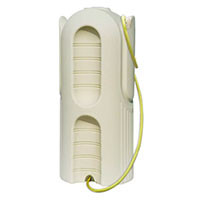


 Barbecue, fire pit & fireplace
 Cleaning & care
 Refrigerants & air conditioning
 Watering
Stagnant tank water and green algae: How to sanitize?
Water is the lifeblood of your garden, but carelessly stored water can quickly become the lifeblood of your problems. In March 2026, with the return of warm weather and bright days, the transparent 1,000-liter IBC tanks become veritable algae greenhouses. The equation is simple: Light + Organic debris + Stagnant water = Microbial proliferation. If your water has a suspicious odor, or if your sprinkler filters saturate every other day, it's time to take action. At Multitanks, we take a healthy, sustainable approach: no harsh chemicals, just a foolproof physical barrier strategy. Here's how to clean up your stash for the season.
GREEN ALGAE: TANK ENEMY NO. 1 IBC
Most tanks IBC are made of translucent HDPE (High Density Polyethylene). This material is excellent for strength, but catastrophic for long-term water conservation if left unprotected. Green algae need photosynthesis to grow. By allowing daylight to penetrate the walls of your tank, you create the ideal conditions for an algal "bloom".
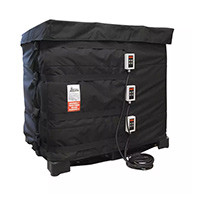
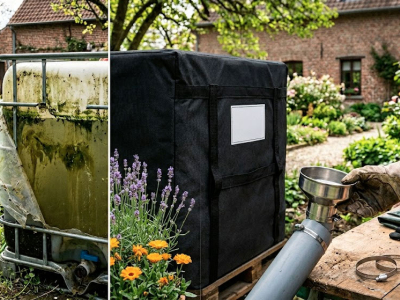
These algae are not only unsightly: as they die, they decompose at the bottom of the tank, consuming the oxygen in the water and encouraging the development of anaerobic bacteria responsible for the "sulfur" or rotten egg smell. The radical solution? Plunge the tank into total darkness. Installing a protective cover for IBC 1000L is the smartest investment you can make. By blocking 100% of UV rays, you kill photosynthesis at source. No light, no algae.
FILTRATION: BLOCKING POLLUTION BEFORE IT GETS IN
Where does the "food" for algae and bacteria come from? Your roof. Dust, bird droppings, decomposing leaves and pollen are all nutrients that turn your rainwater into an organic soup. If you let this debris into your tank, you'll never be able to keep your water clean, even in the dark.
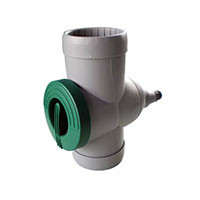
The first line of defence is the 3P filter collector with stainless steel grid. This system doesn't just fill your tank; it acts as a miniature purification station. Its fine stainless steel grid captures even the smallest impurities and discharges them down the gutter. As a result, only "clear" water enters the tank, drastically limiting the organic load and therefore the risk of fermentation.
MECHANICAL CLEANING: HOW TO REPAIR A CAKED TANK?
If the damage has already been done, it's time for a major spring clean. Since access to the interior of a IBC tank is limited by the 150 or 225 mm top opening, the task can seem complex. Here's the "gentle" way Multitanks:
1. **Total emptying:** Open your valve and empty most of the water. Finish off the last few centimetres by tilting the tank.
2. **Exterior cleaning:** Use our special cleaning products to restore the shine to the exterior of your tank and metal structures. A clean tank exterior is easier to inspect.
3. **High-pressure cleaning:** Insert the lance of a high-pressure cleaner through the top opening. The force of the water is enough to loosen the biofilm from the walls. For difficult nooks and crannies, a grandfatherly trick is to introduce a few liters of water, coarse salt (or clean sand) and shake the tank vigorously if you can, to create a natural abrasive effect.
Expert's note: Never use high-dose bleach if you intend to water your vegetable garden afterwards. Instead, use a mixture of white vinegar and baking soda to naturally disinfect the walls after rinsing.
MAINTENANCE OF SENSITIVE POINTS: VALVES AND PLUGS
Often neglected, your tank's accessories are breeding grounds for bacteria. A valve that has been exposed to foul water retains a biofilm inside its sphere or cap. Even with new water, this biofilm will contaminate your reservoir within a few days.
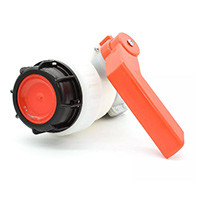
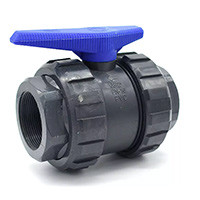
If your valve is difficult to handle or shows signs of internal mould, don't hesitate to replace it. Our range of valves for 1000-litre tanks will enable you to start again from a healthy, sterile base. Similarly, a cracked top cap lets in light and insects (mosquitoes!). Check the condition of your caps and lids to ensure a perfectly sealed enclosure.
HYGIENE FOR YOUR WATERING SYSTEM
Keeping your water clean isn't just a question of aesthetics. If you use micro-irrigation systems, the slightest particle of algae can ruin your installation. Water loaded with organic matter also encourages the development of fungi at the foot of your vegetable plants.
By combining healthy water with a quality growing medium such as Or Brun potting soil, you create a virtuous environment. The nutrients in the potting soil will be better assimilated by the roots if the water used for watering is pure and rich in oxygen, rather than loaded with fermentation bacteria.
CONCLUSION
Maintaining a IBC tank doesn't require heavy chemistry, but regularity and technical common sense. By blocking the light with a cover, filtering impurities with a 3P collector and replacing wearing parts such as valves, you can guarantee your garden "spring-quality" water throughout the summer of 2026. Take an hour this weekend to inspect your system with your gardening tools: it's the best service you can do for your future crops!
Answer honestly to find out the condition of your water.
1. Is your tank exposed to direct light?
2. Do you use a filter collector on your gutter?
Share this content