IBC 1000 L accessories



 Heating jackets



 Fittings


 Drums, jerrycans & fittings


 Seeds
Seeds 


 Plant protection & biocides

 Garden



 Green spaces & municipal




 Barbecue, fire pit & fireplace


 Cleaning & care
 Refrigerants & air conditioning

 Watering

What fertilizer for rose bushes? Flowering & Diagnosis Guide
- Understanding the specific nutrient needs of rose bushes
- Granular fertilizer Solabiol : long-lasting, basic nutrition
- Liquid fertiliser: the immediate energy boost for flowering
- Creating a winning synergy between the two formats
- Some expert tips for a successful application
- Express Diagnosis: What nutrition for your rose bushes today?
- Need a diagnosis for your rose bushes?
The Elixir of Life for your Roses: Granulated or Liquid Fertilizers, what synergy for a spectacular flowering?
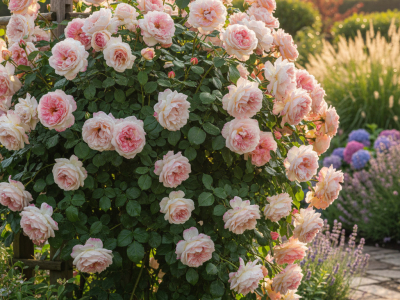
The rose is unquestionably the queen of gardens. A symbol of elegance, passion and delicacy, it occupies a special place in the hearts of gardeners. However, behind this majestic beauty is a greedy plant that requires special attention to offer the best of itself. Rose bushes are so-called "exhausting" plants for the soil: their repeated flowering and vigorous growth require a significant amount of nutrients. Without regular and appropriate supply, the flowers wither, the colors fade and the plant becomes more vulnerable to disease. Understanding the nutrition of your rose bushes means ensuring a dazzling floral spectacle from the end of spring until the first frosts of autumn.
Understanding the specific nutrient needs of rose bushes
To flourish, a rose bush needs a precise balance between several natural chemical elements, often summarized by the acronym NPK. Nitrogen (N) is the engine of growth: it promotes green foliage and strong stems. Phosphorus (P) plays an essential role in the development of a deep root system and stimulates the formation of flower buds. Finally, Potassium (K) strengthens the plant's overall resistance to diseases and climatic hazards, while intensifying the colour of the petals. Beyond this major trio, rose bushes also need trace elements such as Magnesium or Iron to prevent chlorosis (the yellowing of the leaves). Successful fertilisation therefore consists of providing these elements at the right time, while respecting the biological rhythm of the plant.
Granular fertilizer Solabiol : long-lasting, basic nutrition
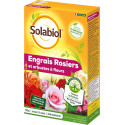
To lay the foundations for healthy growth, granular fertiliser is the gardener's essential ally. The product Solabiol Roses and Flowering Shrubs (750g) that we offer at Multitanks perfectly embodies this gentle and regular fertilisation approach. Thanks to its organic formulation, this fertilizer releases its nutrients gradually. Once spread at the foot of the rose bush and lightly scratched in the soil, the granules slowly disintegrate with watering and rainfall. This method of diffusion avoids any risk of root blight and ensures a constant supply for several weeks. It is the ideal solution to apply as soon as the vegetation restarts in March or April, and then a second time after the first big wave of flowering to help the rose bush regenerate.
Liquid fertiliser: the immediate energy boost for flowering
While granular fertiliser is the main meal, liquid fertiliser can be compared to a targeted energy drink. Its action is almost immediate because the nutrients are already dissolved and directly assimilated by the roots. The use of a specific liquid fertilizer for roses is particularly recommended during the critical phase of flower formation, usually from June to August. It acts as a real "boost" that helps to support the plant's effort during heat waves or periods of intense flowering. This format is also the most suitable for roses grown in pots or containers, where the limited volume of soil is depleted much faster than in the ground. Adding every 15 days mixed with the watering water ensures larger, more numerous and more fragrant flowers.
Creating a winning synergy between the two formats
The real key to success for exceptional roses lies in the complementarity of these two fertilization methods. You don't have to choose between one or the other, but learn to combine them. The granular fertilizer Solabiol prepares the ground and ensures a strong plant structure in the long term. Liquid fertilizer, on the other hand, takes over to maximize the aesthetic potential during the summer season. By practicing this double fertilization, you avoid periods of nutritional "slump" when the rose bush runs out of steam. Imagine a simple program: a dose of Solabiol granules in early spring, followed by regular liquid accompaniment throughout the summer. This holistic approach not only enhances the immediate beauty of your garden, but also the long-lasting health of your shrubs for years to come.
Some expert tips for a successful application
To maximize the effectiveness of your fertilizers, there are a few golden rules that must be followed. First of all, never apply fertilizer (whether liquid or granular) to totally dry soil or a dehydrated plant; Always water your rose bush copiously the day before to prepare the roots. Then, scrupulously respect the dosages indicated on the packaging. In gardening, the "best" is often the enemy of the good: over-fertilization can saturate the soil and weaken the stems by making them too tender, which attracts aphids. Finally, always apply at the beginning or end of the day, when temperatures are mild, to avoid unnecessary evaporation or heat stress. With these simple gestures and quality products such as those in the Solabiol and Or Brun ranges, your rose bushes will become the main attraction of your neighbourhood.
Express Diagnosis: What nutrition for your rose bushes today?
Between the maintenance of the soil and the need for a seasonal boost, it is not always easy to know which fertilizer to favor when you are in front of your bed. To help you make the right choice and guarantee the iron health of your shrubs, we have designed an interactive Diagnostic Assistant. Whether you're in the middle of spring pruning or you're noticing a sign of fatigue on your flowers in the middle of summer, simply select your situation below. In one click, our tool will recommend the best fertilization strategy and the most suitable product for your immediate needs:
Need a diagnosis for your rose bushes?
Select the situation that corresponds to your garden:
Share this content