IBC 1000 L accessories
 Heating jackets
 Fittings
 Drums, jerrycans & fittings
 Seeds
Seeds 
 Plant protection & biocides

 Garden
 Green spaces & municipal
 Barbecue, fire pit & fireplace
 Cleaning & care
 Refrigerants & air conditioning
 Watering
How much potting soil should I use for my pot? Calculator & Guide | Multitanks
- Why the choice and quantity of potting soil make all the difference
- When should we take action? Repotting Signals
- The universal calculation method for your containers
- The repotting process step by step
- Ensuring a vigorous recovery after the pot change
- Get practical: How many bags for your new pots?
- Potting soil calculator?
Successful pot plantings: the guide to choosing the right amount of potting soil
Container gardening is a wonderful solution for greening our living spaces, whether it's a large garden, a sun terrace or a small city balcony. However, for your plants to flourish and reveal their full flowering or foliage potential, a technical gesture is essential: repotting. This step, often dreaded by beginner gardeners, is nevertheless a vital act. It renews depleted nutrients and gives the roots the space they need to expand. One of the most common questions we receive at Multitanks has to do with logistics: how many litres of potting soil do I actually need for my pots? This guide aims to lift the veil on these often approximate calculations in order to help you prepare your gardening sessions with precision and serenity.
Why the choice and quantity of potting soil make all the difference
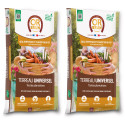
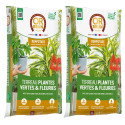
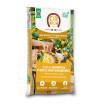
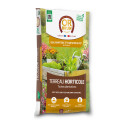
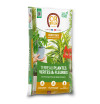
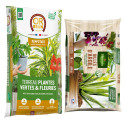
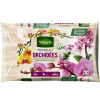
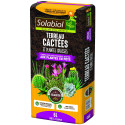
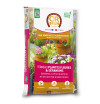
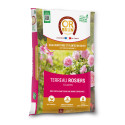
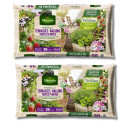
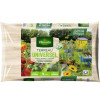
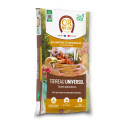
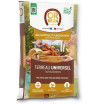
Potting soil is not simply "earth". It is a sophisticated growing medium, designed to mimic natural growing conditions while being adapted to the specific constraints of growing it. Unlike garden soil, which can be too compact or contain pathogens, quality potting soil such as those in the Or Brun range ensures ideal porosity, controlled water retention and effective drainage. Each plant has its own preferences: a peat-free potting soil for eco-responsible gardeners, a planting soil enriched with natural fertilizer to boost growth, or specific substrates for roses and heather plants. Using the right amount of potting soil is crucial: a layer that is too thin will not allow the roots to become anchored, while a poorly used surplus is a waste of valuable resources. By understanding the volumes needed, you ensure your plants have a nutritious pantry for months to come.
When should we take action? Repotting Signals
Knowing when to win is just as important as knowing how to do it. Several signs are clear. If you notice that the roots are starting to come out of the drainage holes at the bottom of the pot, or if they are curling up on themselves on the surface (the famous "root bun"), it is urgent to act. Growth that stagnates despite regular fertilisers, or a substrate that dries out faster and faster between waterings, are also serious warnings. Typically, the ideal time for repotting is in early spring, just before the plant begins its active growth cycle. Autumn is also a great season for perennials and shrubs, as the still warm soil promotes rooting before winter. Repotting means giving your plant a second wind and anticipating its future space needs.
The universal calculation method for your containers
Now let's get to the heart of the matter: volume. The geometry of the pots (often conical or cylindrical) makes visual estimation difficult. To make your life easier, we have established a matching grid based on the diameter of your pots. These numbers correspond to a standard pot height (the height is often close to the diameter). It is important to note that when repotting, not only do you fill in the new empty space, but you often renew part of the existing substrate around the root ball. Here are the average volumes of potting soil to plan for per pot: For a pot with a diameter of 20 cm (height approx. 18 cm): plan for about 4 litres. For a pot with a diameter of 30 cm (height approx. 25 cm): plan for about 12 litres. For a pot with a diameter of 40 cm (height approx. 35 cm): plan for about 30 litres. For a pot with a diameter of 50 cm (height approx. 45 cm): plan for about 60 litres. If you use rectangular planters, the calculation is simpler: Length x Width x Height (in decimeters) will give you the volume in liters directly. For example, a planter 60 cm (6 dm) long by 20 cm (2 dm) wide and 20 cm (2 dm) deep requires: 6 x 2 x 2 = 24 liters. We advise you to always bring a reserve bag to compensate for the natural compaction of the soil after the first watering.
The repotting process step by step
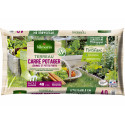
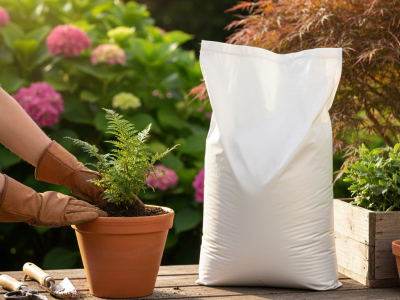
Once you have your bags of Or Brun or Vilmorin potting soil and your new pots (which should be 2-4cm wider than the previous ones), you can get started. Start by placing a drainage layer at the bottom (clay pebbles or pozzolan) for about 3 cm. Pour in a first layer of fresh potting soil. Carefully take the plant out of its old pot and scrape the roots a little if they are too tight. Place the root ball in the center of the new pot. The top of the root ball should be about 2 cm below the top edge of the pot to prevent overflow when watering. Fill in the gaps with your new potting soil, packing lightly with your fingers to remove any air pockets. Finish with a copious watering: this is the step that will put the roots in intimate contact with their new substrate and "activate" microbial life.
Ensuring a vigorous recovery after the pot change
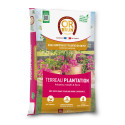
After repotting, your plant needs a little rest. Avoid immediately exposing it to hot sun or strong drafts for a few days. Monitor the humidity of the soil closely; The first waterings are crucial to ensure the cohesion of the substrate. If your potting soil already contains fertilizer (such as planting potting Or Brun), it is not necessary to add fertilizer for the first 4 to 6 weeks. The plant will draw on these fresh reserves to develop its new root system. A well-calculated and well-executed repotting literally transforms the appearance of a plant in a few weeks: the foliage becomes greener, denser, and the flowers more vibrant. It is the ultimate wellness investment for your urban garden.
Get practical: How many bags for your new pots?
After choosing the right Or Brun soil for your plants, the crucial step is to estimate the quantity. Nothing is more frustrating than having to interrupt a repotting session because a few litres of substrate are missing. To support you, we have developed an exclusive Interactive Volume Calculator . Whether you have classic round pots or rectangular planters, our tool transforms your centimeter measurements into an accurate volume in liters. In a few seconds, get a reliable estimate and immediately find out how many 20L or 35L bags to order. Take the test below and garden with peace of mind:
Potting soil calculator?
Estimate the volume needed for your repotting
Share this content