IBC 1000 L accessories
 Heating jackets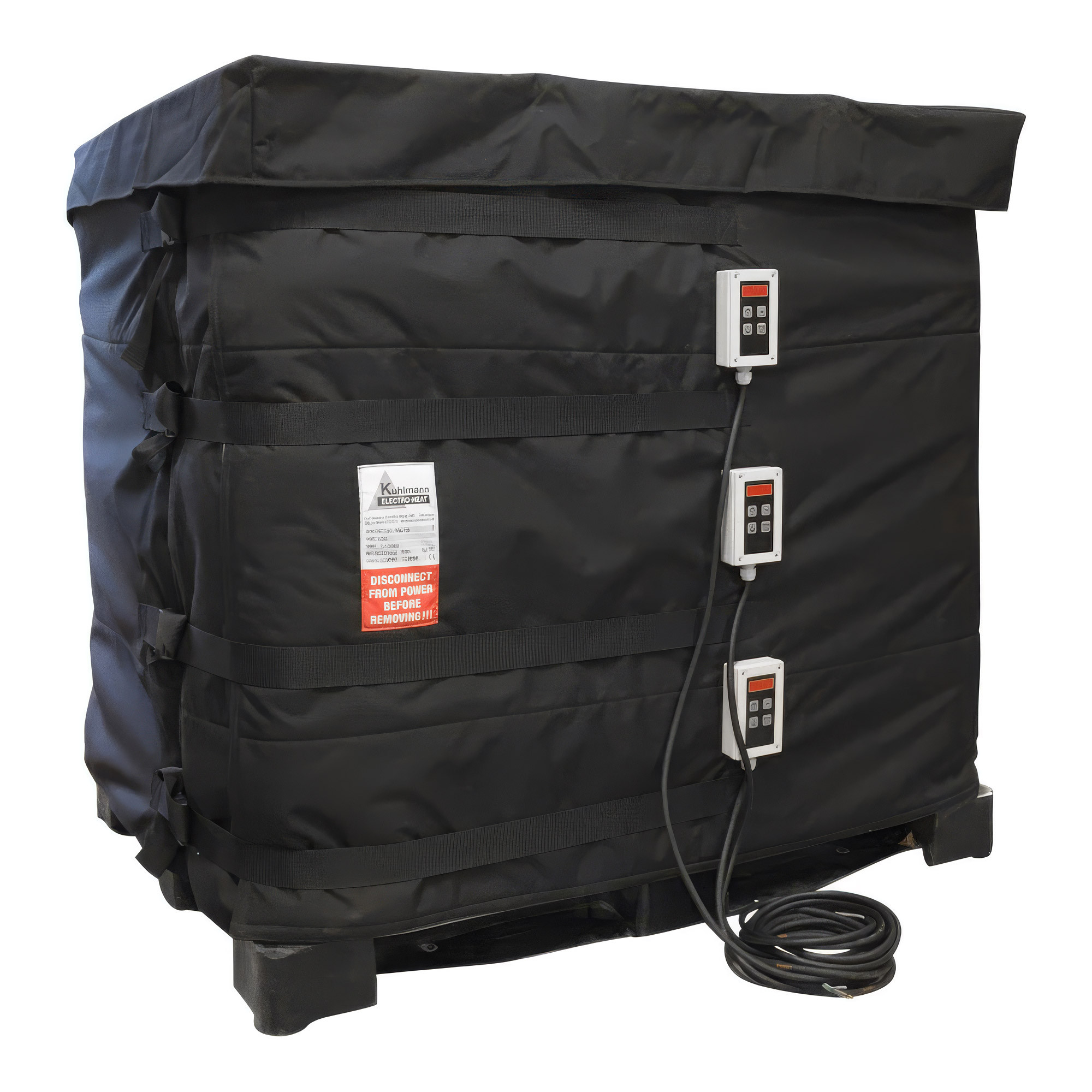
 Fittings
 Drums, jerrycans & fittings
 Seeds
Seeds 
 Plant protection & biocides

 Garden

 Green spaces & municipal

 Barbecue, fire pit & fireplace
 Cleaning & care
 Refrigerants & air conditioning
 Watering
Biochar or Fertilizer? Why combine the two to save money
- Biochar vs. conventional fertilizers: Why your soil is wasting money (and what to do about it)
- Cation Exchange Capacity (CEC): Your nutrient vault
- The phenomenon of leaching: poison for the wallet
- Nitrogen starvation: Why you need to "load" your biochar
- Biochar and mycorrhizae: the logistics of the future
- Conclusion: Invest in structure rather than infusion
- Calculator: Make the most of your fertilizers with Biochar
Biochar vs. conventional fertilizers: Why your soil is wasting money (and what to do about it)
Every year, tons of fertilizers are poured into gardens, orchards and vegetable plots with a simple promise: feed the plants for bountiful harvests. Yet there's a stark scientific reality behind this practice: a huge proportion of these nutrients, notably Nitrogen (N), Phosphorus (P) and Potassium (K), never reach your plants' root systems. In fact, between 40% and 70% of fertilizers are lost. They evaporate into the air or, worse still, leach into the water table. It's a financial waste for you and an ecological disaster for the environment.
Biochar is not a fertilizer, and that's its greatest strength. It doesn't replace plant food, it transforms the soil so that it becomes capable of holding it. Whereas a fertilizer provides an ephemeral solution, often likened to a chemical "infusion", Terra Fertilis biochar acts as a permanent storage structure. To optimize your crops and finally make the most of every euro spent on fertilization, it's time to understand the mechanism of Cation Exchange Capacity (CEC).
Cation Exchange Capacity (CEC): Your nutrient vault
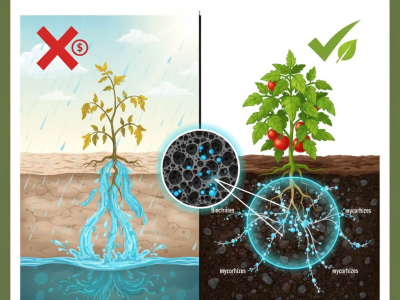
To understand why biochar is essential, we need to look at the invisible chemistry of your soil. CEC is a measure of a soil's ability to retain positively charged nutrients (cations such as calcium, magnesium and potassium). Imagine sandy soil: its grains are large and not very electrically charged. It's like a sieve. You put fertilizer on it, and the slightest shower or watering session washes the minerals away deep down, where the roots can no longer reach them.
Biochar has a huge specific surface area and, above all, an extremely powerful negative electrical charge. It acts like a magnet for nutrients. By incorporating biochar into your planting soil, you dramatically increase the substrate's CEC. Instead of having a food peak followed by a famine, biochar captures excess fertilizer and releases it gradually, in step with the plant's needs. This is the transition from "immediate consumption" agriculture to "asset management" agriculture.
The phenomenon of leaching: poison for the wallet
Leaching is the movement of dissolved nutrients into the deeper layers of the soil through the infiltration of water. In a conventional garden, this phenomenon is accentuated by the excessive use of soluble fertilizers. Not only do you lose the money invested in these products, but you also saturate the soil with mineral salts which, over time, kill off microbial life. Biochar stops this process dead in its tracks. Thanks to its microscopic pores, it traps mineral ions and keeps them in the first 20 cm of soil, where the roots are located.
This retention is particularly vital when you use an automatic watering system. Regular watering tends to rinse the soil continuously. With biochar, the water transports the fertilizer not "through" the soil, but "into" the pores of the biochar. The financial gain is direct: gardeners using biochar find that they can reduce their fertilizer inputs by 30% to 50% by the second year, for the same or even better results.
| Performance criteria | Mineral fertilizer alone | Fertilizer + Biochar |
|---|---|---|
| Nutrient availability | 15-day flash | Constant over the season |
| Leaching losses | Up to 70 | Less than 10% leaching |
| Cost over 5 years | Exponential (continuous buy-back) | Decreasing (fixed investment) |
Nitrogen starvation: Why you need to "load" your biochar
A technical point often overlooked is the risk of "nitrogen starvation". As we have seen, biochar is an ultra-powerful sponge. If you incorporate raw biochar into your vegetable garden, it will immediately start to fill up with whatever it finds. In the first few weeks, it can "steal" the nitrogen available in the soil to saturate its own pores, depriving your plants of their nourishment.
To avoid this, biochar needs to be "loaded". At Multitanks, we recommend activating it before planting. A formidable method is to soak it in concentrated nettle manure. The natural nitrogen in the liquid manure saturates the micro-cavities of the charcoal, transforming each grain into a slow-release nutritional capsule. You can also use a liquid fertilizer rich in trace elements to load the biochar with essential minerals. In this way, the sponge arrives already full in the garden: it doesn't pump anything into the soil, but immediately starts distributing its reserves to the roots.
Biochar and mycorrhizae: the logistics of the future
If biochar is the safe, mycorrhizae are the transporters. These symbiotic fungi penetrate plant roots and extend into the soil on a microscopic scale. They are able to fetch nutrients trapped in the finest pores of the biochar, where the roots themselves cannot squeeze through. This alliance increases the plant's absorption capacity tenfold.
By using the water stored in your rainwater harvesting tanks to water soil rich in activated biochar, you create a closed circuit of formidable efficiency. The water serves as a vehicle for nutrients, which are immediately secured by the biochar and then transported by the mycorrhizae. This is the only system capable of maintaining high production while reducing chemical inputs. It's the basis of regenerative agriculture, where the soil gains in value every year.
Conclusion: Invest in structure rather than infusion
Continuing to fertilize without biochar is like trying to fill a leaky bucket. You can increase the dose of fertilizer, but most of your money will still go down the drain. Biochar repairs the bucket. By changing the physical and chemical structure of your soil, you create a lasting asset. Switching to biochar means choosing agronomic intelligence: it means securing your crops, protecting the environment by limiting groundwater pollution, and above all, restoring the soil to its primary function: to be a self-sufficient, fertile reservoir of life.
Calculator: Make the most of your fertilizers with Biochar
Estimate the savings you'll make on your fertilization budget by activating your soil's "nutrient bank".
Share this content