



 IBC 1000 L accessories
 Heating jackets
 Fittings
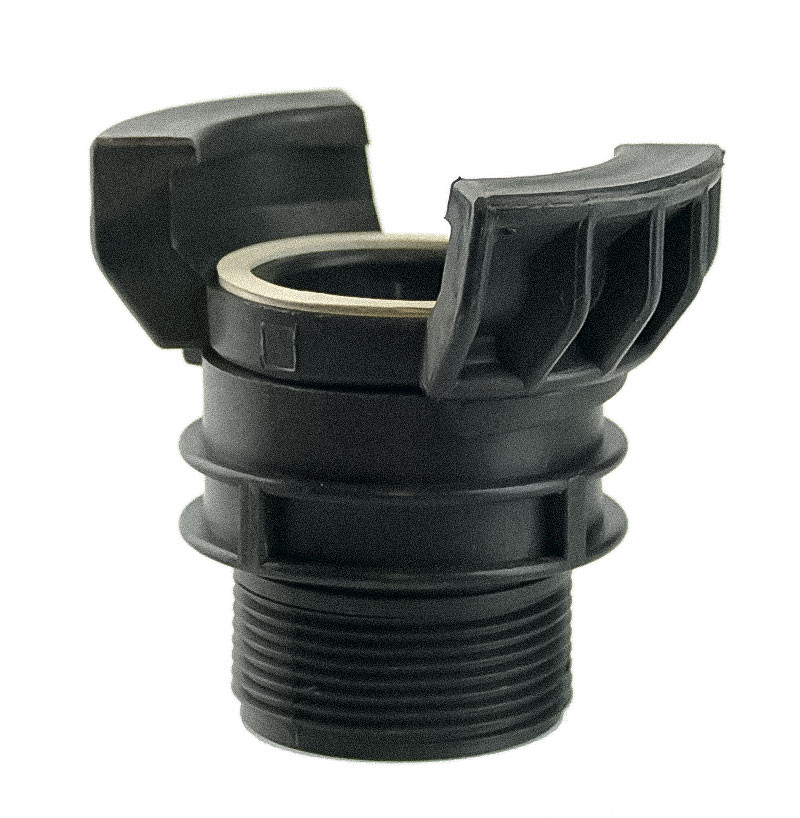
 Drums, jerrycans & fittings
 Seeds
Seeds 





 Plant protection & biocides


 Garden


 Green spaces & municipal

 Barbecue, fire pit & fireplace
 Cleaning & care
 Refrigerants & air conditioning

 Watering

Home water reserve facing wildfire risk: what it's really for
France is experiencing in this summer of 2026 an unprecedented wildfire season: tens of thousands of hectares already turned to ash, 54 departments classified as high to very high danger, and homes threatened in several regions simultaneously. In this context, many property owners in wooded areas are questioning the role a private water reserve could play. It is a legitimate question — provided it is answered rigorously, without ever suggesting that a garden hose could replace emergency services or justify disobeying an evacuation order.
🔥 THE ABSOLUTE PRIORITY: YOUR SAFETY ABOVE ALL
Before addressing anything else, the official doctrine of French civil security must be stated clearly and unambiguously, as published by the Ministry of the Interior (securite-civile.interieur.gouv.fr), Géorisques and Service-Public.fr. This doctrine is the absolute framework within which everything else in this article must be read. The safety of people always takes precedence, without exception, over the protection of property — and no water reserve, however large, changes this hierarchy.
If you witness a fire starting, your first action is to call 18 or 112, locating the fire as precisely as possible. You must then stay informed — radio, municipal alerts, official channels — and strictly follow the instructions of the authorities and emergency services. The fundamental principle is this: you are safer inside a solid building than outside. You should therefore never evacuate on your own initiative, only on the explicit order of the authorities. Conversely, if that order is given, you must leave immediately — regardless of the water reserve you have.
If you are caught by a fire front outdoors, the official instructions are clear: seek a physical screen (wall, rock, embankment), breathe through a damp cloth, and if you are in a car, never leave the vehicle, park in a clear area, engine off, hazard lights on. The most important rule, consistently emphasised by civil security, is never to attempt to cross a fire front or a curtain of smoke, for any reason — to reach a loved one, recover a possession, or get to your home.
Here, in structured form, are the key steps for what to do, as defined by official sources:
🔥 A COMMON MISCONCEPTION TO CORRECT: WATERING YOUR PLANTS IS NOT PROTECTION
Among the instinctive reactions of property owners in risk areas, one of the most widespread is to abundantly water the vegetation around the house — lawn, hedges, bushes — in the belief that it will make it more fire-resistant. This belief is understandable, but it is not confirmed by specialists. As Assurance Prévention points out, preventive watering of vegetation has no significant impact on its resistance to fire. Plants, even momentarily damp, remain combustible once temperature and wind reach a certain level — which is precisely the case during an active fire.
The correct advice is quite different: it is the house itself that must be wetted. Watering the facades, roof, shutters and immediate surroundings of the building before the fire front arrives is a recognised and recommended measure — provided it is done calmly, in advance, and never at the expense of an evacuation if one is ordered. This distinction is essential: it refocuses the usefulness of your water reserve on the right actions, and prevents you from wasting a precious resource on ineffective measures. This is also why you should never empty your tank as a "preventive" measure before the fire passes: the water will be essential afterwards.
🔥 FIRST LEGITIMATE USE: A RESOURCE FOR FIREFIGHTERS
In rural, peri-urban or forest-edge areas, the density of standardised water points (fire hydrants and standpipes) is often insufficient. Fire engine tankers have limited capacity: once emptied, they must resupply, which can take precious time. In this context, any private water reserve — swimming pool, IBC tank, buried cistern — can become a valuable DFCI (Forest Fire Defence) water point for rescue teams. Some prefectures, such as Ille-et-Vilaine, explicitly recommend that property owners make their swimming pool accessible to firefighters.
To give a concrete sense of scale: a swimming pool or a 30 m³ reserve represents the equivalent of 5 Canadair loads or 10 fire engines. This figure, drawn from historical data from the Ministry of the Interior, illustrates the importance that a well-sized private water point can have for emergency services — not as an individual action tool, but as a logistical supplement for professionals. A 1,000-litre IBC tank, combined with a suitable fitting, can thus become a supply relay usable by firefighters with their own equipment. The key is that the reserve is visible, accessible (not locked or blocked), and ideally reported to the town hall or local rescue services before the risk season begins.
For this contribution to be real, the reserve must be full and access to it clear. A vehicle parked in front of the tank, a locked gate or an inaccessible valve can render a well-sized reserve useless. These logistical details, to be prepared in advance, are an integral part of a responsible preparation approach. The fittings and valves adapted to IBC tanks make it easier for firefighters to connect quickly without special tools.
🔥 SECOND LEGITIMATE USE: PREPARING THE HOUSE IN ADVANCE
When the alert is given sufficiently early and the fire front is still distant, preparing the house is one of the actions recognised by civil security. This involves wetting the facades, shutters, roof and immediate surroundings of the building, closing all openings, and sealing ventilation points with damp cloths. This preparation, carried out calmly and methodically, significantly increases the chances of the building withstanding the passage of the thermal front. But it requires one fundamental thing: having enough water available when you need it.
This is precisely where the public water network may fail. During a fire crisis, network pressure sometimes drops drastically: firefighters, residents and municipal services simultaneously draw on an infrastructure that is not dimensioned for this level of demand. In addition, power cuts can interrupt the pumping stations that supply some rural areas. A cistern or autonomous storage tank, filled in advance, offers complete independence from these uncertainties. It is immediately available, without depending on electricity or the network, and can be put into service with a petrol-powered motor pump — the only truly reliable equipment in this context, as electricity is frequently cut during major fires.
One point must be emphasised: this preparation is always done before the fire arrives, never during. As soon as the fire front is visible or the authorities order an evacuation, all action on the house is immediately abandoned and you leave. No material possession is worth the risk of being trapped by a wind change or a sudden acceleration of the front. This is why advance preparation — from the first days of a heatwave, well before any alert — is infinitely preferable to rushed action at the last moment.
🔥 THIRD LEGITIMATE USE: VIGILANCE AFTER THE FIRE HAS PASSED
This is the safest use, the most consistently recommended by official sources, and yet one of the least known to the general public. Once the fire front has passed, once the authorities have returned and permission to re-enter the home has been obtained, monitoring for rekindling is a crucial task that can last several hours, or even an entire night. Embers buried under ash, residual fires in attics or behind a shutter, slowly smouldering stumps: all potential ignition points that can flare up several hours after the front has passed.
Official guidelines explicitly recommend keeping water for this phase: carefully inspect roofs, attics, hedges and wooden structures, and drench any trace of smoke as soon as it is detected. It is at this stage that a private water reserve comes into its own practically: firefighters, mobilised on multiple simultaneous fronts, cannot provide permanent individual surveillance of each home. Having 500 to 1,000 litres of water in an accessible IBC tank, combined with a simple petrol motor pump, allows effective action on isolated rekindling without depending on the network or electricity. Standard garden equipment can complement this setup for hard-to-reach areas.
This is precisely why you should never empty your reserve by preventively watering vegetation before the fire passes — an ineffective action, as we have seen. Keeping your tank full until the last moment preserves a precious capacity for intervention during the safest and most useful phase: the aftermath. A well-maintained IBC tank, with its drainage and connection accessories, can be put into service in a few minutes, even by a single person, making it a particularly well-suited tool for this situation.
A well-positioned and signposted private water reserve can constitute a valuable DFCI water point for firefighters. Make sure access is clear and that the fittings are compatible or easily usable by rescue teams. Report your reserve to the town hall before the season begins.
In the event of a power cut or a drop in public network pressure — two frequent scenarios in a fire situation — a storage tank filled in advance guarantees immediate availability. Combined with a petrol motor pump, it operates independently of any infrastructure.
The golden rule: keep your reserve full from June to September, and do not empty it on ineffective actions (watering vegetation). It must be available for the three moments when it is truly useful: a supplement for firefighters, preparing the house in advance, and monitoring after the fire front has passed.
🔥 WHAT A WATER RESERVE CAN NEVER REPLACE
It is essential to be explicit on this point, without ambiguity: a private water reserve, whatever its size, in no way justifies staying on site to "fight" an active wildfire. Against a fire front, a garden hose or an individual motor pump are absolutely nothing. A wildfire in conditions of wind and drought can reach propagation speeds of several kilometres per hour and temperatures of several hundred degrees: no private individual can face this. This idea — fuelled by romanticised images of the property owner who saves his farm with a hosepipe — is not only false, but potentially fatal.
Likewise, having a water reserve is in no way a legitimate reason to disobey an evacuation order. The authorities evacuate an area because they assess, with an overview that the isolated resident does not have, that the risk to people has become unacceptable. Staying behind because you have a 1,000-litre tank is an irrational risk. It also exposes rescue services, who may have to intervene for you, to the detriment of other victims. The right decision, always, is to leave when the order is given, and to let the professionals do their work.
💥 The Multitanks advice: a water reserve, a tool for peace of mind — not for combat
A well-sized water reserve — 1,000-litre IBC tank, flexible or rigid cistern — is a genuine preparedness asset for residents of risk areas. But its usefulness lies before and after a fire, never during. The key is to keep it full and accessible throughout the summer, not to waste it on ineffective actions (watering vegetation), to ensure firefighters can access it easily, and to reserve it for monitoring after the fire front has passed. Also think about your watering and pumping equipment: check right now that your fittings, valves and pumps are operational. And do not forget: the mandatory vegetation clearance around your home is the first line of defence, well before the water reserve.
Share this content