Accessoires IBC 1000 litres
 Couvertures Chauffantes
 Raccords Plomberie
 Bidons / Futs et raccords
 Semences

 Produits Phyto

 Jardin

 Espaces Verts

 Barbecue - Braséro - Cheminée
 Entretien
 Fluides & Climatisation
 Arrosage
Anti-Ant Calendar: How to Anticipate the Spring Invasion?
Why spring is the pivotal season to block ant colonies
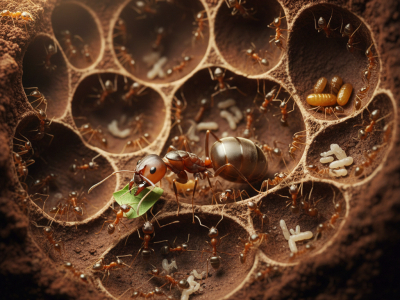
As soon as the first rays of the March sun warm up the walls of the house, an invisible biological mechanism is set in motion under our feet. Throughout the winter, the anthill lived in slow motion, in survival mode, protecting the queen in the heart of the earth. But with the rise in temperatures, the needs of the colony are literally exploding.
The awakening of the queen and the workers
The queen must start laying eggs again massively and for this, she needs a colossal intake of proteins and sugars. It is at this precise moment that the first workers, the famous "scouts", emerge from the nest. They are the ones you sometimes come across, alone, on a windowsill or on the kitchen tiles when it is not yet very hot.
The classic mistake is to ignore them or to overwrite them with a simple wave of the hand thinking that the problem is isolated. In reality, a Girl Scout follows a specific mission:
Locate a food source: a crumb, a drop of syrup, or even a simple garbage can that is not properly closed.
Draw a chemical trail: as soon as it finds its happiness, it returns to the nest by depositing pheromones on the ground.
Launch the invasion: in a few hours, this invisible track becomes a highway that thousands of ants will follow with military discipline.
Intervening in prevention in the spring means breaking this cycle before it becomes unmanageable. If you wait until June, you will no longer be fighting against a few individuals, but against a structured organization that has already installed egg-laying relays inside your partitions or under your slab. Preventive control is not an option, it is the only strategy to avoid turning your kitchen into a battlefield for the whole summer.
February and March: the crucial step in the exterior of your home's exterior armoring
Before even talking about curatives or poisons, the top priority is to turn your home into an impenetrable fortress. Ants are outstanding opportunists: a crack in an expansion joint, a gap around an electrical duct or a door bottom with a worn seal is a monumental gateway for them.
Inspect to better protect
In February and March, take advantage of dry days to take a complete tour of your home. Inspect the foundation at ground level. If you see cracks, even millimetres, it's time to act. It is the ideal time because the vegetation has not yet regained its rights and the accesses are clearly visible, free of dead leaves or tall grass.
Here are the priority points of vigilance:
Window and door seals: Over time, the sealant dries and cracks, providing direct passages.
Cable and hose entries: Check for tightness where the fibre or garden hoses penetrate the wall.
Vegetation in contact: bushes that touch the façade or tree branches that brush against the roof are real aerial bridges for ants.
Severely prune anything that creates contact with your walls. Also clean your terraces: the leftovers left under the garden furniture after the first coffees on the terrace are magnets. This physical "shielding" work reduces the risk of intrusion by 80%. This is a common sense step that avoids many future inconveniences, because an ant that does not find an easy entry will end up looking for its food elsewhere, simply because the energy effort to enter your home will have become too great for the colony.
April and May: the establishment of an active barrier and the eradication of nests
Once the perimeter is physically secured, it's time to move on to the active defense phase. In April, the soils are warmer and nest activity is at its peak. This is where surface barrier products come in, designed to last for several weeks despite inclement weather.
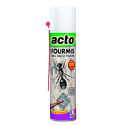
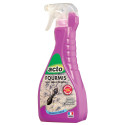
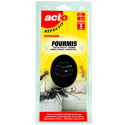
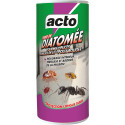
Create an effective security perimeter The idea is not to spray everywhere at random, which would be useless and expensive, but to create invisible "cordon sanitaires" on all the strategic points identified during your March inspection. Apply long-lasting sprays (such as those in the ACTO range) to:
Door sills and window frames.
The air vents and cellar windows.
The bottom of the walls to a height of 10 to 15 cm.
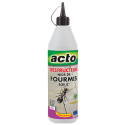
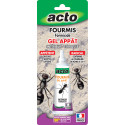
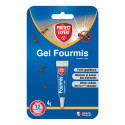
If, despite your efforts to shield, you see the first columns forming, you must change your method. Forget about sprays that kill instantly (which would only alert the rest of the colony) and switch to professional gel baits. The frost is a real Trojan horse: the ants eat it, do not die immediately, and carry it to the heart of the anthill to feed the queen.
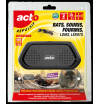
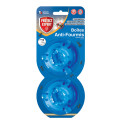
In May, install secure bait boxes in high-traffic areas. This is a period of vigilance: observe the behaviour of insects. If they ignore a sweet bait, it may be because they are looking for protein to feed the larvae at this stage of the cycle. Vary the types of bait to make sure you hit the target. A well-respected schedule, combining physical protection at the end of winter and an active barrier in spring, guarantees you a serene summer without having to endure the incessant parades of insects in your home.
Share this content