



 Accessoires IBC 1000 litres
 Couvertures Chauffantes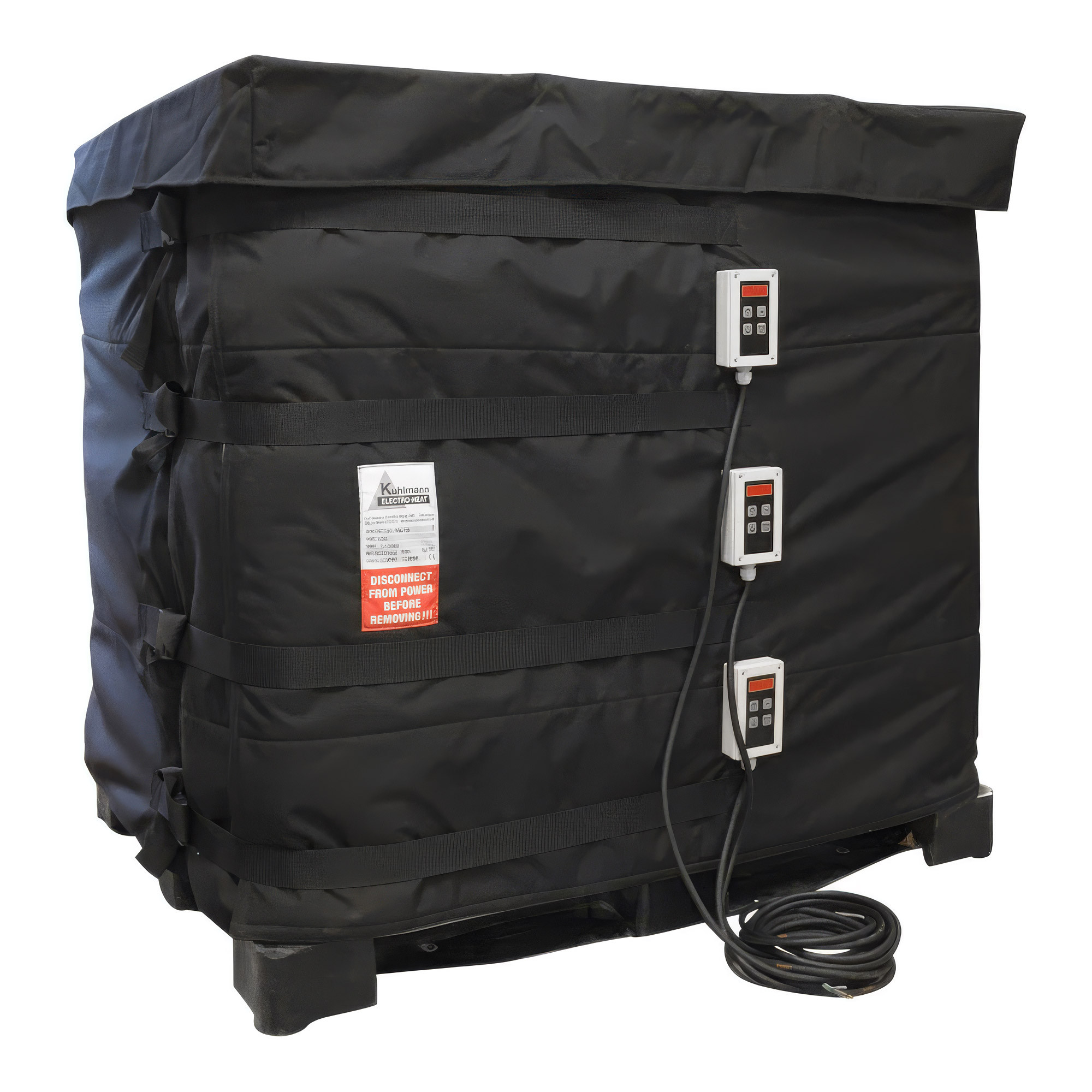
 Raccords Plomberie
 Bidons / Futs et raccords
 Semences





 Produits Phyto
 Jardin

 Espaces Verts
 Barbecue - Braséro - Cheminée
 Entretien
 Fluides & Climatisation
 Arrosage
ATEX heating of IBC tanks and drums: zones, temperature classes and obligations
As soon as an explosive atmosphere can form around a heated container, the installation leaves the domain of standard equipment. Heating then becomes a potential source of ignition, and the regulations govern both the equipment used and the way it is controlled. This page explains hazardous area classification, temperature classes, what the ATEX certification of a heating device actually covers, and the mistakes that expose an operator even when no incident has occurred.
Why heating is concerned
An explosive atmosphere forms when a combustible substance, such as solvent vapour, oil mist, or organic or metallic dust, mixes with air in flammable proportions. All that is then missing is a source of ignition for an explosion to occur.
A heating device brings together several potential sources: a hot surface, liable to reach the auto-ignition temperature of the mixture; electrical contacts, capable of producing an arc or a spark; and, in some cases, a build-up of electrostatic charge on insulating materials. This is why heating is among the most tightly regulated equipment in a classified area, even though it looks innocuous in an ordinary workshop.
The difficulty is that the risk is not visible. A container of cutting oil or solvent presents no apparent danger, and a non-compliant installation can run for years without incident, until the day the conditions come together. The absence of any incident to date is therefore never evidence that an installation complies with the regulations.
Hazardous area classification
The zone expresses the probability that an explosive atmosphere is present. It is established by the operator, under the operator's responsibility, and recorded in the explosion protection document. Two families coexist depending on the nature of the combustible substance.
| Zone | Nature | Probability of an explosive atmosphere being present | Equipment category |
|---|---|---|---|
| Zone 0 | Gases, vapours, mists | Present continuously or for long periods | Category 1G |
| Zone 1 | Gases, vapours, mists | Likely to be present in normal operation | Category 2G |
| Zone 2 | Gases, vapours, mists | Unlikely to be present, and for a short period if it occurs | Category 3G |
| Zone 20 | Combustible dusts | Present continuously or for long periods | Category 1D |
| Zone 21 | Combustible dusts | Likely to be present in normal operation | Category 2D |
| Zone 22 | Combustible dusts | Unlikely to be present, and for a short period if it occurs | Category 3D |
In practice, the heating of containers and drums mainly concerns zones 1 and 2 for gases and vapours, and zones 21 and 22 for dusts. Zones 0 and 20, which correspond to a near-permanent presence, relate to the inside of the vessels themselves rather than to their surroundings.
A single site generally has several classifications: the inside of a tank, its immediate surroundings and the rest of the building do not fall within the same zone. The equipment required is determined by the point where the heating is installed, not by the general nature of the activity.
Temperature classes
Every flammable substance has an auto-ignition temperature: the temperature above which it ignites spontaneously, with no spark or flame. Equipment installed in a zone must never reach that surface temperature, including under fault conditions.
Temperature classes express this constraint. They indicate the maximum surface temperature the equipment may reach:
| Class | Maximum surface temperature |
|---|---|
| T1 | 450 °C |
| T2 | 300 °C |
| T3 | 200 °C |
| T4 | 135 °C |
| T5 | 100 °C |
| T6 | 85 °C |
The logic runs counter to intuition: T6 is the most demanding class, since it limits the surface to 85 °C, and T1 the most permissive. T6-rated equipment is therefore suitable for every substance, whereas T1 equipment is only suitable for substances whose auto-ignition temperature exceeds 450 °C.
The selection always follows the same direction: identify the substance present, note its auto-ignition temperature, and choose equipment whose class guarantees a lower surface temperature. That information appears on the safety data sheet for the product.
Equipment stated as compatible with a range of classes, from T6 to T1 for example, is configured according to the substance: the range indicates the classes achievable depending on the setting selected, not universal compatibility as supplied.
One useful clarification: these six classes apply to gases and vapours. For dusts, the marking does not use the codes T1 to T6 but states the maximum surface temperature directly, for example T135 °C. The principle remains the same, namely staying below the ignition temperature of the dust layer or cloud, but the marking is read differently.
What certification covers
In Europe, equipment intended for explosive atmospheres falls under Directive 2014/34/EU, which replaced Directive 94/9/EC. It requires the manufacturer to carry out a conformity assessment and to provide specific marking and technical documentation. Heating equipment certified under this text bears a marking stating the group, the category, the type of atmosphere, the protection concept and the temperature class.
Protection concepts used in heating
Several principles make it possible to avoid ignition, and a given item of equipment may combine more than one of them. In container heating, two of these concepts occur systematically.
Intrinsic safety, marked Ex-i, consists in limiting the energy available in the circuit to a value incapable of igniting the atmosphere, even in the event of a short circuit or a break. It applies to measurement circuits, typically the Pt100 control probes, whose power is naturally low.
The enclosure and its protection rating address the other side of the problem: preventing dust and moisture from reaching live parts. An IP65 rating indicates a dust-tight enclosure with resistance to water jets, which corresponds to the conditions of outdoor storage or of a building washed down with a hose.
Static electricity
An insulating jacket that is rubbed or moved accumulates charge that may discharge as a spark. This is why heating jackets intended for classified areas are made of antistatic materials, such as an antistatic, water-repellent PVC. This detail, invisible in use, is an integral part of compliance: replacing a certified jacket with an ordinary cover cancels the protection.
Temperature control as a safety device
Outside a classified area, a thermostat is a convenience device: if it drifts, the product gets too hot. In a classified area it becomes a safety device, because exceeding the surface temperature can cause ignition.
This is why an ATEX heating assembly combines two distinct functions:
- the controller, which manages the working set point;
- the limiter, which cuts the supply if a threshold temperature is exceeded, independently of the controller.
This independence is essential: if the two functions shared the same probe and the same electronics, a single failure would remove both the control and the safety function. Galvanic isolation between circuits follows the same logic, by preventing a fault on one circuit from propagating to the other.
Measurement accuracy takes on a different meaning here from ordinary usage. An accuracy better than 1 kelvin does not serve setting convenience: it reduces the margin that must be kept between the set point and the safety threshold, which makes it possible to use the full working range without approaching the limit.
Self-regulating cable
Some heaters use a self-regulating heating cable, whose resistance increases with temperature. Each portion of the cable therefore adjusts its power according to the local temperature: cold areas heat more, while areas that are already hot reduce their consumption.
This behaviour offers two significant advantages in a classified area, beyond the convenience it brings in ordinary installations. It intrinsically limits the surface temperature, adding a further layer of safety on top of the limiter. And it removes the risk of overheating if the cable is accidentally covered, a situation that would create a hot spot on a conventional heating element.
Installing and operating in a classified area
The junction box
Electrical connections are a sensitive point, both for safety and for maintenance. A certified, replaceable junction box makes it possible to intervene without replacing the whole heater, which reduces downtime, an important criterion when the heated container feeds a production line.
Ambient conditions
Equipment is qualified for an ambient temperature range. Equipment specified from −20 to +55 °C covers outdoor storage in our climates, but this range is a characteristic of the equipment, not a usage recommendation: beyond it, compliance is no longer guaranteed.
The working range of the heated product is a separate matter. On a metal container it may extend from frost protection to high temperatures; on a plastic container, the limit is set by the resistance of the polyethylene, which is far lower. Heating a plastic tank beyond its thermal resistance deforms it, with a risk of the contents leaking and, in a classified area, of an explosive atmosphere forming where there was none.
Periodic inspection
In a classified area, the condition of the equipment determines the compliance of the installation. A punctured jacket, a cable pinched by the container cage, a loose cable gland or a cracked box all call the protection into question, regardless of the apparently correct operation of the equipment.
Regular visual inspection is therefore part of operation, and any damage requires removal from service until repaired, with the findings recorded so that the history of the equipment can be traced. An improvised repair, such as adhesive tape on a jacket or the replacement of a cable gland with a standard model, voids the certification just as surely as non-compliant equipment.
Four mistakes that engage liability
- Choosing the equipment before classifying the area. Classification is the operator's responsibility and precedes any equipment decision. Buying ATEX equipment without knowing which zone it has to cover often leads to unsuitable equipment, either oversized and expensive or inadequate.
- Ignoring the temperature class of the substance. ATEX-certified equipment of an unsuitable class remains a source of ignition. Certification does not remove the need to check the auto-ignition temperature of the product present.
- Mixing certified equipment with ordinary accessories. An ATEX heater controlled by a standard thermostat, or insulated with a non-antistatic cover, forms a non-compliant assembly. Compliance is assessed on the complete installation, not component by component.
- Treating compliance as settled once and for all. It is maintained over time: condition monitoring, traceability of interventions, updating the classification if the process changes. A change in the product stored can alter the zone without any equipment having moved.
Standard or ATEX: how to decide
The question often comes up in the form "is my installation really concerned?". Three situations arise.
If the building or the area around the container is already classified in the explosion protection document, the answer is settled: the equipment must be certified for the zone concerned, with no room for discussion.
If no classification exists while flammable products are stored or handled, the first step is not the purchase of heating equipment but the risk assessment. Installing standard equipment in that situation exposes the operator, and installing ATEX equipment without knowing the zone offers no better guarantee of compliance.
If the products stored are not flammable and no combustible dust is present, standard equipment is suitable. That is the case for the majority of applications: water, glycol, AdBlue, aqueous food products. The extra cost of ATEX equipment then adds no safety whatsoever, and the funds are better applied to insulation and to the quality of the temperature control.
What this page does not replace
Hazardous area classification, explosion risk assessment and the drafting of the associated document are the responsibility of the operator, assisted where necessary by a competent body. The material presented here is intended to explain the constraints that bear on the choice of heating equipment, not to substitute for that process.
Where there is any doubt about the classification of an installation, the rule is to assume the most demanding hypothesis until verification has been carried out, rather than to select equipment on the basis of a favourable assumption that nothing confirms.
Identifying certified equipment for your zone
The classification of your zone determines which equipment is permitted, and standard equipment is prohibited there without exception. Our heating selector includes this criterion: state that your installation is in a classified area and only certified equipment will be proposed. If the classification has not yet been established, the "I do not know" option displays both ranges for comparison, bearing in mind that the prior verification remains indispensable.
Our ATEX range
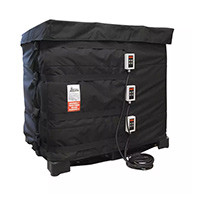
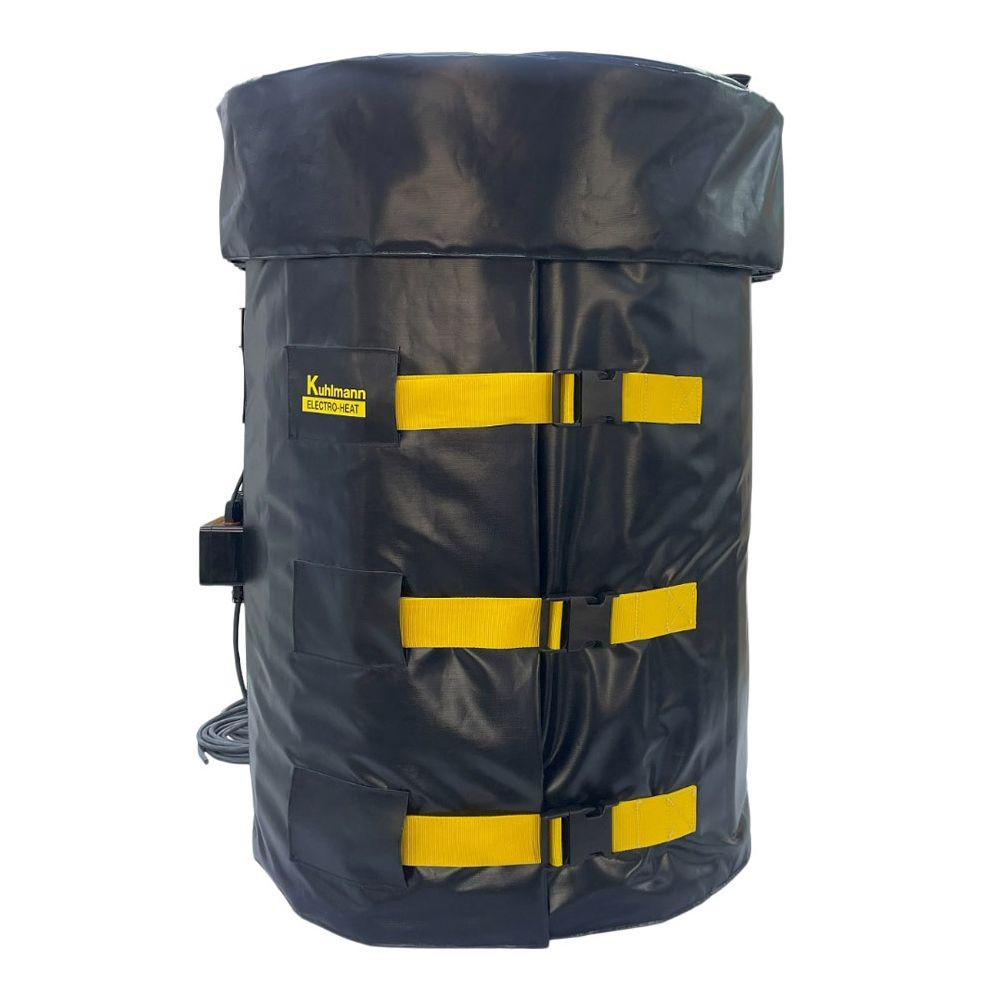
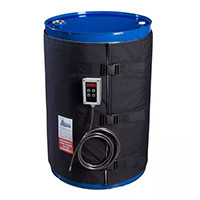
Multitanks distributes Kuhlmann heating solutions certified for explosive atmospheres, for IBC containers as well as drums: self-regulating cable heaters, heating blankets, intrinsically safe controller-limiters and antistatic insulated lids. The equipment covers zones 1, 2, 21 and 22 and the usual temperature classes.
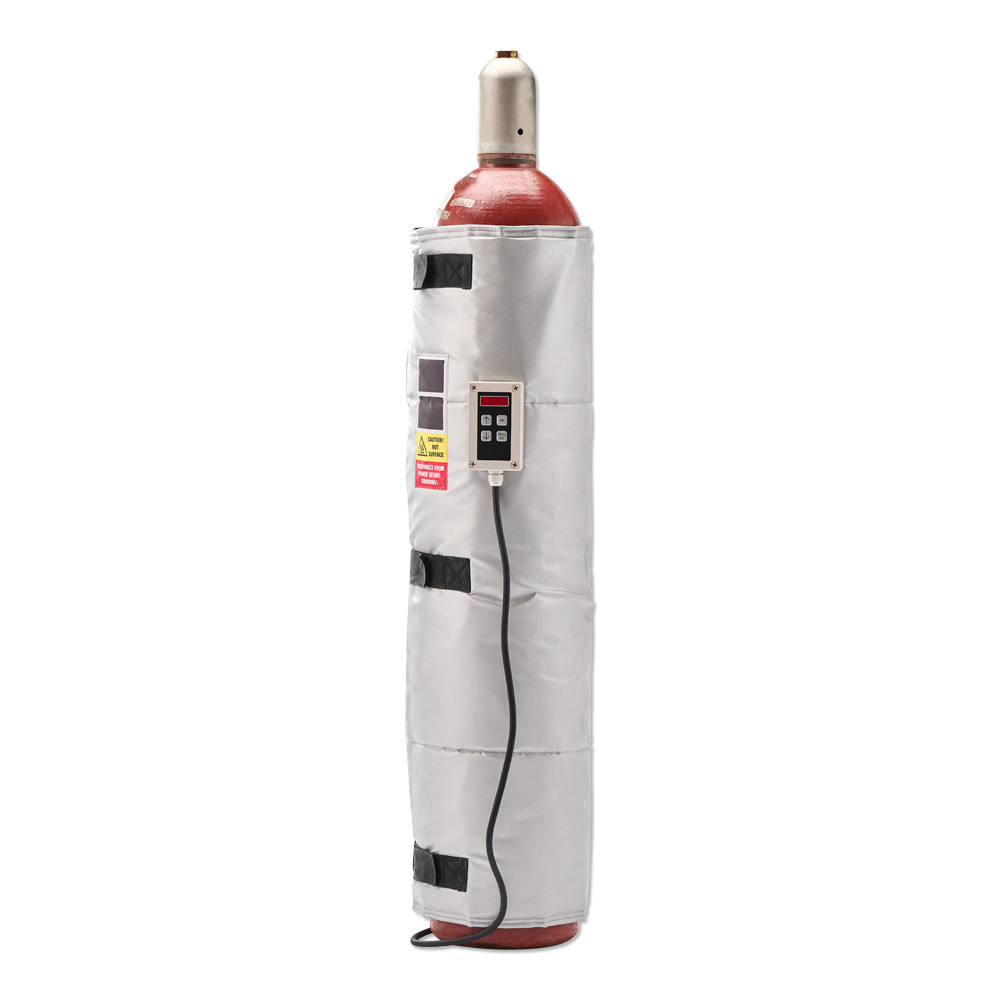
The range is available from the IBC container heaters and ATEX and standard drum heaters sections, grouped under heating blankets for IBC, drums and gas cylinders. To compare the available heating technologies and their respective uses, see also our page on blanket, base, immersion heater or heating tape.
An installation in a classified area is configured case by case: nature of the substance, zone classification, required temperature class, volume, ambient conditions and the way the equipment is to be operated day to day. Our technical team will prepare a quotation on the basis of these elements.