IBC 1000 L accessories
 Heating jackets

 Fittings
 Drums, jerrycans & fittings
 Seeds
 Plant protection & biocides


 Garden

 Green spaces & municipal

 Barbecue, fire pit & fireplace
 Cleaning & care
 Refrigerants & air conditioning
 Watering


Tropical lawns: cynodon, dichondra or kikuyu? A comparison
In hot, dry regions, ordinary ornamental lawns give out. Three tropical species then take over: cynodon dactylon, dichondra repens and kikuyu. They are often presented together, as if they were interchangeable. They are nothing of the kind: one takes heavy foot traffic, another barely needs mowing, the third colonises everything. Here is how to decide.
The comparison at a glance
Before the detail, here is what genuinely separates these three grasses. All three handle heat, so that is not the deciding factor. What decides is how the ground is used and how much time you want to spend on it.
| Criterion | Cynodon dactylon | Dichondra repens | Kikuyu |
|---|---|---|---|
| Family | Grass | Ground cover (not a grass) | Grass |
| Origin | South Africa | Australia, New Zealand | East Africa |
| Drought resistance | Very good | Good | Very good |
| Heavy foot traffic | Excellent | Avoid | Excellent |
| Mowing frequency | Regular, 2 to 4 cm | Very low | Low, but cut high |
| Speed of cover | Fast | Moderate | Slow in year one |
| Tendency to spread | Marked | Low | Strong |
| Cold sensitivity | High | High | High |
| Typical use | Play area, heavy use | Ornamental area, little walked on | Large area, family garden |
The useful shortcut: ground that gets used means cynodon or kikuyu; ground you look at means dichondra; a large area to cover without spending a fortune on water means kikuyu. And if your winter is not mild enough for these three species, BHS Rustic SUD grass meets the same need with ryegrass and fescue.
Cynodon dactylon, or Bermuda grass
Native to South Africa, cynodon owes its English name to Bermuda, through which it reached North America. It is the grass of golf courses and sports fields in warm climates: it takes heavy use and recovers quickly.
One point deserves clarifying, because both claims are often made without qualification. Cynodon is highly drought-resistant once established, but it needs regular watering during its establishment phase and to keep a deep green. Without water it survives: it yellows. With a little water it stays green. Both regimes work, and the choice is yours.
Sow it from late spring to early summer, when the soil is warm and rainfall still regular. Prepare the ground by removing weeds and levelling, fertilise before sowing, then water regularly for the first few weeks. Once established, regular mowing thickens the mat, and annual aeration maintains rooting.
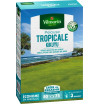
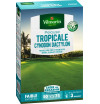
Our cynodon dactylon seed in a 500 g box suits both new lawns and the repair of worn areas. For heavily used ground in a less mild climate, BHS High Resistance grass (ryegrass, tall fescue and meadow grass) takes the traffic without the frost sensitivity.
Dichondra repens, the lawn you barely mow
Dichondra is not a grass at all, and that changes everything. Native to Australia and New Zealand, it is a creeping plant with round leaves forming a very low, velvety mat. It grows little in height: that is precisely its appeal.
Sow or plant cuttings from spring to early autumn, in a warm, sunny region. Drainage is the critical point: on soil that holds water, it develops disease. Water regularly during establishment, then space it out. An annual feed is enough to maintain it, and mowing, if you do any, stays at 2 to 4 cm.
This is the query that earns our best click-through rate, a sign of genuine interest: dichondra repens in a 500 g box is in stock. Keep it for ornamental areas: for daily traffic, prefer cynodon or kikuyu.
Kikuyu, the toughest and the most invasive
Kikuyu, Pennisetum clandestinum, comes from the highlands of East Africa. It is the most vigorous of the three: underground rhizomes and creeping stolons let it get through summer without watering, close its own gaps and cover large areas cheaply.
The trade-off is twofold. First a slow first year: the mat only truly thickens in the second season. Then a markedly creeping habit - without buried edging it crosses into the neighbour's garden and colonises beds. This is a grass to contain, not merely to watch.
Two articles are devoted to it, depending on your question: how and when to sow it for the practical method (timing, the 12 g/sqm rate, soil preparation) and its real drought resistance to find out whether your region suits it.
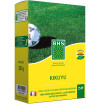
Our kikuyu seed comes in a 300 g box for 25 sqm for a trial or a small area, and a 1.2 kg pack for 100 sqm for a whole garden. It is enriched with organic fertiliser, which supports the seedlings from germination onwards.
The shared weakness: cold
All three species come from warm climates and share the same weakness. They yellow as soon as temperatures stay low, and settled frost can reach their underground organs. Winter yellowing is normal and reversible; prolonged frost is a genuine risk.
In practice they suit the Mediterranean coast, Corsica, south-west France and the southern Atlantic coast. North of the Loire, in the mountains or in eastern France, a hardy fescue-based mixture will be more reliable, even if it needs a little more water.
A simple test: if olive trees and oleanders survive your winter outdoors unprotected, these grasses will too.
Do you really need to start over?
Before changing species, ask yourself one question: is your lawn dead, or merely damaged? A lawn scorched by summer often recovers with autumn rain. If dense areas remain, overseeding costs far less than a complete rebuild.
BHS Overseeding grass GRE5 germinates in 5 to 8 days and covers up to 250 sqm: it is the most economical answer to drought damage. And if you would rather treat the soil first, our article on scarifying your lawn explains when and how.
Frequently asked questions
Cynodon dactylon or kikuyu: which should I choose? Both handle heat equally well. Cynodon takes a closer cut and suits a play area mown short; kikuyu covers larger areas more cheaply and needs fewer cuts, but spreads more.
Does dichondra really replace a lawn? Visually, yes, with a distinctive velvety finish. In use, no: it will not take daily traffic. It is an ornamental ground cover, not a family lawn.
Do these grasses need less water than an ordinary lawn? At maturity, considerably less. In the weeks following sowing they need just as much: that is the stage where most failures happen.
Can they be mixed together? Not advisable. Their growth rates are too different: the most vigorous species, usually kikuyu, eliminates the others and the result becomes uneven.
What are Moroccan, African or Brazilian grass? These are trade names with no stable botanical definition. They usually refer to kikuyu or cynodon. Go by the Latin name - Pennisetum clandestinum for kikuyu, Cynodon dactylon for the other - rather than the commercial one.
In short
The three tropical grasses all handle heat, but they answer different uses. Cynodon for ground that gets used and is mown short. Dichondra for an ornamental space you no longer want to mow. Kikuyu to cover large areas without watering, accepting that you must contain it. Their shared limit remains cold: beyond mild regions, a hardy mixture will be safer.
All these seeds are gathered in the turf seeds category, each with its coverage and recommended rate. Dispatched within 24 hours.
Share this content