



 IBC 1000 L accessories
 Heating jackets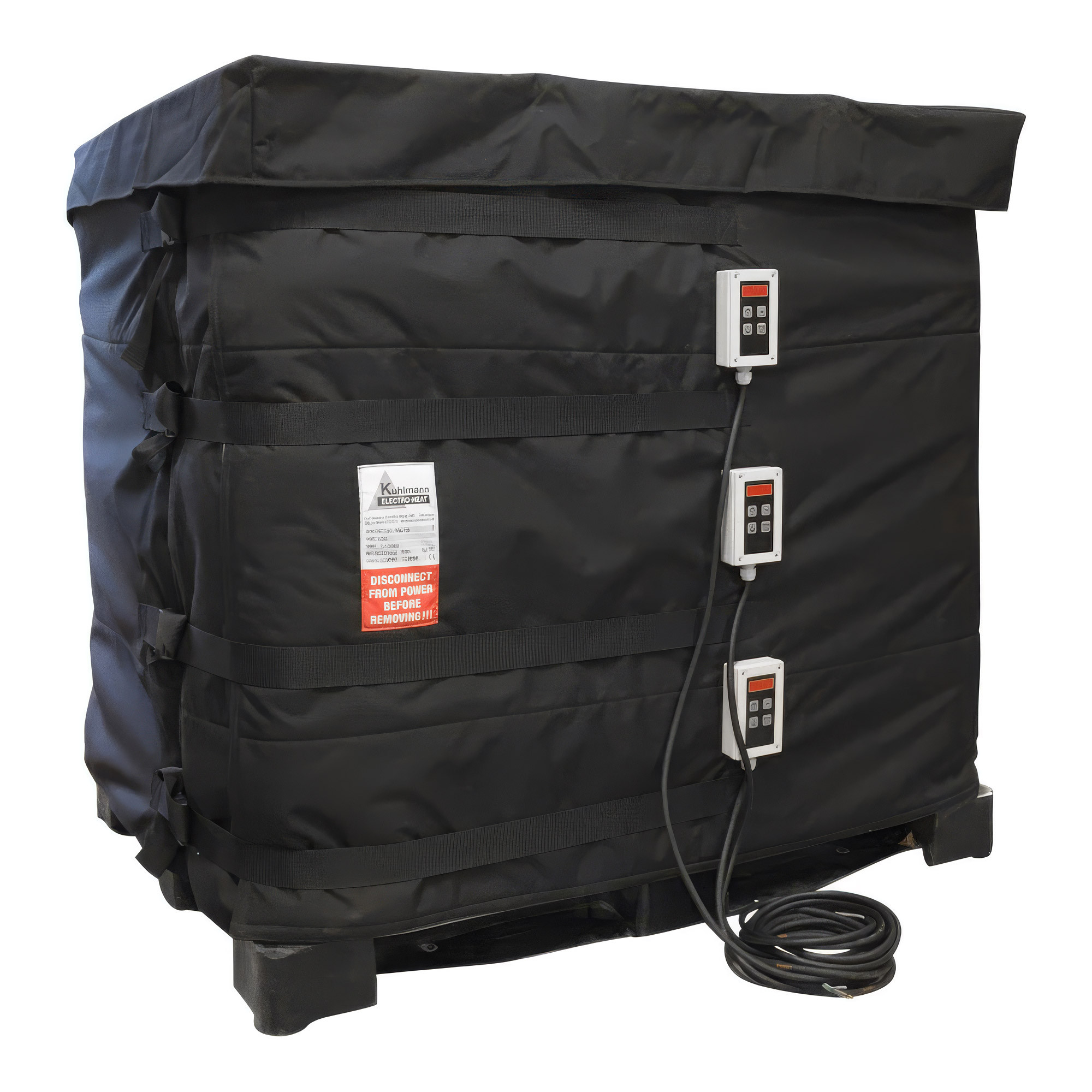
 Fittings
 Drums, jerrycans & fittings
 Seeds
Seeds 




 Plant protection & biocides

 Garden




 Green spaces & municipal


 Barbecue, fire pit & fireplace
 Cleaning & care

 Refrigerants & air conditioning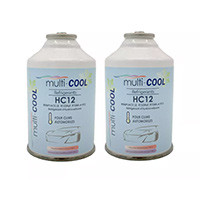
 Watering
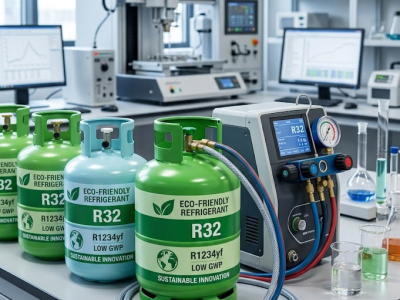
Eco-Friendly Refrigerants: Complete Guide for Sustainable Refrigeration
❄️ THE ECO-FRIENDLY REFRIGERANT REVOLUTION
Eco-friendly refrigerants represent a major technological breakthrough in the refrigeration industry. Unlike conventional refrigerants with high environmental impact, these new formulations favour natural or synthetic compounds with a low global warming potential (GWP).
Innovation is focused on three main categories: hydrocarbons such as R-290 (propane) and R-600a (isobutane), next-generation HFO fluids, and blends optimised for specific applications. These alternatives significantly reduce the carbon footprint of installations while maintaining excellent thermodynamic performance.
The eco-friendly refrigerants range from Multitanks offers certified solutions for all types of applications, from automotive air conditioning to industrial refrigeration.
🌿 ENVIRONMENTAL BENEFITS AND PERFORMANCE
🔧 MAIN FAMILIES OF ECO-FRIENDLY REFRIGERANTS
Duracool refrigerants are a benchmark in the field of hydrocarbon-based fluids for automotive air conditioning. These propane and isobutane-based formulations offer exceptional performance with a GWP of less than 3.
HFO (Hydrofluoroolefin) fluids represent the new generation of synthetic refrigerants. Their unique molecular structure allows rapid decomposition in the atmosphere, limiting their climate impact. They are an ideal solution to replace HFCs in commercial and industrial applications.
Azeotropic blends combine several compounds to optimise thermodynamic properties for the intended application. These tailored formulations achieve unmatched performance while meeting environmental constraints.
⚙️ COMPATIBILITY AND SYSTEM CONVERSION
The transition to eco-friendly refrigerants requires a precise assessment of compatibility with existing systems. Most recent installations require only minor adaptations: replacement of seals, updating of safety devices, and recalibration of pressure regulators.
For direct replacement applications, some eco-friendly refrigerants are formulated as "drop-in" solutions to facilitate conversion. These solutions allow for a gradual migration without major modification of the refrigeration circuit, considerably reducing upgrade costs.
🛠️ ADAPTED PROFESSIONAL TOOLING
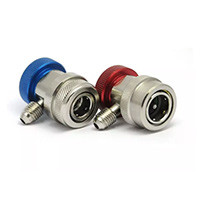
Handling eco-friendly refrigerants requires specialised and certified refrigeration tools. Hydrocarbons in particular require explosion-proof equipment and enhanced safety procedures.
Manifolds, vacuum pumps and recovery stations must be compatible with the new refrigerants. Investing in suitable equipment ensures operational safety and the quality of service work.
📋 BEST PRACTICES AND SAFETY
The use of eco-friendly refrigerants requires adherence to specific safety protocols. Hydrocarbons present flammability risks that require particular precautions during maintenance and recharging operations.
Training technical personnel becomes crucial to mastering these new technologies. Professional certification in eco-friendly refrigerants ensures the competence of technicians and compliance with safety standards.
❄️ Eco Conversion Calculator
Estimate the environmental and economic benefits of your conversion
Share this content