IBC 1000 L accessories
 Heating jackets
 Fittings
 Drums, jerrycans & fittings
 Seeds
Seeds 


 Plant protection & biocides
 Garden
 Green spaces & municipal
 Barbecue, fire pit & fireplace
 Cleaning & care
 Refrigerants & air conditioning
 Watering
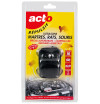
Engine Protection 2026: How Ultrasonic Repellents Are Revolutionizing Automotive Pest Control
Imagine the surprise of discovering your vehicle immobilized by an expensive breakdown caused by a simple rodent. This reality affects thousands of motorists each year, confronting owners of cars, motorhomes and agricultural machines with sometimes astronomical repair bills. Fortunately, modern sonic repellents offer an effective and environmentally friendly preventive solution to keep martens, rats and mice away from engine compartments.
🚗 THE SILENT SCOURGE OF AUTOMOTIVE PESTS
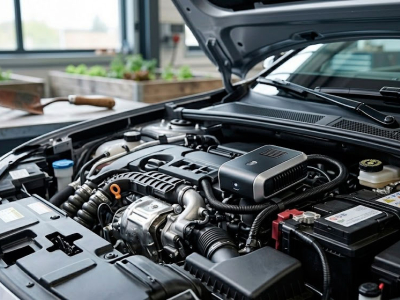
Rodents and mustelids represent a real threat to our vehicles, much more significant than most drivers imagine. Attracted by the residual heat from the engine after a journey, these animals find an ideal refuge under the hood to spend the night or even establish their territory. The warm temperature, combined with the shelter offered by the many recesses of the engine compartment, creates a particularly attractive environment for these unwelcome visitors.
The damage caused goes far beyond simple aesthetic inconveniences. Martens, equipped with sharp and acidic teeth, primarily attack electrical cables, severing the harnesses that supply sensors, ignition or safety systems. Cooling hoses, steering boots and rubber elements also become preferred targets. This deterioration causes sudden breakdowns, often discovered at the most inopportune moment.
The financial cost of these intrusions can quickly climb. Beyond replacing damaged parts, you must count diagnostic fees, specialized labor and sometimes prolonged vehicle immobilization. For professionals dependent on their agricultural or utility machines, these forced stops also represent considerable loss of earnings. This problem particularly affects rural and suburban areas, where proximity to wildlife multiplies the risk of intrusion.
🔊 THE TECHNOLOGICAL REVOLUTION OF ULTRASONICS
Ultrasonic technology has evolved considerably in recent years, progressing from rudimentary devices to sophisticated systems incorporating the latest developments in applied acoustics. The operating principle is based on the emission of very high frequency sound waves, generally between 25 and 55 kHz, completely inaudible to the human ear but perfectly perceived by small mammals. This frequency range corresponds precisely to the zone of maximum auditory sensitivity of rodents and mustelids.
The major innovation of modern devices lies in the automatic and random variation of emitted frequencies. Unlike old models that broadcast a fixed frequency, current engine ultrasonic repellents constantly modulate their signal to avoid any habituation phenomenon. This variation creates an unpredictable and stressful sound environment for pests, who never manage to completely adapt to the signal. Long-term effectiveness is increased tenfold.
Modern repellents also integrate advanced protection circuits guaranteeing optimal operation in the difficult conditions of the engine compartment. Resistance to vibrations, temperature variations, humidity and electromagnetic interference, these devices are designed to withstand the specific constraints of the automotive environment. Their reduced electrical consumption, generally less than a few milliamps, allows continuous operation without risk of vehicle battery discharge.
⚙️ SIMPLIFIED INSTALLATION AND COMMISSIONING
Installing a modern ultrasonic repellent requires no particular technical skills or specialized tools. The procedure, designed to be accessible to as many people as possible, takes place in a few simple steps and generally takes only fifteen to twenty minutes. This simplicity of installation is a major asset for users wanting to quickly protect their vehicle without using the services of a professional.
The choice of location is crucial to guarantee the effectiveness of the device. The ideal is to position the device in the central part of the engine compartment, equidistant from potential access areas used by pests. Proximity to intense heat sources such as the exhaust manifold, turbo or radiator should be avoided, while ensuring that the housing remains accessible for possible maintenance interventions. Fixing is generally carried out using clamps or adhesive supports supplied with the device.
Electrical connection follows a universal diagram suitable for all types of 12V or 24V vehicles. The red wire connects to the positive terminal of the battery or to a permanent power point, while the black wire connects to the chassis ground. Some models offer an optional connection to the ignition to activate the device only during parking periods, thus optimizing battery life. An integrated LED indicator confirms proper operation of the device as soon as it is powered on.
Effective against martens, rats, mice and other small mammals, the repellent adapts to all types of vehicles: automobiles, motorhomes, tractors, agricultural machines and even boats.
Unlike traps or poisons, the ultrasonic solution keeps pests away without harming them, respecting the local ecosystem while effectively protecting your investment.
Once installed, the device operates continuously without human intervention. Its low consumption guarantees permanent protection without impacting your battery life.
🛠️ PRACTICAL APPLICATIONS AND USE CASES
Ultrasonic repellents find their place in an impressive variety of situations and environments. Private vehicle owners parking in rural or suburban areas constitute the first category of users. These drivers, regularly confronted with marten intrusions in their garage, under their carport or during overnight outdoor parking, find an effective preventive solution in this technology. The investment in a repellent quickly proves profitable compared to the cost of a single repair.
The leisure sector also represents an important market for these devices. Motorhome owners, faced with prolonged parking in natural environments conducive to wildlife, massively adopt this technology. The specificity of motorhomes, with their numerous electrical and hydraulic equipment, makes rodent damage particularly expensive and complex to repair. Caravans, boats and other leisure vehicles also benefit from this protection.
Modern agriculture makes extensive use of this technology to protect an increasingly sophisticated and expensive machine fleet. Tractors, combine harvesters, sprayers and other agricultural equipment, often stored outdoors or in open hangars, inevitably attract rodents. Agricultural operators, whose profitability depends directly on the availability of their machines during critical periods, cannot afford untimely breakdowns caused by pests. The systematic installation of repellents on the entire machine fleet becomes an indispensable prevention measure.
| Vehicle type | Main risk | Average damage cost | Ultrasonic efficiency |
|---|---|---|---|
| Automobile | Electrical cables | 300-800€ | 90-95% |
| Motorhome | Hydraulic circuit | 500-1500€ | 85-90% |
| Tractor | Sensor harness | 800-2000€ | 95% |
| Boat | Electrical installation | 400-1200€ | 85% |
📋 OPTIMIZATION GUIDE AND BEST PRACTICES
The effectiveness of an ultrasonic repulsion system largely depends on the quality of its installation and compliance with certain best practices. The range of ultrasonics, although theoretically important, can be considerably reduced by the presence of obstacles or absorbent materials. It is therefore necessary to carefully evaluate the configuration of the engine compartment to identify possible acoustic shadow zones. Massive elements such as the engine block or gearbox can create obstacles to wave propagation.
Device maintenance, although minimal, contributes significantly to maintaining optimal performance. Periodic cleaning of the housing and ventilation grilles prevents the accumulation of dust and debris that could alter ultrasonic diffusion. Regular verification of electrical connections, particularly after vehicle maintenance interventions, guarantees power supply continuity. Checking the operating indicator ensures that the device remains operational.
Certain particular situations may require adaptations to the standard installation. Vehicles with very large engine compartments, such as certain utilities or agricultural machines, may benefit from installing multiple repellents to guarantee complete coverage. Device orientation must also be optimized according to the specific configuration of each vehicle. Directional models concentrate their emission in a defined sector, while omnidirectional versions broadcast ultrasonics over 360 degrees.
🔬 MEASURED EFFECTIVENESS AND FEEDBACK
Independent studies conducted on ultrasonic repellent effectiveness reveal encouraging results, with success rates oscillating between 85 and 95% depending on targeted species and usage conditions. These performances, measured over observation periods of several months, demonstrate the viability of this preventive approach. Feedback from professional users, particularly in the agricultural sector, confirms this theoretical data with a drastic reduction in repair interventions related to rodent damage.
Performance analysis by species reveals interesting nuances in treatment effectiveness. Martens, particularly sensitive to high-frequency ultrasonics, present the best deterrence rates, frequently exceeding 95% effectiveness. Rats, equipped with more developed adaptive capacity, sometimes require frequency or power adjustments to maintain optimal repulsion levels. Mice, although less destructive individually, also react favorably to ultrasonic treatment, with success rates approaching 90%.
Environmental factors considerably influence the results obtained. Installations in rural environments, where habitat alternatives for pests remain numerous, generally show better performance than dense urban environments. The period of the year also plays a role, with maximum effectiveness observed during cold months, when seeking shelter becomes a priority for animals. Association with other preventive methods, such as eliminating food sources or blocking access, multiplies the effectiveness of the ultrasonic device.
To maximize the effectiveness of your anti-pest protection system, combine the use of the ultrasonic repellent with regular vehicle inspection. Spot signs of presence (droppings, hair, odors) that may indicate recent intrusion and adjust the position or orientation of your device if necessary. A monthly check is generally sufficient to maintain optimal protection.
The future of this technology looks promising with the integration of intelligent sensors capable of automatically adapting emission parameters according to detected activity. These next-generation systems, already in development phase, promise even greater effectiveness while optimizing energy consumption. For vehicle owners wishing to invest today in this protection, the Multitanks garden equipment range offers proven and reliable solutions, suitable for all types of automotive and agricultural applications.
🔧 Repellent Efficiency Calculator
Assess the protection potential for your vehicle
Share this content