IBC 1000 L accessories
 Heating jackets
 Fittings
 Drums, jerrycans & fittings
 Seeds
 Plant protection & biocides

 Garden
 Green spaces & municipal

 Barbecue, fire pit & fireplace
 Cleaning & care
 Refrigerants & air conditioning
 Watering
World's Fastest Online Shopping Destination
World's Fastest Online Shopping Destination

 Safety guarantees100% secure payment
 Shipping PolicyResponsive and attentive after-sales service
 Returns PolicyFast and secure delivery
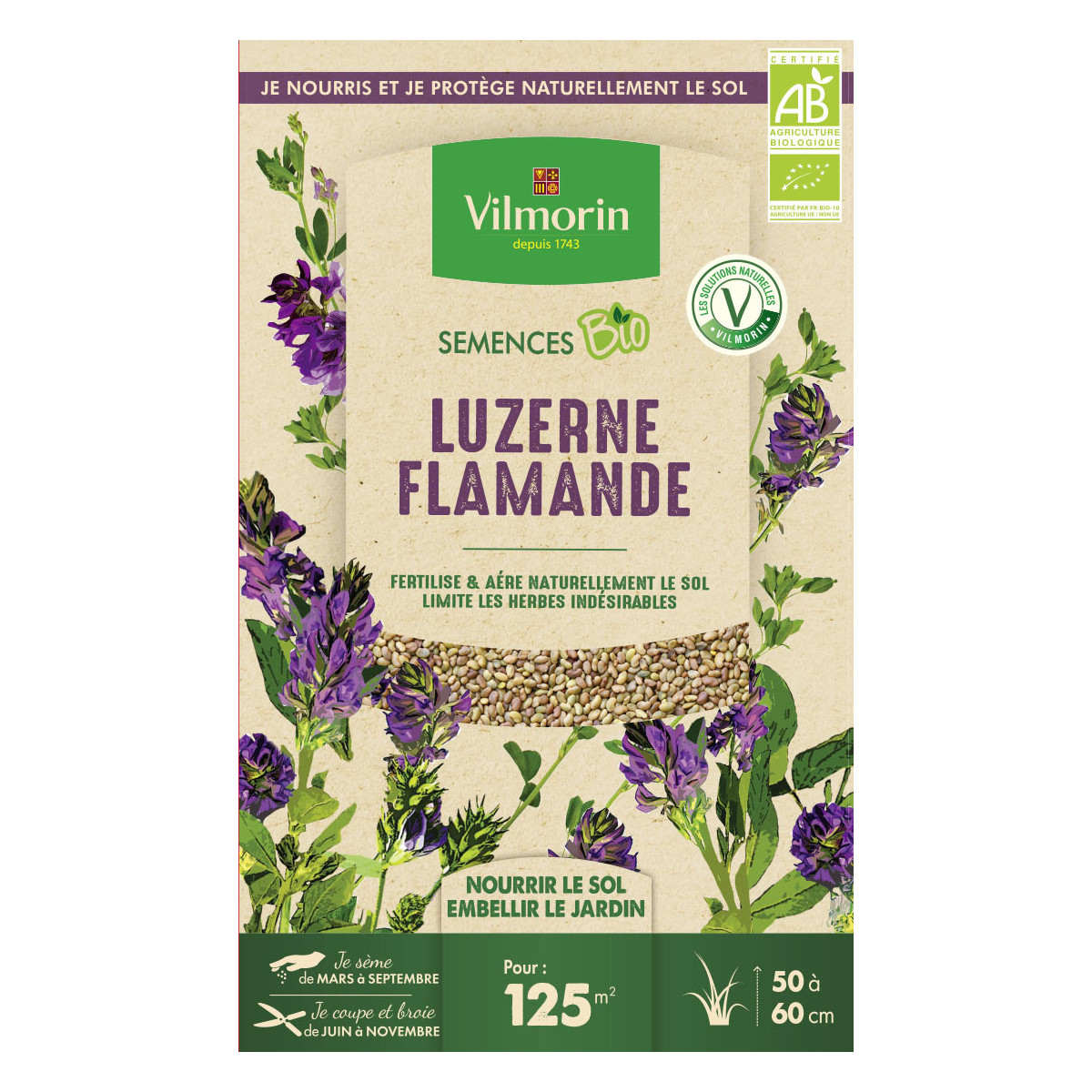
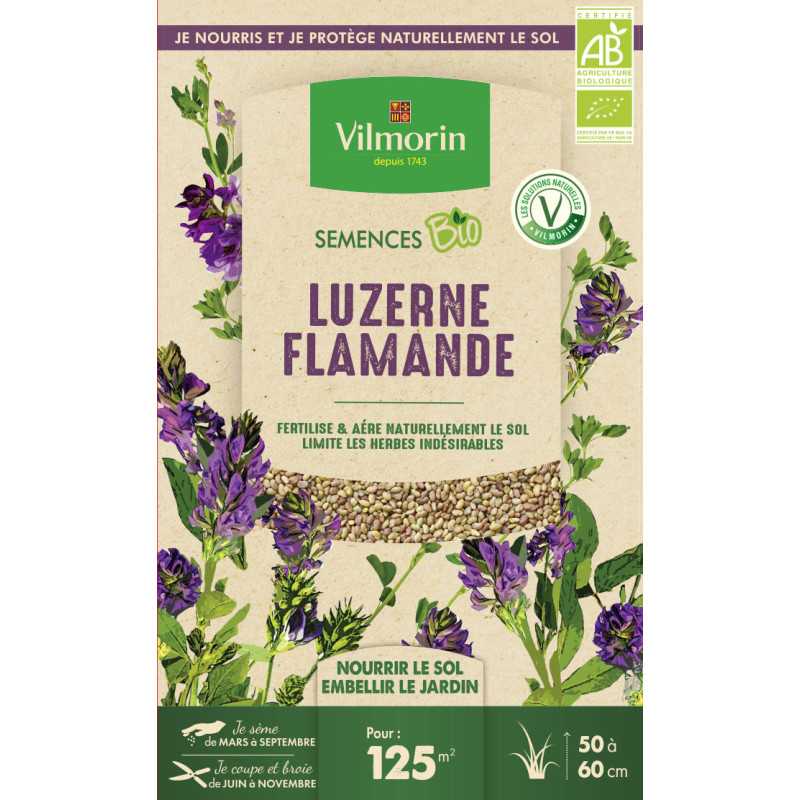
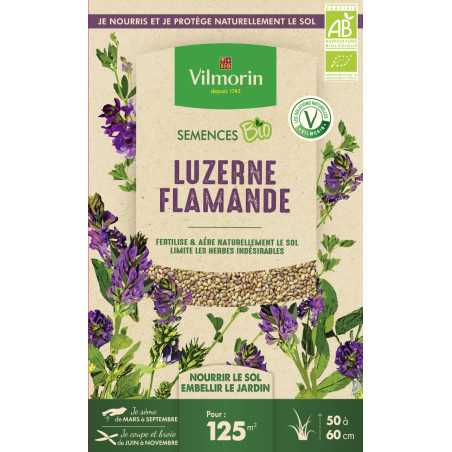
Organic Flemish Alfalfa Seeds - Reference: 399624G
Discover Vilmorin organic Flemish alfalfa seeds, the benchmark green manure for enriching your soil naturally. This certified organic variety represents the best in soil improvement, combining agronomic effectiveness with respect for the environment. Widely chosen by professionals and by knowledgeable gardeners, it is a lasting investment in the health of your land.
Flemish alfalfa stands out as the all-purpose green manure par excellence. As a legume, it has the unique ability to fix atmospheric nitrogen thanks to the nodules on its roots. That property enriches the soil with available nitrogen, the key nutrient for the growth of the crops that follow.
Ideal for organic farmers, market gardeners and eco-minded gardeners, it has a place in many situations: crop rotation, soil-improving fallow, winter cover, or preparing new plots. Its ability to give the soil structure also makes it a valuable ally for restoring degraded or compacted land.
Livestock farmers particularly value this variety for its high protein content, which makes it a top-quality forage for their animals. Its high nutritional value contributes to a balanced diet for farm livestock.
Vilmorin organic Flemish alfalfa stands out for its exceptional root system, which can reach several metres deep. This powerful root architecture gives it remarkable drought resistance and lets it draw nutrients from well below the surface.
This variety shows a marked preference for chalky soils with a pH between 6.5 and 8.0. It does particularly well on well-drained ground, disliking excess moisture, which can starve the roots of air. Its tolerance of difficult conditions nonetheless makes it a species that adapts to many soil types.
The 375-gram pack covers an area of around 125 m² effectively, at an optimal rate of 30 g per 10 m². This quantity gives the ideal sowing density to obtain an even, dense cover and so get the most agronomic benefit.
Success with your alfalfa sowing rests on careful soil preparation. Start with a shallow pass using a cultivator or hand fork to loosen the top 5 centimetres. This step improves contact between seed and soil and helps germination.
Then broadcast the seed, spreading 30 grams per 10 m² evenly. For an even spread over large areas, mix the seed with dry fine sand. Follow immediately with a light raking to bury the seed 1 to 2 cm deep.
The optimal sowing window runs from March to September, with a preference for spring (March-May) or summer (August-September) sowings. Avoid periods of high summer heat, which can compromise emergence.
Upkeep comes down to keeping an eye on weeds during the first few weeks. Once established, Flemish alfalfa becomes very self-sufficient and competes well against weeds.
To get the strongest green manure effect, chop the alfalfa and work it in at flowering time, when the nitrogen concentration is at its peak. Doing this before the seed has fully set avoids self-seeding while returning the maximum of nutrients to the soil.
Pair Flemish alfalfa thoughtfully with other complementary green manures: ryegrass for its structuring effect, white mustard for its biofumigant action, or phacelia to attract pollinators. These mixes create particularly effective multi-purpose cover crops.
In a crop rotation, Flemish alfalfa is the ideal preparation for nitrogen-hungry crops such as cabbages, squashes or cereals. Its improving effect carries on for several years after it has been worked in.
Expert tip: in windy regions, Flemish alfalfa makes an excellent natural windbreak thanks to its height and density. It protects sensitive crops effectively while enriching the soil.
For beekeepers, this nectar-bearing species produces a quality nectar, contributing to biodiversity and to the pollination of the surrounding crops.
| Details | Specifications |
|---|---|
| Scientific name | Medicago sativa |
| Pack weight | 375 grams |
| Area covered | Up to 125 m² |
| Recommended rate | 30 g per 10 m² |
| Soil type | Chalky, well-drained |
| Optimal pH | 6.5 to 8.0 |
| Sowing period | March to September |
| Sowing depth | 1 to 2 cm |
| Germination time | 7 to 15 days |
| Mature height | 60 to 80 cm |
| Certification | Organic farming |
| Main use | Green manure, forage |
Specific references