IBC 1000 L accessories
 Heating jackets
 Fittings
 Drums, jerrycans & fittings
 Seeds




 Plant protection & biocides



 Garden



 Green spaces & municipal
 Barbecue, fire pit & fireplace
 Cleaning & care

 Refrigerants & air conditioning

 Watering
- New
- Pack
World's Fastest Online Shopping Destination
Instead of €103.00
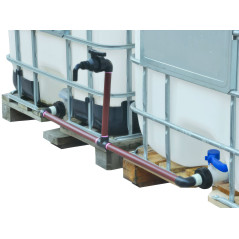
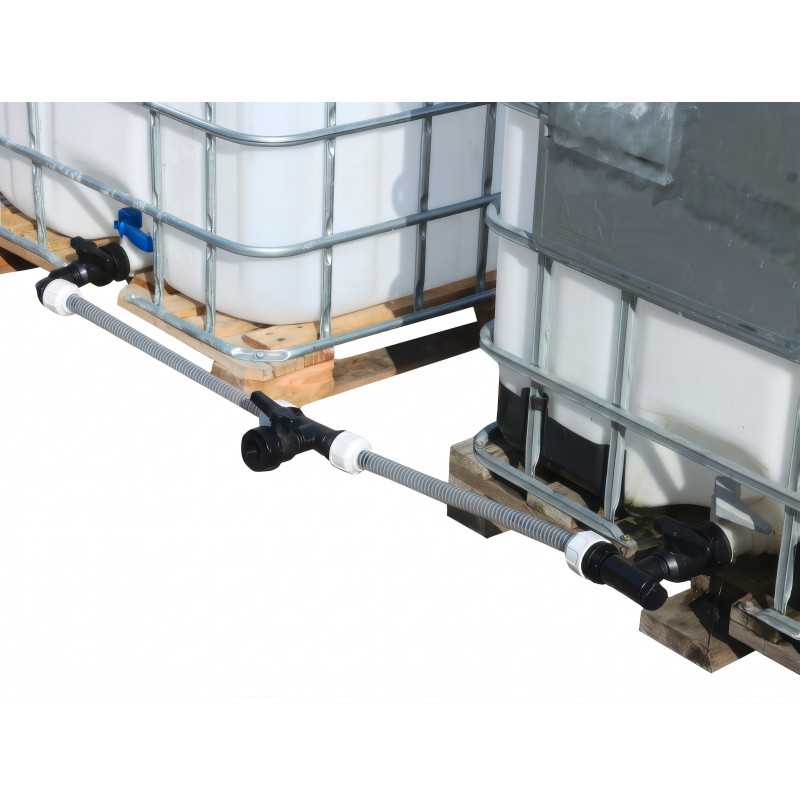
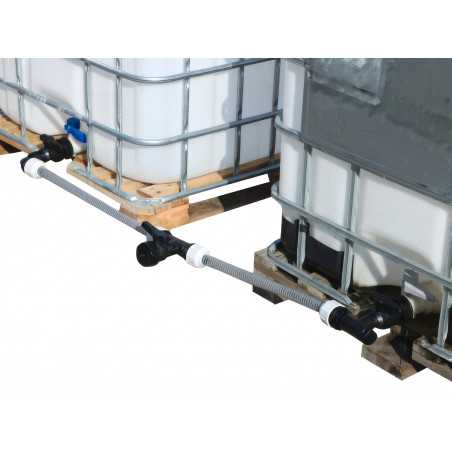
The two kits to put two IBC tanks in series, under a single reference. The lead kit and the extension kit, that is three valves, two tees and two plugs.
The two kits are not interchangeable : the lead tank calls for one with two valves, the next one for one with a single valve.
Already ready for a third tank, which will call for nothing but one more 0101597. S60x6 bungs, link in 1 inch, Italian manufacture.
 Safety guarantees100% secure payment
 Shipping PolicyResponsive and attentive after-sales service
 Returns PolicyFast and secure delivery
Linking two 1,000 litre IBC tanks means giving yourself 2,000 litres on a single draw-off point. They still have to be connected properly. This pack brings together the two Bucchi kits needed for that : the one for the lead tank and the one for the next tank. Everything is there, and nothing is duplicated.
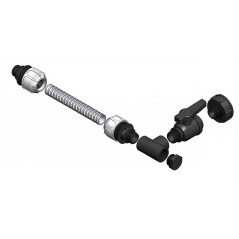
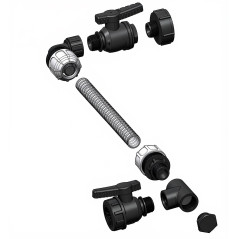
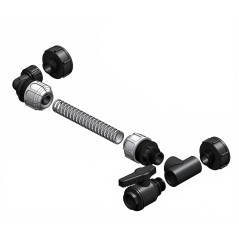
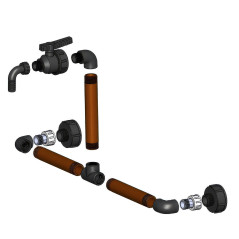
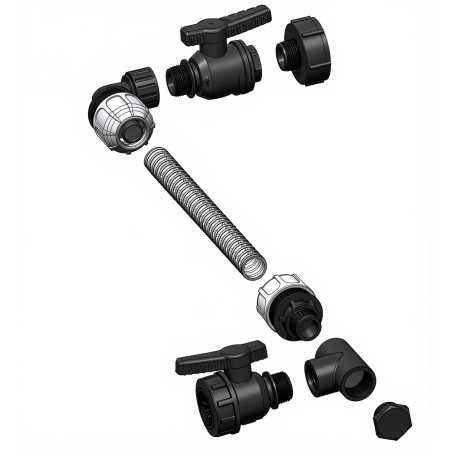
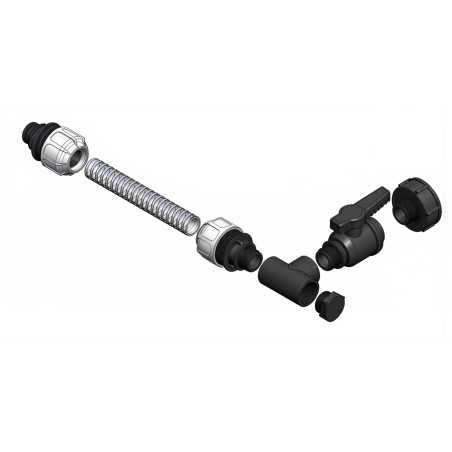
The 0101596 equips the lead tank, the 0101597 the second. Together they bring two S60x6 to 1 inch adapters with flat gaskets, two spiral hoses of 600 mm, four compression fittings, two tees, two plugs and three ball valves.
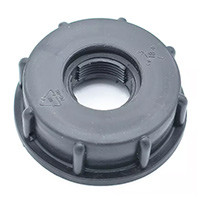
The adapters screw onto the S60x6 bung of each tank, that 2 inch pitch carried by the great majority of 1,000 litre tanks, new as much as reconditioned. It is the thread of our taps and our IBC tank fittings.
It is the exact combination the manufacturer provides for two tanks : one lead kit, then one kit per following tank. Nothing to take away, nothing to make up, and no spare part that would end up at the back of a drawer.
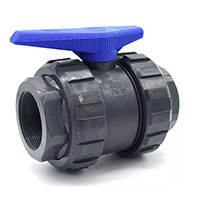
The lead tank carries both the draw-off outlet and the link towards its neighbour, which earns it two valves. The second tank only has to be able to isolate itself, and one valve is enough for that.
So the two kits are not interchangeable, and that is the confusion this pack avoids : ordering the same one twice would leave one valve too many on one side, and one valve missing on the other.
In use, that third valve counts for more than it seems. It is what lets you close the link between the two tanks without closing the outlet tap, so you can empty, move or clean one tank while the other feeds your watering.
Start with the adapters. You unscrew the original cap of each bung, you present the adapter with its flat gasket, and you tighten by hand : the seal is made on the gasket and not on the thread, so there is no point forcing it.
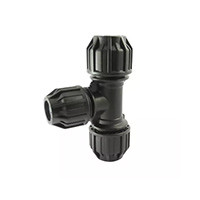
Then comes the tee, which screws onto the adapter. It is what opens three ways : one towards the tank, one towards the link hose, a third that the plug closes as long as it is not in use.
The spiral hose goes on last, onto its compression fittings. You slide it in, you screw the ring by hand, and it is held. No clamp, no tape, no wrench : dismantling will be just as quick on the day you move a tank.
Reckon on a short half hour for the whole thing, provided you have brought the level of both tanks down below that of the bungs. That is the only real piece of method advice : working on full tanks always ends in a puddle.
One detail that pays off in use : the link is a spiral hose, not a rigid tube. Two pallets are never perfectly aligned ; the hose absorbs that offset and lies as it comes, where a rigid tube has to be measured and then cut to the right length.
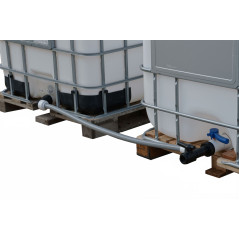
Once the link is open, the two tanks communicate at the bottom and settle at the same level. You draw from a single outlet, and the 2,000 litres empty evenly instead of your having to change tank halfway through.
This is the assembly you find in rainwater harvesting, where a single downpipe feeds several tanks, and in irrigation, where you are after reserve rather than flow rate. It also holds for buffer storage in a workshop or on a site.
Moving up to a third tank will call for nothing but one more 0101597 kit : each of the two kits already brings its tee closed off by a plug, so the branch exists and is waiting. Nothing to undo of what you will have fitted.
Each kit brings 600 mm of hose, and the two meet at the central tee : the link therefore measures 1,200 mm from one bung to the other, the same reach as a hose in one piece. The valve is at the centre, and it comes out in 1 inch : that is the diameter your pipe connects to.
Set the two tanks at the same height. Linked at the bottom, they work as communicating vessels : a difference in level between the pallets would make the higher one drain into the lower as soon as the link is opened.
Finally, check that both your tanks do carry an S60x6 bung — it is the most widespread pitch on 1,000 litre containers, but there are others. The gaskets of these kits are moreover intended for water.
Before ordering, a one-minute check saves a return. These kits screw onto the S60x6 thread, known as the "artillery pitch", which fits the great majority of 1,000 litre tanks sold in France — but not all of them.

Two marks are enough to recognise it, and they are measured on your tank outlet with the cap removed :
| D1 — outer diameter of the thread | 60 mm |
| P1 — pitch, from one thread to the next | 6 mm |
A pitch of 6 mm gives wide threads, few in number, visible to the naked eye : that is the simplest sign. If your tank ends differently — cam lock, DIN thread, gas pitch — the kit will not screw straight onto it : an adapter has to be fitted in between, and we stock them.
Identify your thread with our matching tool : you enter what you measure, it tells you which part to fit in between.
| Details | Specifications |
| Reference | PACKIBC2CUVES |
| Composition | 0101596, lead kit, and 0101597, extension kit |
| Brand | Bucchi |
| Intended for | Two 1,000 litre IBC tanks |
| Adapters | Two, S60x6 to 1 inch, with flat gaskets |
| Hoses | Two, spiral, 25 mm inner Ø, 600 mm each |
| Fittings | Four BDFast® compression fittings |
| Valves | Three ball valves |
| Tees and plugs | Two of each |
| Extendable | Yes, by one 0101597 kit per tank added |
| Net weight | About 2 kg |
| Manufacture | Italy |
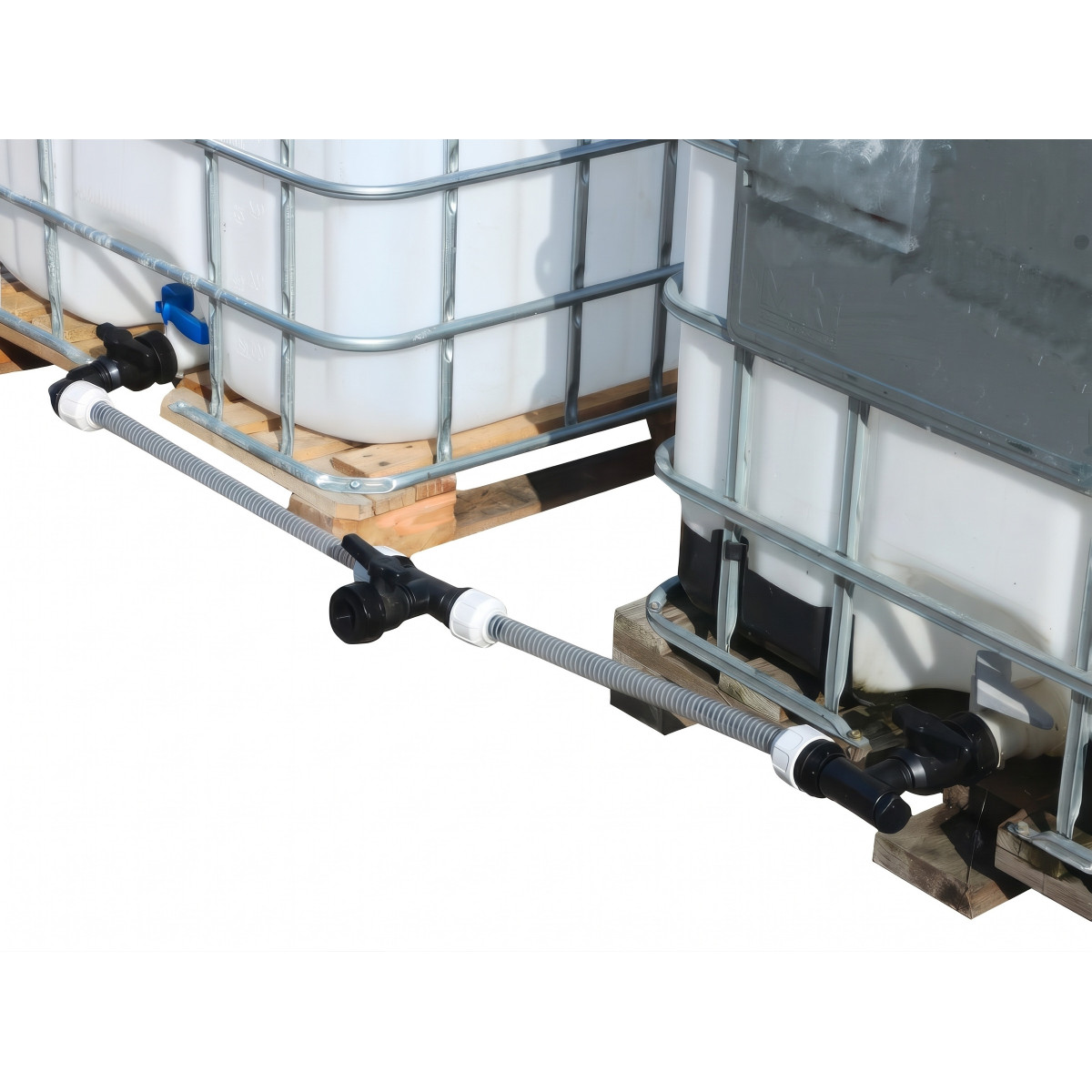
The two kits to put two IBC tanks in series, under a single reference. The lead kit and the extension kit, that is three valves, two tees and two plugs.
The two kits are not interchangeable : the lead tank calls for one with two valves, the next one for one with a single valve.
Already ready for a third tank, which will call for nothing but one more 0101597. S60x6 bungs, link in 1 inch, Italian manufacture.