Accessoires IBC 1000 litres
 Couvertures Chauffantes
 Raccords Plomberie
 Bidons / Futs et raccords

 Semences
 Produits Phyto

 Jardin

 Espaces Verts


 Barbecue - Braséro - Cheminée
 Entretien
 Fluides & Climatisation
 Arrosage
Bacillus thuringiensis: the biological solution to protect your vegetable garden from caterpillars
In 2026, biological crop protection takes on a crucial dimension in the face of environmental challenges. Bacillus thuringiensis positions itself as the essential ally for gardeners concerned with combining efficiency and ecosystem respect. This natural bacterium revolutionizes the fight against destructive caterpillars and larvae, offering a credible alternative to conventional chemical treatments.
🦠 WHAT IS BACILLUS THURINGIENSIS?
Bacillus thuringiensis (BT) is a spore-forming bacterium naturally present in soils worldwide. Discovered at the beginning of the 20th century, this bacterium produces specific toxins that exclusively target lepidopteran larvae, without affecting other insects, mammals, or aquatic organisms.
The action mechanism of BT relies on the production of protein crystals called delta-endotoxins. When caterpillars ingest these spores while feeding on treated leaves, the toxins are released in their alkaline digestive system, causing paralysis of the digestive tract and immediate cessation of feeding.
This biological specificity makes Bacillus thuringiensis a particularly appreciated insect control tool in organic farming, where it benefits from complete approval for all types of food crops.
🎯 TARGETS AND EFFECTIVENESS IN THE VEGETABLE GARDEN
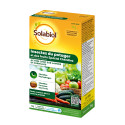
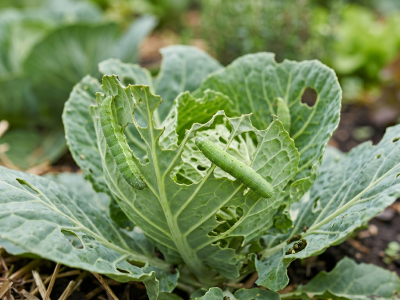
Solabiol treatment based on Bacillus thuringiensis demonstrates remarkable effectiveness against a wide spectrum of lepidopteran pests. Cabbage white butterfly constitutes one of the main targets, as these white and green caterpillars can destroy a brassica harvest in just a few days.
Pine processionary caterpillars also represent a privileged target, particularly problematic in gardens where ornamental trees and vegetable gardens coexist. BT allows treating these pests without risking poisoning domestic animals or surrounding wildlife.
Bacillus thuringiensis only attacks butterfly larvae, completely preserving beneficial insects such as ladybugs, lacewings, and parasitoids essential to garden balance.
Approved for organic farming, this treatment respects the strictest specifications and allows maintaining organic certification for vegetable productions.
No toxicity for mammals, birds, fish, or bees. Natural biodegradability prevents any accumulation in soils or groundwater.
🌿 PRACTICAL APPLICATION GUIDE
Application of Bacillus thuringiensis treatment requires adherence to precise protocols to optimize its effectiveness. Intervention timing proves crucial: treat as soon as the first larvae appear, before they reach their third stage of development.
Solabiol's water-soluble formulation considerably simplifies spray mixture preparation. Pre-dosed sachets dissolve directly in the sprayer water, eliminating risks of under or over-dosing. This technical innovation ensures homogeneous distribution of spores across the entire treated vegetation.
⚡ ACTION MECHANISM AND SPEED
Bacillus thuringiensis effectiveness manifests through immediate cessation of caterpillar feeding within hours following ingestion. Unlike contact insecticides, this biological action requires larvae to consume the spores, hence the importance of preventive application or at the very beginning of infestation.
Delta-endotoxins released in the caterpillars' intestines cause pore formation in the intestinal membrane, leading to fatal septicemia within 24 to 72 hours. This delayed death explains why caterpillars may still be visible several days after treatment, although they have stopped feeding.
Action persistence varies between 7 and 15 days depending on climatic conditions. Spores resist heat well but degrade under UV rays, justifying evening applications to maximize treatment persistence.
🏡 INTEGRATION IN INTEGRATED PROTECTION
Bacillus thuringiensis integrates perfectly into an integrated crop protection strategy. This approach combines several control methods to reduce pesticide dependence while maintaining agronomic effectiveness.
Association with pheromone traps allows early detection of adult flights and anticipation of egg laying. This monitoring helps program BT treatments at the optimal moment, just after egg hatching.
Preventive gardening techniques effectively complement Bacillus thuringiensis action. Crop rotation, elimination of infected plant residues, and encouragement of functional biodiversity create an environment unfavorable to pests.
Expert advice: To maximize treatment effectiveness, regularly monitor your crops and note the first signs of infestation. Early treatment with Bacillus thuringiensis is always more effective than late intervention on developed larvae. Don't hesitate to combine this biological approach with other phytopharmaceutical products authorized in organic farming for optimal protection of your vegetable garden.
📊 ECONOMIC AND ECOLOGICAL ADVANTAGES
Adoption of Bacillus thuringiensis generates sustainable economic benefits for gardeners and market gardeners. Reduction in crop losses largely compensates for the initial treatment cost, particularly on high-value crops such as leafy vegetables or fruits.
The absence of pre-harvest interval constitutes a major advantage over conventional insecticides. This characteristic allows treating leafy vegetables even close to harvest, without risk of residues on consumed products.
From an ecological perspective, BT preserves natural balances by respecting auxiliary fauna. This selectivity favors the maintenance of natural predator populations, creating a lasting regulatory effect on all garden pests. Professionals of anti-insect and mite solutions recommend this approach to establish stable biological balance.
🌱 Bacillus thuringiensis dosage calculator
Determine the exact amount of product needed for your treatment
Share this content