Accessoires IBC 1000 litres
 Couvertures Chauffantes
 Raccords Plomberie
 Bidons / Futs et raccords
 Semences
 Produits Phyto

 Jardin
 Espaces Verts

 Barbecue - Braséro - Cheminée
 Entretien
 Fluides & Climatisation
 Arrosage
Complete Guide to Organic Aphid Control in Biological Agriculture: Eliminate Pests Naturally
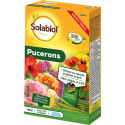
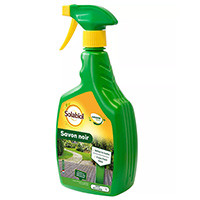
In 2026, organic agriculture has never been more accessible to gardeners concerned about preserving their environment. Faced with aphid infestations that can compromise your harvests in just a few days, there are now natural solutions of formidable effectiveness. Discover how the Solabiol anti-aphid treatment revolutionizes biological pest control with its rapid action while respecting the ecosystem.
🐛 UNDERSTANDING THE APHID THREAT IN THE GARDEN
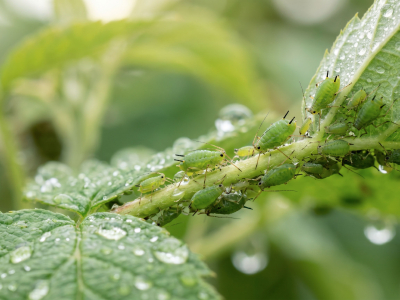
Aphids constitute one of the main threats to market garden and ornamental crops. These small sucking insects reproduce at lightning speed, capable of doubling their population in just a few hours under favorable conditions. They preferentially attack young shoots and tender leaves, causing deformations, general weakening of the plant and promoting the development of secondary diseases.
The damage caused goes far beyond simple sap extraction. Aphids secrete a sticky honeydew that attracts ants and promotes the appearance of sooty mold, a black fungus that obstructs leaf stomata. This cascade of problems can quickly compromise photosynthesis and the vigor of your plants, hence the importance of rapid and effective intervention.
In organic agriculture, the approach differs radically from conventional methods. Rather than blindly eliminating all insects, the objective is to restore natural balance by specifically targeting pests while preserving beneficial auxiliaries such as ladybugs, lacewings or hoverflies.
🌱 THE ADVANTAGES OF ORGANIC AGRICULTURE AGAINST APHIDS
Biological treatments respect the garden ecosystem by avoiding massive destruction of beneficial insects. This approach promotes the development of a balanced food chain where natural predators spontaneously regulate pest populations.
The absence of chemical residues in treated fruits and vegetables allows immediate consumption after harvest. This guarantee is particularly important for short-cycle crops such as radishes, spinach or herbs.
Modern formulations based on essential oils act from the first hours of application. This immediate effectiveness makes it possible to quickly stop an emerging infestation before it becomes critical.
🍊 THE ORANGE ESSENTIAL OIL REVOLUTION
The major innovation in the field of biological pest control lies in the use of citrus essential oils, particularly orange. This natural substance has exceptional insecticidal properties thanks to its limonene content, a terpene that acts on the nervous system of aphids by causing their paralysis then death.
The advantage of this approach lies in its selectivity of action. Unlike synthetic insecticides that indiscriminately affect all arthropods, orange essential oil primarily targets soft-bodied insects such as aphids and scale insects, while largely sparing insects with hard cuticles such as adult ladybugs.
Speed of action constitutes another major asset. The first visible effects appear as early as 2 to 3 hours after spraying, allowing immediate evaluation of treatment effectiveness. This reactivity is crucial during massive infestations where every hour counts to limit damage.
🎯 INSTRUCTIONS FOR USE AND APPLICATION TECHNIQUES
The effectiveness of a biological treatment largely depends on the quality of its application. To optimize the action of your anti-aphid treatment, several parameters must be precisely mastered.
The recommended dosage varies according to the intensity of the infestation. In prevention or during light attacks, a 1% dilution is generally sufficient. For established infestations, a concentration of 1.5 to 2% is necessary. Respecting these dosages guarantees optimal effectiveness while minimizing impact on auxiliary fauna.
🌿 SPECIFIC USE CASES IN THE VEGETABLE GARDEN
In the vegetable garden, each crop presents particular sensitivities to aphid attacks. Leafy vegetables such as spinach, lettuce and cabbage constitute preferred targets, particularly during active growth periods in spring. Preventive application from the appearance of the first colonies helps prevent their exponential proliferation.
Aromatic plants deserve special attention. Basil, very sensitive to green aphids, benefits greatly from early treatment that preserves the taste quality of its leaves. Mint, although more resistant, can also be affected by black aphids, particularly in greenhouse cultivation.
For solanaceae crops such as tomatoes, eggplants and peppers, intervention must be particularly early because aphids promote the transmission of devastating viruses. A regular treatment program from transplanting constitutes insurance against these often irreversible viral diseases.
🌸 PROTECTION OF ORNAMENTAL PLANTS
Roses probably represent the ornamental plants most exposed to aphid attacks. These colonize preferentially young shoots and flower buds, compromising flowering and weakening the shrub. Biological intervention helps preserve garden aesthetics while respecting pollinators that frequent roses.
Perennial beds are not spared, particularly species with tender foliage such as hostas or astilbes. The discretion of biological treatment allows intervention without altering the natural appearance of these plantings, unlike chemical treatments which sometimes leave whitish traces on foliage.
Multitanks expert advice: To maximize the effectiveness of your anti-aphid treatment, combine it with complementary methods such as installing yellow chromatic traps and introducing repellent plants such as nasturtium or marigold. This integrated approach considerably reinforces the preventive effect and reduces the need for curative interventions.
Adopting a biological pest control strategy against aphids is part of a sustainable approach that benefits your entire garden. By choosing phytopharmaceutical products that respect the environment, you actively participate in biodiversity preservation while guaranteeing the health of your crops. Explore our complete range of insect control solutions to discover other biological alternatives adapted to your specific needs in ecological gardening.
🧮 Anti-aphid dosage calculator
Determine the optimal dosage for your treatment area
Share this content