



 IBC 1000 L accessories
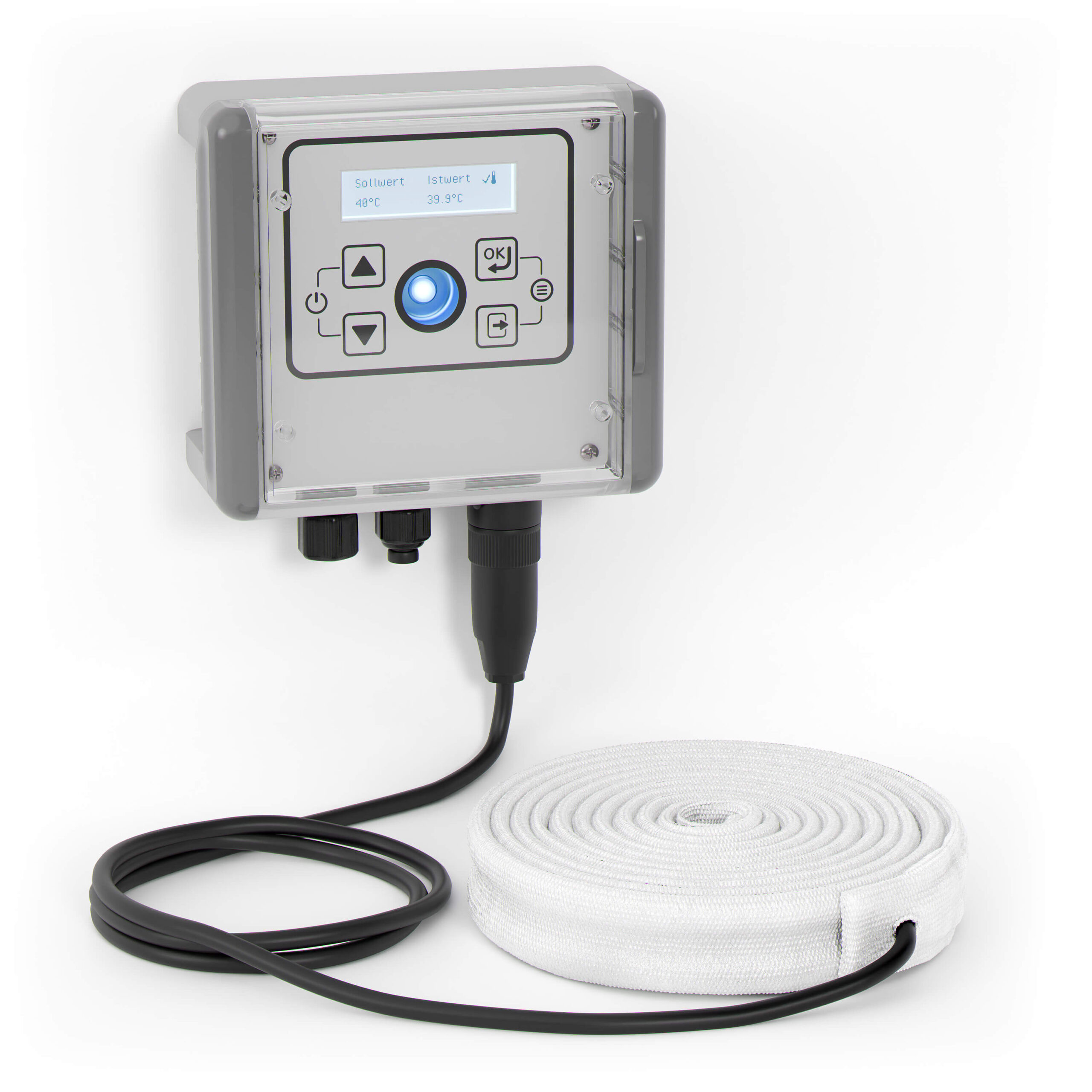
 Heating jackets
 Fittings
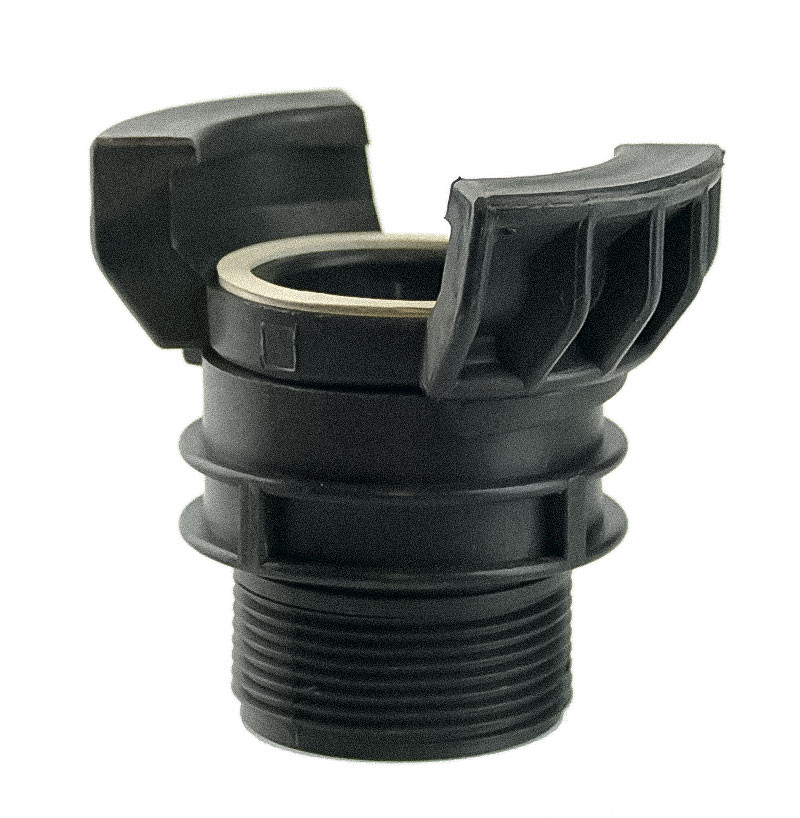
 Drums, jerrycans & fittings
 Seeds
Seeds 
 Plant protection & biocides

 Garden
 Green spaces & municipal
 Barbecue, fire pit & fireplace
 Cleaning & care
 Refrigerants & air conditioning
 Watering
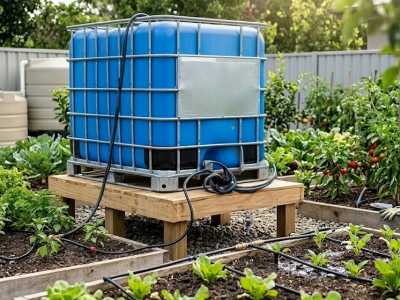
Drip Irrigation on 1000L IBC Tank: Step-by-Step Assembly
When summer heat intensifies and water restrictions multiply, optimizing every drop becomes essential in the vegetable garden. Drip irrigation fed by a 1000-liter IBC tank represents the ideal solution to combine autonomy, water economy and efficiency. This precise irrigation method delivers water directly to the base of plants, eliminating losses through evaporation and runoff that characterize traditional watering.
Our tool finds the fitting that goes with it — IBC tank, plumbing, garden — in 3 clicks, with live prices and stock.
🌱 WHY IS DRIP IRRIGATION SO EFFECTIVE IN SUMMER?
Drip irrigation stands out for its remarkable efficiency during periods of intense heat. Unlike sprinkler systems that lose a significant portion of water through immediate evaporation, this technique deposits water slowly and directly in the root zone. This precise approach saves up to 40% water compared to traditional hose watering.
Rainwater stored in an IBC tank is perfectly suited to this type of irrigation. Its ambient temperature avoids thermal shock to the roots, while its natural composition, free of chlorine, promotes soil microbial life. The 1000-liter IBC tank offers optimal storage capacity to feed a family vegetable garden for one to two weeks depending on weather conditions.
The regularity of water supply that drip irrigation allows also limits water stress in plants. Tomatoes, zucchini and other summer vegetables thus develop a deeper and more resistant root system, naturally improving their drought tolerance.
⚡ THE CRUCIAL QUESTION OF PRESSURE
Many hesitate to install a drip irrigation system for fear of insufficient pressure. This apprehension is based on a fundamental misunderstanding: unlike sprinklers or water jets, drip irrigation works perfectly at very low pressure. An IBC tank simply elevated by one meter generates a gravity pressure of 0.1 bar, largely sufficient to feed suitable drippers.
The secret lies in the choice of drippers. Self-regulating models, designed to maintain a constant flow rate regardless of pressure variations, generally require a minimum pressure of 0.5 to 1 bar. For gravity operation, it is advisable to favor non-self-regulating drippers or those specifically designed for low pressure, which deliver a flow proportional to the available pressure.
If the installation must cover a large area or requires stable pressure, adding a small pump with pressure reducer proves wise. Drippers generally do not tolerate pressures above 1.5 bar well, hence the importance of the reducer to preserve system integrity.
🔧 FILTRATION: A VITAL ELEMENT
Rainwater stored in a tank, even covered, inevitably accumulates impurities. Atmospheric dust, plant debris, roofing particles and microscopic algae development constitute as many elements likely to clog dripper orifices, whose diameter generally does not exceed a few millimeters.
An adapted filtration system at the tank outlet is therefore not optional but absolutely essential. Screen filters, with their mesh of 120 to 200 microns, effectively intercept the coarsest particles. For optimal protection, disc filters offer superior filtration fineness and simplified cleaning capacity.
The location of the filter is of paramount importance. Installed immediately after the tank outlet and before any other system element, it protects the entire installation. A clogged filter significantly reduces flow and can compromise irrigation efficiency, hence the need for regular cleaning.
🔨 STEP-BY-STEP ASSEMBLY
Installing a drip irrigation system on an IBC tank follows a precise logic that guarantees its proper functioning. Each step naturally follows to create a coherent and efficient ensemble.
This sequence respects fundamental hydraulic principles and ensures homogeneous water distribution throughout the network. Using quality fittings guarantees system tightness and facilitates maintenance operations.
The layout of drip irrigation lines must take into account the natural spacing of plants and their specific water needs. Large-development vegetables like squash require several watering points, while row crops like radishes are satisfied with a single dripper line.
⏰ AUTOMATION FOR AUTONOMY
Automation transforms a manual drip irrigation system into a true tool for summer autonomy. An irrigation timer installed at the network head allows defining watering schedules adapted to crop needs and climatic conditions. This automation proves particularly valuable during periods of absence or summer vacations.
The choice of timer must take into account system specificities. Some models require a minimum operating pressure that may prove incompatible with a gravity system. It is advisable to favor timers specifically designed for low pressure or gravity systems, which often integrate adapted mechanisms.
Optimal programming varies according to season and weather conditions. In full summer, two daily sessions of 30 to 45 minutes, early morning and late afternoon, maximize irrigation efficiency while limiting evaporation losses. This distribution also helps optimize the use of available water reserves.
Drip irrigation reduces water consumption by 30 to 50% compared to traditional methods. Each drop reaches roots directly without waste through evaporation or runoff.
A 1000-liter tank feeds a 50 to 100 m² vegetable garden for 7 to 15 days depending on climatic conditions, guaranteeing appreciable autonomy even during restriction periods.
Regular and measured water supply promotes deep root development and reduces water stress responsible for numerous physiological disorders in vegetables.
📏 SIZING AND PRACTICAL GUIDELINES
Sizing a drip irrigation system requires knowing some fundamental guidelines to adapt the installation to the real needs of the vegetable garden. A standard dripper delivers between 2 and 8 liters per hour depending on its calibration and available pressure. This variation allows adapting water supply to the specific requirements of each crop.
A 1000-liter IBC tank can theoretically feed between 50 and 100 plants depending on their size and water needs. In practice, during a heat wave week, daily consumption oscillates between 50 and 100 liters for a well-sized family vegetable garden. This estimate includes system losses and takes into account consumption peaks linked to high heat.
Autonomy duration depends directly on weather conditions and crop development stage. In moderate weather, a tank can ensure 10 to 15 days of irrigation, while during heat waves, this autonomy is reduced to 7 to 10 days. These variations underline the importance of regular monitoring of available water levels.
| Dripper type | Average flow | Advantages | Disadvantages |
|---|---|---|---|
| Adjustable drippers | 0-8 L/h | Precise adaptation to needs | Manual adjustment required |
| Porous tubing | 2-4 L/h/m | Quick installation, linear watering | Sensitive to clogging |
| Self-regulating drippers | 2-4 L/h constant | Stable flow, high precision | Minimum pressure required |
🧽 SUMMER MAINTENANCE AND WINTERIZATION
Maintenance of a drip irrigation system conditions its longevity and efficiency. During the intensive use season, weekly cleaning of the main filter prevents clogging risks and maintains optimal flow. This simple operation consists of dismantling the filter element and rinsing it under pressure to eliminate accumulated deposits.
Monitoring individual drippers allows early detection of malfunctions. A blocked dripper manifests by total absence of flow, while a defective dripper produces irregular or excessive flow. Cleaning is generally performed by dismantling and soaking in a mild descaling solution.
Winterization is of paramount importance to preserve the installation from freeze damage. Complete drainage of pipes is performed by opening all end caps and letting water evacuate naturally. This operation, carried out before the first frosts, avoids the expansion of frozen water that could irreversibly damage system components.
Multitanks Expert Advice
At the beginning of the season, perform a complete flushing of lines by temporarily removing end caps. This operation eliminates deposits accumulated during winterization and verifies proper functioning of the entire network. Take advantage of this step to check the condition of fittings and replace defective elements before the start of intensive irrigation season.
💧 Drip irrigation autonomy calculator
Estimate your consumption and autonomy of your 1000L tank
Share this content