IBC 1000 L accessories



 Heating jackets

 Fittings


 Drums, jerrycans & fittings


 Seeds

 Plant protection & biocides

 Garden


 Green spaces & municipal

 Barbecue, fire pit & fireplace
 Cleaning & care
 Refrigerants & air conditioning


 Watering


World's Fastest Online Shopping Destination

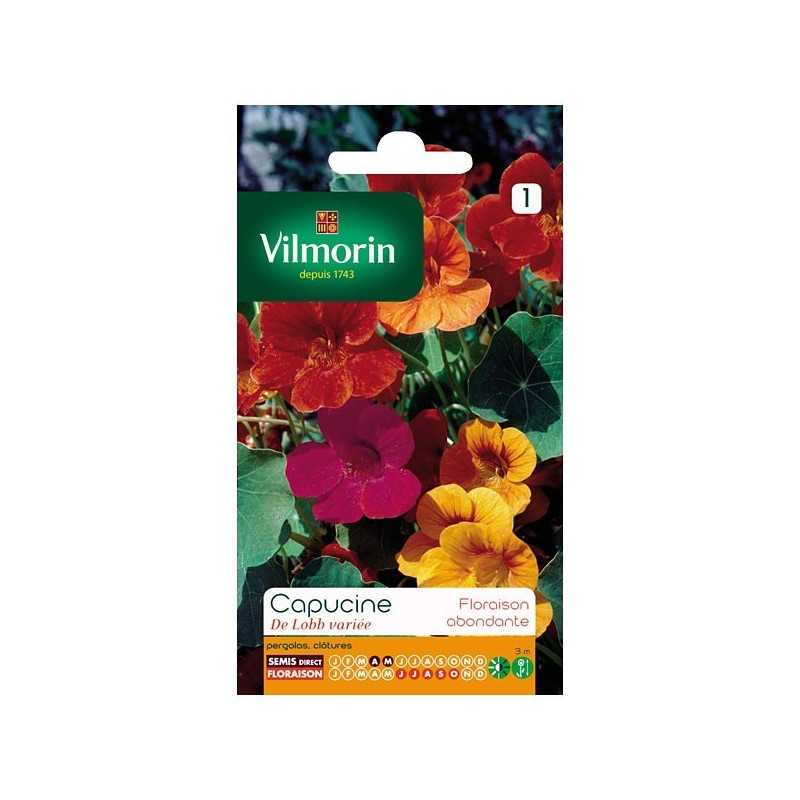
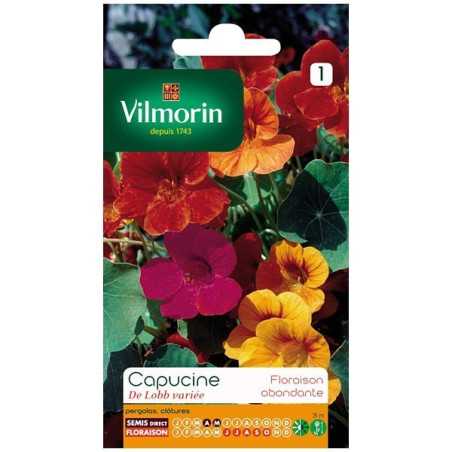
The Climbing Nasturtium DE LOBB Mixed Vilmorin is an exceptional climbing variety producing an abundant display in bright colours from yellow through to red. Reaching 3 metres in height, it stands out for its dense foliage, which naturally keeps weeds down.
Ideal for covering pergolas and trellises, or as ground cover, this nasturtium copes with poor soils and tolerates coastal climates. A versatile decorative solution for eco-minded gardens and colourful outdoor spaces.
 Safety guarantees100% secure payment
 Shipping PolicyResponsive and attentive after-sales service
 Returns PolicyFast and secure delivery
Climbing Nasturtium DE LOBB Mixed Seed Packet Vilmorin (Reference: 5185441) represents horticultural excellence for creating spectacular flower beds and lasting planting schemes. This prestigious climbing variety, selected by Vilmorin, the benchmark seed brand since 1743, guarantees a generous display and vigorous growth. Certified for its germinating quality and varietal purity, it is a favoured choice for demanding gardeners, whether dedicated amateurs or landscape professionals.
Climbing Nasturtium DE LOBB Mixed excels in many decorative applications thanks to its rapid growth reaching 3 metres in height. For vertical gardens, it dresses pergolas, trellises, fences and arbours in a brilliant curtain of flowers. As natural ground cover, it forms a dense carpet in shimmering colours, ideal for banks, rockeries or areas that are hard to reach.
Eco-minded gardeners particularly value its natural weed-suppressing action: its dense foliage smothers weeds effectively, cutting down on hand weeding. For coastal settings, its tolerance of salt spray makes it a favoured solution for seaside gardens. Balconies and terraces also benefit from how well it adapts to tubs and window boxes, creating spectacular cascades of flowers.
This variety stands out for its exceptional colour range, from luminous yellow to intense red, taking in bright orange and coppery tones. Its abundant, spread-out flowering runs from June until the first frosts, giving a long-lasting colourful display. The flowers, 4 to 6 cm across, show the spurred shape characteristic of nasturtiums, with delicately crumpled petals.
The orbicular foliage, 8 to 12 cm across, has a unique texture, at once decorative and functional. Its naturally water-repellent surface helps water run off and reduces the risk of fungal disease. Its twining growth lets the plant wind itself naturally around supports, creating dense green structures with no training needed. This nasturtium adapts remarkably well to poor and chalky soils, a rare trait that makes it valuable for difficult ground where other species struggle to establish.
Direct sowing in place is best done from April to June, once the risk of frost has passed and the soil temperature reaches 15°C. Make stations of 3-4 seeds, 30 to 40 cm apart, at a depth of 2 cm. Germination takes 7 to 14 days depending on the weather. To speed up the process, soaking the seed for 24 hours beforehand considerably improves both the rate and the speed of germination.
Putting up suitable supports should come before sowing: trellis with a 10-15 cm mesh, horizontal wires 20 cm apart, or bamboo structures. For use as ground cover no support is needed; the plant spreads naturally over 1 to 2 metres across. Minimal upkeep comes down to moderate watering in dry weather and regular removal of faded flowers to extend the display. No fertiliser is recommended, as it would favour leaf growth at the expense of flowering.
To maximise the visual impact, pair Climbing Nasturtium DE LOBB Mixed with complementary colours: blue or purple morning glories, black-eyed Susan vine, or runner beans with red flowers. This combination creates multicoloured living walls of striking effect. As ground cover, mix it with spring bulbs (tulips, daffodils), which will flower before the nasturtiums take over, ensuring an ideal succession of blooms.
Permaculture gardeners make use of its natural repellent properties against aphids, whitefly and flea beetles. Planted at the foot of tomatoes, squashes or roses, it acts as a protective companion plant. Its edible flowers, with their peppery taste, brighten up salads and fine dishes. In windy regions, put up light windbreaks to protect the young plants. In a Mediterranean climate, go for an east- or west-facing position to avoid the fierce midday heat. Saving seed at the end of the season lets you carry the variety on: pick the achenes as they turn brown and keep them dry for your next sowings.
| Details | Specifications |
|---|---|
| Scientific name | Tropaeolum majus var. DE LOBB |
| Growth habit | Annual twining climber |
| Maximum height | 3 metres |
| Spread on the ground | 1 to 2 metres |
| Sowing period | April to June |
| Flowering period | June until the frosts |
| Flower colours | Yellow, orange, red, copper |
| Flower diameter | 4 to 6 cm |
| Soil type | Poor, free-draining, chalk tolerated |
| Aspect | Sun to partial shade |
| Climate resistance | Coastal climates, moderate winds |
| Planting distance | 30 to 40 cm |
Specific references

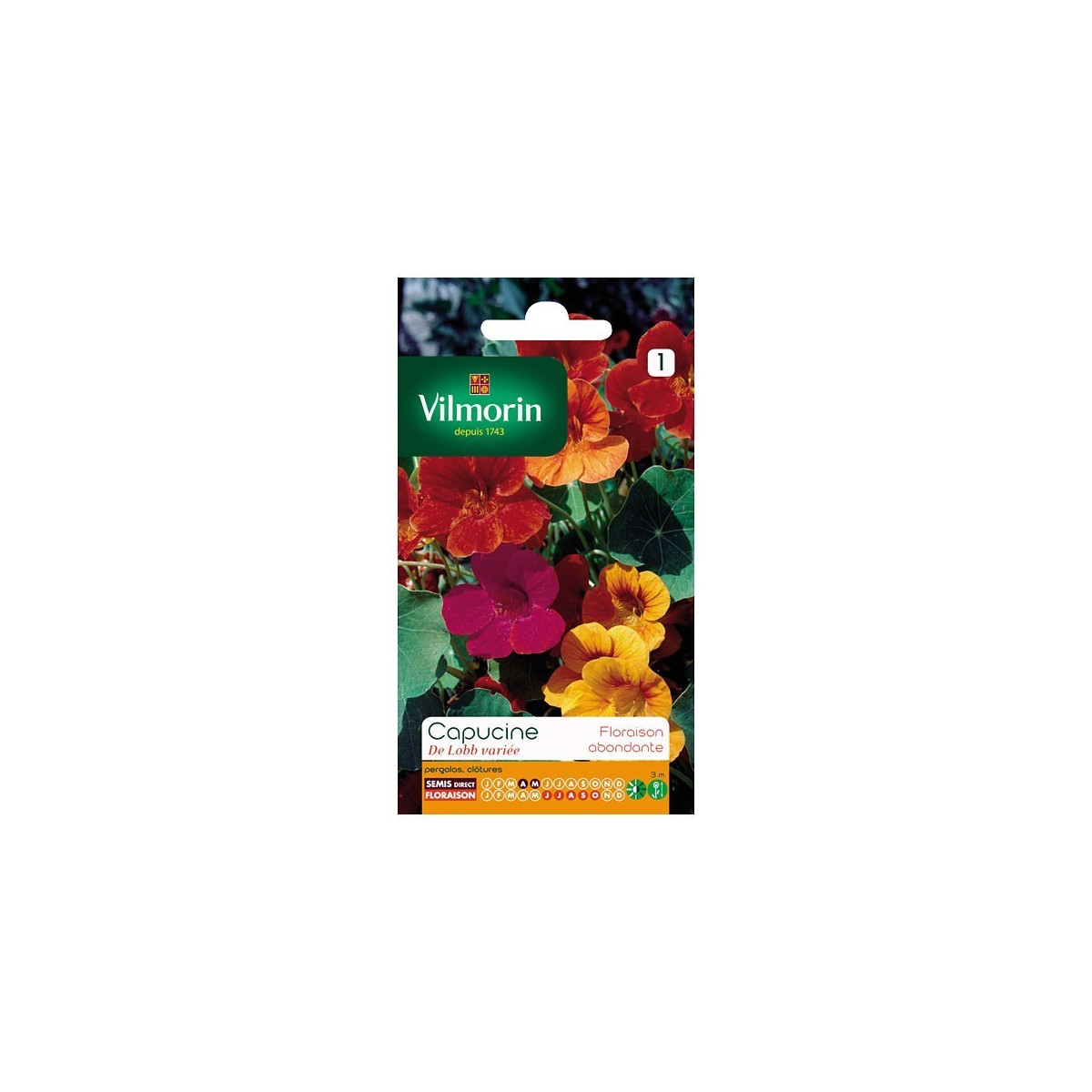
The Climbing Nasturtium DE LOBB Mixed Vilmorin is an exceptional climbing variety producing an abundant display in bright colours from yellow through to red. Reaching 3 metres in height, it stands out for its dense foliage, which naturally keeps weeds down.
Ideal for covering pergolas and trellises, or as ground cover, this nasturtium copes with poor soils and tolerates coastal climates. A versatile decorative solution for eco-minded gardens and colourful outdoor spaces.