IBC 1000 L accessories


 Heating jackets

 Fittings

 Drums, jerrycans & fittings


 Seeds
 Plant protection & biocides

 Garden
 Green spaces & municipal

 Barbecue, fire pit & fireplace
 Cleaning & care
 Refrigerants & air conditioning

 Watering


World's Fastest Online Shopping Destination

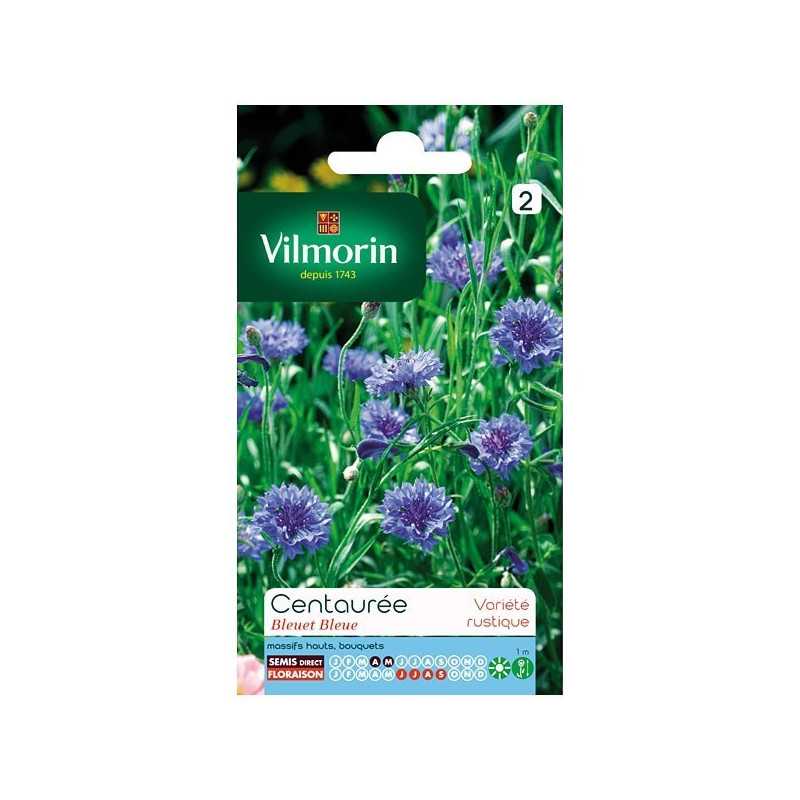
The Vilmorin Blue Cornflower seed packet lets you easily grow this magnificent meadow flower with its double petals of an intense blue. Reaching 1 metre in height, this hardy and undemanding variety will turn your garden into a real butterfly magnet.
Ideal for natural gardens, colourful beds and making country bouquets, this field cornflower adapts to all soil types and flowers generously all summer long.
 Safety guarantees100% secure payment
 Shipping PolicyResponsive and attentive after-sales service
 Returns PolicyFast and secure delivery
Blue Cornflower Seeds Packet Vilmorin (Reference: 5208642) is one of the finest field cornflower varieties available to amateur and professional gardeners. This annual plant, a symbol of the French meadow flora, offers a spectacular flowering in intense blue tones that recall the old rural landscapes. Vilmorin, a reference brand since 1743, guarantees exceptional seed quality for this emblematic species of our countryside.
The blue cornflower is perfectly suited to beginner gardeners as well as to the most experienced, thanks to its hardy and undemanding nature. This variety, 1 metre tall, finds its place in many settings: perennial beds, wild gardens, flower meadows, borders and even container growing on terraces. The very blue double flowers create a striking contrast with green foliage and bring an authentic country note to any green space.
Landscape professionals appreciate this species for its remarkable adaptation to difficult conditions and its ability to attract beneficial wildlife. Butterflies and bees are irresistibly drawn by the abundant nectar these flowers produce, making this plant a real asset for garden biodiversity. It fits perfectly into ecological landscaping projects and therapeutic gardens.
This Centaurea cyanus variety stands out for its double flowers of exceptional colour intensity. Unlike single cornflowers, this selection offers flower heads densely packed with petals, creating a remarkable visual effect that lasts for several weeks. The plant develops a sturdy stem that can reach 1 metre in height, borne on a taproot system that gives it excellent drought resistance.
The main advantage of this cornflower lies in its universal adaptation to soils. Whether clay, sandy, chalky or even slightly acidic ground, this plant thrives without difficulty. It tolerates poor and mediocre soils, which makes it an ideal choice for difficult plots where other species struggle to establish. Its cold resistance down to -15°C allows autumn sowing in many French regions.
Sowing the blue cornflower is best done in spring, from March to May, directly in place after the last frosts. Sow in rows or broadcast, covering the seeds lightly with a thin layer of soil. The recommended spacing is 20 to 30 cm between plants to allow optimal development. Autumn sowing is also possible in regions with mild winters, giving an earlier flowering.
Maintaining this variety comes down to a few simple steps. Regular but moderate watering helps it establish, after which the plant becomes self-sufficient thanks to its drought tolerance. Removing the faded flowers regularly extends the flowering period and encourages new buds. No staking is needed despite the 1 metre height, as the stem is naturally sturdy and upright.
To create harmonious country beds, pair the blue cornflower with pink clarkias, white mallows and orange marigolds, as traditionally suggested. This palette of complementary colours creates a balanced, natural visual effect. Ornamental grasses such as quaking grass or foxtail barley reinforce the wild look of these compositions. For a more contemporary effect, combine the cornflowers with white cosmos, love-in-a-mist and Californian poppies.
Professionals also recommend pairing with herbs such as bronze fennel or dill, whose fine foliage contrasts with the cornflower's double flowers. This combination attracts a diverse wildlife while creating natural scenes of great visual richness. For country bouquets, cut the stems as the buds open, preferably in the morning once the dew has gone. This technique guarantees a better life in the vase and preserves the intensity of the blue.
An expert tip is to stagger the sowings every 3 weeks to extend the flowering period until the first frosts. This method gives a constant supply of fresh flowers for floral arrangements, or simply keeps the garden attractive over an extended period.
| Details | Specifications |
|---|---|
| Botanical name | Centaurea cyanus |
| Variety | Blue cornflower with double flowers |
| Mature height | 1 metre |
| Plant type | Hardy annual |
| Flower colour | Intense blue, double flowers |
| Sowing period | March to May (spring) |
| Flowering period | June to October |
| Exposure | Sun, partial shade tolerated |
| Soil type | All types, even poor |
| Cold resistance | Down to -15°C |
| Spacing | 20 to 30 cm between plants |
| Use | Beds, bouquets, wild garden |
Specific references
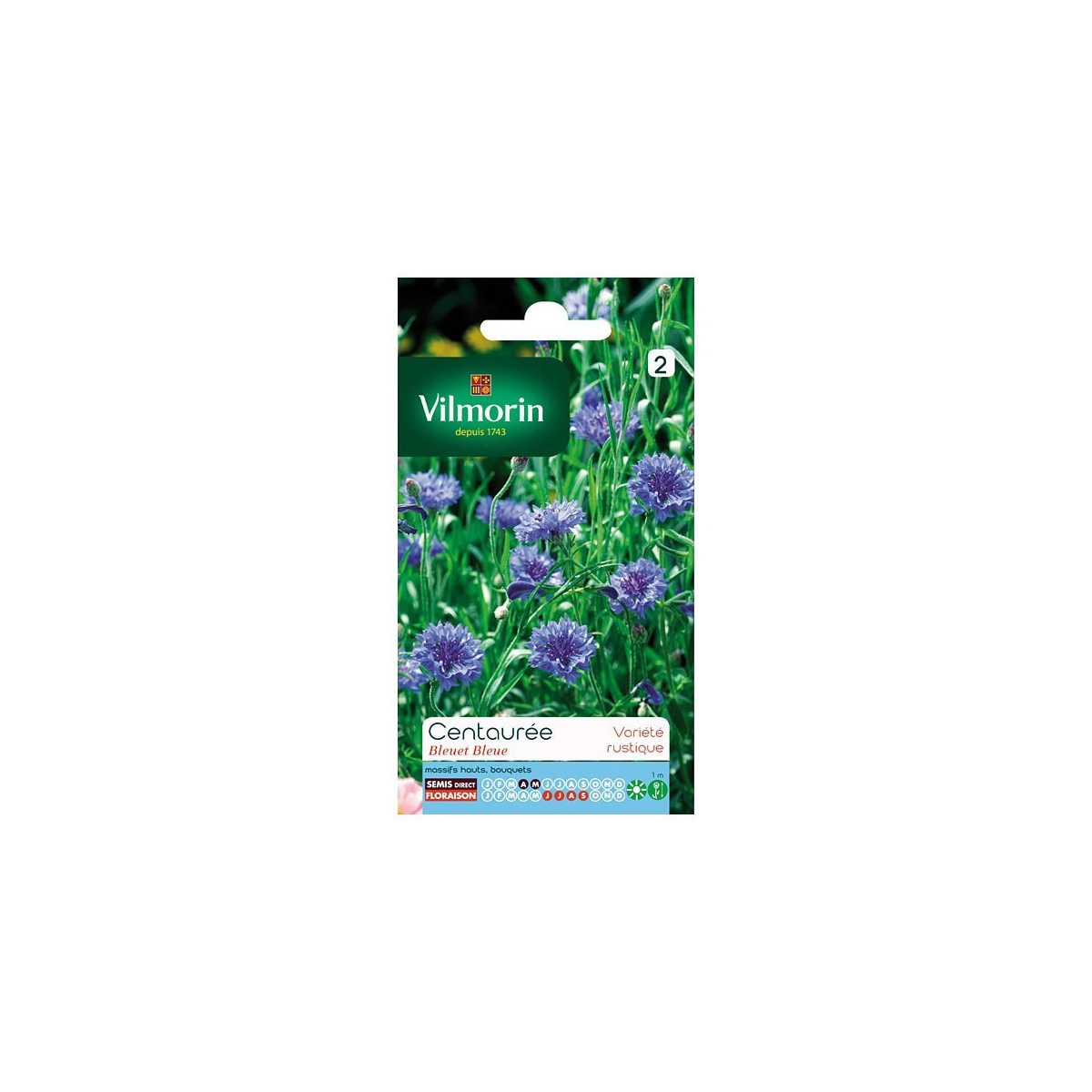
The Vilmorin Blue Cornflower seed packet lets you easily grow this magnificent meadow flower with its double petals of an intense blue. Reaching 1 metre in height, this hardy and undemanding variety will turn your garden into a real butterfly magnet.
Ideal for natural gardens, colourful beds and making country bouquets, this field cornflower adapts to all soil types and flowers generously all summer long.