IBC 1000 L accessories
 Heating jackets
 Fittings
 Drums, jerrycans & fittings
 Seeds
Seeds 

 Plant protection & biocides

 Garden


 Green spaces & municipal

 Barbecue, fire pit & fireplace
 Cleaning & care
 Refrigerants & air conditioning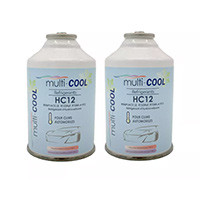
 Watering
1234yf AC Too Expensive? The Duracool 12a-yf Alternative
The bill arrives, and it comes as a shock: you just had the air conditioning recharged on your car bought after 2017, and the amount is nothing like what you used to pay. The reason comes down to a few letters: HFO-1234yf, the refrigerant that became mandatory on all new vehicles from 1 January 2017, and whose recharge cost is significantly higher than the old R134a. But a serious, technical and economical alternative exists: Duracool 12a-yf, a hydrocarbon refrigerant designed to replace 1234yf, provided a precise framework of use is followed. This article explains everything, with figures to back it up.
❄️ Why is 1234yf so expensive?
It all starts with the European MAC (Mobile Air Conditioning) directive, which has banned since 1 January 2017 the use of any refrigerant whose GWP (Global Warming Potential) exceeds 150 in new vehicles. R134a, which was then very widespread, has a GWP of 1430: it was therefore out of the running. HFO-1234yf, with a GWP of approximately 4, emerged as the ideal solution to meet this environmental requirement, and became the reference gas for all automotive manufacturers. The problem is that it is not free from intellectual property rights.
1234yf is indeed a patented fluid, whose production is essentially controlled by two chemical giants: Honeywell and Chemours. This near-monopoly situation, combined with the complexity of its chemical synthesis, leads to a structurally high price per kilogram. Unlike R134a, which was produced in large volumes with patents long expired, 1234yf remains a protected molecule. Workshops that carry out recharges logically pass on this supply cost to their rates, and the owner of a post-2017 car ends up paying significantly more than they would have on an older vehicle.
Added to this is the fact that 1234yf is subject to European F-Gas quotas, which regulate the placing on the market of fluorinated gases and contribute to keeping pressure on prices. In other words, even if the molecule is not downgraded from a regulatory standpoint, its commercial access remains constrained. For the owner of a recent vehicle, it is a double penalty: a technical obligation imposed by the manufacturer, and a refrigerant market with little competition.
❄️ Duracool 12a-yf: a serious hydrocarbon alternative
Duracool 12a-yf is a hydrocarbon refrigerant specially formulated to replace HFO-1234yf in automotive air conditioning circuits. It belongs to the large family of hydrocarbon refrigerants, like R290 (propane) or R600a (isobutane), which have been used for decades in industrial and commercial refrigeration systems for their excellent thermodynamic efficiency and very low climate impact. Its particular feature is that it is designed to operate under the pressure and temperature conditions of modern automotive air conditioning circuits, as a direct replacement for 1234yf.
The economic argument for Duracool 12a-yf rests on two simultaneous levers. On one hand, it is a non-patented fluid, not subject to F-Gas quotas, and therefore structurally less expensive to purchase. On the other hand, and this is where the real surprise lies: thanks to its superior refrigerating capacity, approximately twice less Duracool 12a-yf is needed than 1234yf to achieve the same cooling performance. The ratio is precisely 1 kg of Duracool equivalent to 2.08 kg of 1234yf. In practical terms, a 5.44 kg cylinder of Duracool 12a-yf offers a refrigerating capacity equivalent to 11.34 kg of HFO-1234yf. The saving therefore results as much from the reduction in quantity to be charged as from the price per kilo itself.
In terms of climate impact, Duracool 12a-yf is not a compromise: its GWP is approximately 3, compared to approximately 4 for 1234yf. We are therefore at virtually equivalent impact levels, both below the regulatory threshold of 150. Switching to Duracool 12a-yf means saving without sacrificing the environment. Its ODP (ozone depletion potential) is zero, making it a fluid perfectly aligned with current ecological requirements.
❄️ Comparison: 1234yf vs Duracool 12a-yf
To fully understand where the differences lie between the original fluid and the hydrocarbon alternative, here is a summary table covering the key criteria. The aim is not to present Duracool as a perfect fluid without constraints — but to lay out the facts clearly so that each user can make an informed decision.
| Criterion | HFO-1234yf (original) | Duracool 12a-yf (alternative) |
|---|---|---|
| Fluid type | Patented fluorinated gas (HFO) | Hydrocarbon (HC) |
| GWP (climate impact) | ≈ 4 | ≈ 3 |
| Recharge cost | High | Economical |
| Quantity to charge | Reference | ≈ 2 times less (ratio 1 kg ≈ 2.08 kg of 1234yf) |
| F-Gas quotas | Subject to | Not subject to |
| Oil flush | — | Not required (compatible with MO/AB/PAG/POE) |
| Safety class | A2L (mildly flammable) | A3 (flammable, precautions required) |
| Manufacturer approval | Yes (mandatory for new vehicles) | No |
This table calls for a few essential comments. The first striking element is the difference in safety class: 1234yf is classified A2L (mildly flammable), while Duracool 12a-yf is classified A3 (flammable). This does not make it dangerous under normal use, but it does require handling precautions which we will detail below. The second notable point is the absence of any required oil flush: Duracool's compatibility with the oils already present in the circuit (mineral, alkylbenzene, PAG or POE) considerably simplifies the transition.
❄️ Compatibility, performance and transition
One of the practical advantages of Duracool 12a-yf is its compatibility with all common refrigerant oils: mineral, alkylbenzene, PAG and POE. This means no prior oil flush is needed when switching to Duracool, which considerably simplifies the operation and reduces intervention costs. The only mandatory condition is that the circuit must be completely free of all fluorinated gas before proceeding with the charge: the recovery of any residual 1234yf must have been carried out beforehand by a certified professional.
In terms of performance, Duracool 12a-yf offers several measurable technical advantages. Its better thermodynamic efficiency results in a lower discharge temperature, which places less stress on the compressor and can contribute to a slight fuel saving. A compressor that is less thermally stressed also means potentially extended service life for the system. These gains are modest but real, and add to the main saving — that achieved on the fluid itself.
It is important to remain measured about the performance figures: Duracool 12a-yf offers cooling comfort comparable to 1234yf under normal operating conditions of a passenger vehicle. It is not a "magic" fluid that would spectacularly outperform the original, but it is a serious substitute, proven in many applications, and whose overall economy is very real thanks to the dual effect of quantity and price per kilo.
❄️ The two formats available at Multitanks
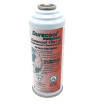
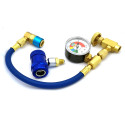
Duracool 12a-yf is available at Multitanks in two formats suited to different uses. For the individual who wishes to recharge their own circuit once it has been emptied of the original fluorinated gas, the individual can is the most accessible solution. It is used with a recharge hose with a 1/2 ACME thread, available in the refrigeration tools section of Multitanks. It is perfectly suited for occasional use on a single vehicle, when the circuit has been previously evacuated by a professional.
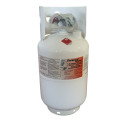
For workshops or regular users, the 5.44 kg cylinder (reference DC0012) represents the most economical option by volume. It is charged via a manifold with a suitable hose, by a professional. It is worth noting that 5.44 kg of Duracool 12a-yf is equivalent to 11.34 kg of HFO-1234yf: for a workshop that carries out several conversions per season, the cumulative saving is considerable. The cylinder quickly offsets its volumetric advantage over individual cans.
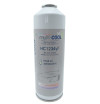
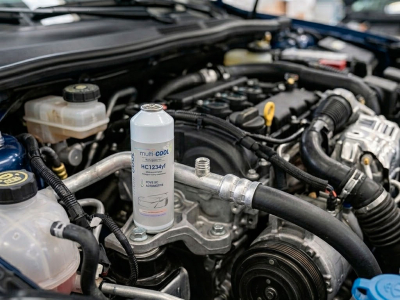
Multitanks also offers the Multicool HC1234yf 200 g can, with a 1/2 ACME thread, as another replacement option for 1234yf for those looking for an alternative solution in a compact format. These products are part of a coherent range of ecological refrigerants designed to meet the needs of professionals and informed consumers alike.
Ideal for the individual recharging their own vehicle once the circuit has been emptied of the original gas. Used with a recharge hose with a 1/2 ACME thread. An accessible solution, requiring no certification provided the circuit is free of all fluorinated gas.
Equivalent to 11.34 kg of HFO-1234yf thanks to the equivalence ratio. The reference option for workshops or regular users. Charged via a manifold by a professional, for maximum economy in use.
Hydrocarbon alternative in compact format, with a 1/2 ACME thread. Another option to replace 1234yf on an empty circuit, for those wishing to diversify their replacement solutions.
❄️ Safety, legality and limitations: what you need to know
Addressing Duracool 12a-yf honestly also means speaking clearly about its constraints. As a hydrocarbon, it is classified A3 (flammable) according to the ASHRAE standard. This does not mean it is dangerous in a normally operating vehicle — the quantities involved are small and the circuits are sealed — but it does require precautions during handling: working in a ventilated space, keeping away from any naked flame or source of sparks, wearing appropriate personal protective equipment (goggles, gloves). These precautions are standard in any serious workshop handling refrigerant fluids.
On the legal front, the situation is clear. Purchasing and using Duracool 12a-yf does not require certification, provided the circuit is completely free of all fluorinated gas. However, any operation on a circuit still charged with fluorinated gas — and in particular the recovery of the original 1234yf — falls exclusively within the remit of a professional holding a capacity certificate, in accordance with the decree of 4 July 2009. Best practice is therefore to have the circuit evacuated by a certified professional, then to carry out or entrust the Duracool recharge to a workshop of your choice.
Finally, one key point must be made transparently: Duracool 12a-yf does not have manufacturer approval. Its use therefore implies an informed decision on the part of the owner, who is voluntarily stepping outside the vehicle manufacturer's recommendations. For vehicles still under warranty, this deserves careful consideration. For vehicles no longer under warranty, this is a conversion that many users and workshops carry out in full knowledge of the facts, prioritising economy over manufacturer orthodoxy.
❄️ Who is Duracool 12a-yf relevant for?
Duracool 12a-yf is aimed first and foremost at the owner of a post-2017 vehicle, no longer under warranty, who is starting to find air conditioning recharges expensive and wants to understand their options. Provided they are willing to have their circuit evacuated by a certified professional beforehand, converting to Duracool represents a rational decision: equally low climate impact, twice less product to purchase, a fluid not subject to quotas. It is an approach that makes sense for a vehicle you keep and maintain yourself.
For refrigeration and automotive workshops, the 5.44 kg cylinder is an investment that quickly justifies itself once several conversions are carried out per season. The saving is not only on the purchase price of the fluid: it is amplified by the equivalence ratio. With 5.44 kg of Duracool, you cover the equivalent of 11.34 kg of 1234yf, which radically changes the picture over a season. The appropriate refrigeration tools (manifold, hoses) are of course essential for professional use.
❄ Multitanks Expert Tip
The saving achieved with Duracool 12a-yf does not come from a single factor, but from two effects that combine: a more accessible price per kilo, and above all a quantity to charge approximately twice lower (ratio 1 kg ≈ 2.08 kg of 1234yf). It is this dual effect that makes all the difference over a season of use. Always check the nominal 1234yf charge indicated on the label under your vehicle's bonnet, and divide it by 2.08 to get the required quantity of Duracool. Our calculator below lets you do this calculation instantly. Find all our ecological refrigerants and our refrigeration tools on Multitanks.
Share this content