



 Accessoires IBC 1000 litres
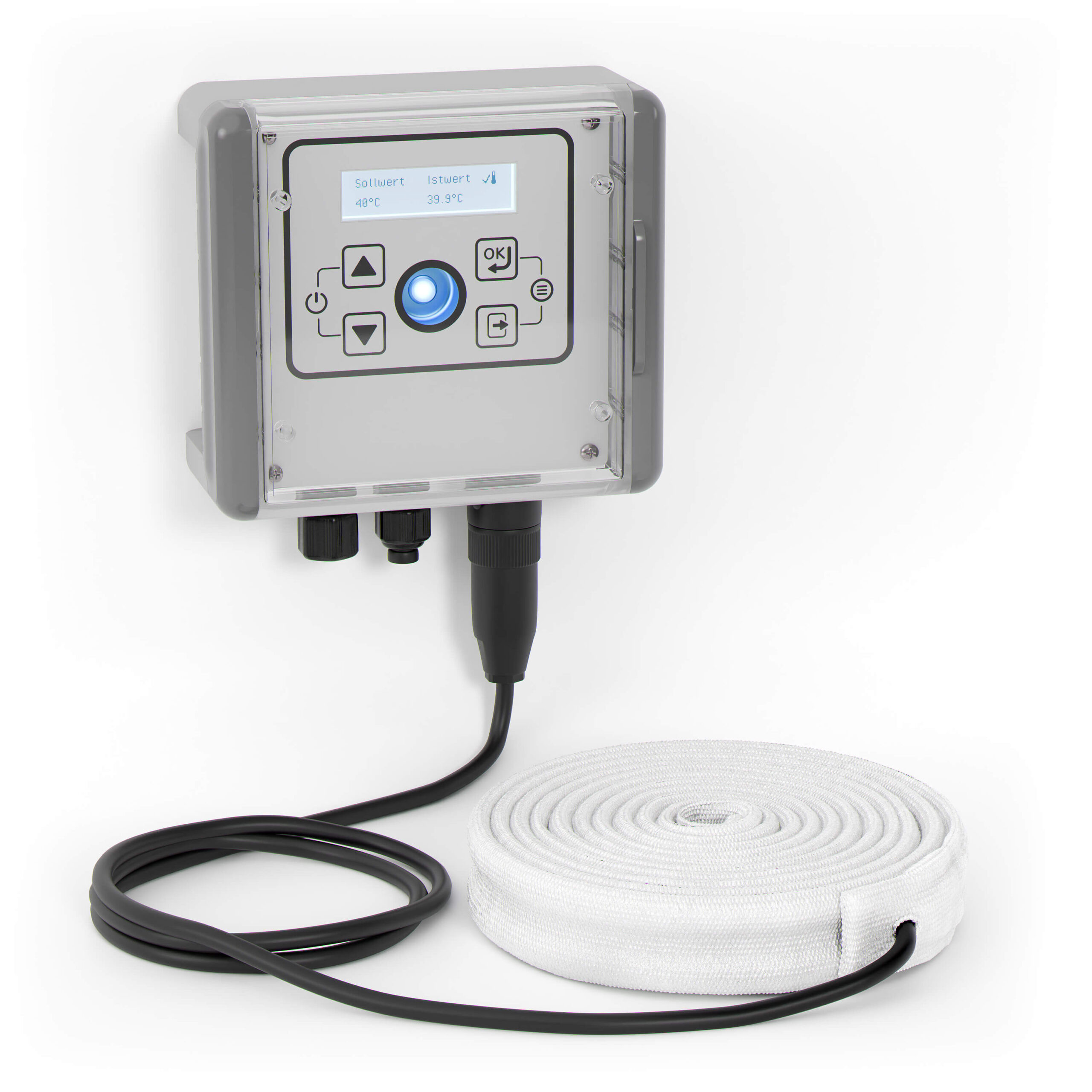
 Couvertures Chauffantes
 Raccords Plomberie
 Bidons / Futs et raccords
 Semences





 Produits Phyto

 Jardin




 Espaces Verts


 Barbecue - Braséro - Cheminée

 Entretien

 Fluides & Climatisation

 Arrosage

Water Restrictions: Am I Allowed to Fill My Pool?
Your pool is starting to lose a few centimetres of water due to the heat, and you are about to top it up with the garden hose — when doubt suddenly strikes: am I still allowed to do that? This summer 2026, the vast majority of French territory is affected by water restrictions to varying degrees, and the question is on the minds of millions of pool owners. This article gives you a clear and thorough answer: the actual legislation, the real sanctions, and above all a little-known legal solution that changes everything — rainwater stored in a tank.
💧 WHAT THE LAW REALLY SAYS: THE 4 OFFICIAL RESTRICTION LEVELS
The water restriction regime in France is governed by the Environmental Code, notably Article R.211-66, which defines water resource management levels, and Article R.216-9, which sets the penalties applicable in the event of non-compliance. This legal framework provides for four progressive levels, from the least to the most restrictive, each with concrete and very different consequences for pool owners. Understanding these levels allows you to plan ahead and act within the rules, rather than finding yourself in breach through ignorance.
The first level, known as Vigilance, does not constitute a ban: it is simply a call for water savings aimed at raising user awareness. At this stage, no mandatory measures apply to your pool. The second level, Alert, marks the transition to binding restrictions: filling private pools is generally prohibited, along with watering lawns or washing vehicles. The third level, Enhanced Alert, tightens things further: not only does the ban on filling remain in place, but partial top-ups are also subject to restrictions. Finally, the Crisis level represents the maximum degree: all filling and topping-up is formally prohibited, with the sole exception of a proven and duly justified structural safety requirement — such as a shell pool that risks deformation if completely emptied.
The table below summarises these four levels and their practical implications for your pool. Note that the word "generally" is used deliberately for the Alert and Enhanced Alert levels: as explained in the next section, the exact rules vary from one department to another, and only the prefectural order applicable to your municipality is authoritative.
| Level | What it generally means for your pool |
|---|---|
| Vigilance | No mandatory prohibition — simply a call for water savings |
| Alert | Filling generally prohibited |
| Enhanced Alert | Filling AND topping-up subject to restrictions |
| Crisis | Filling and topping-up totally prohibited, except for proven structural safety requirements |
💧 WHY THERE IS NO UNIVERSAL ANSWER: THE ROLE OF PREFECTURAL ORDERS
There is no single national rule that automatically applies across the whole of France: each restriction level is triggered by a prefectural order issued department by department, sometimes water basin by water basin, or even municipality by municipality depending on the local water source. This is precisely why it is impossible to tell you, without knowing your exact address, whether you are currently allowed to fill your pool.
A single department can thus have several simultaneous restriction levels: a municipality supplied by an abundant water table may be on simple Vigilance while a neighbouring municipality, dependent on a low-flow river, is placed on Crisis. Moreover, situations evolve rapidly: a department that was on Alert last week may cross the Crisis threshold after a few additional days of heatwave without rainfall. The summer 2026 situation illustrates this reality well: an overwhelming majority of mainland French departments already have at least one municipality under restriction, and this figure continues to change week by week.
In this context, VigiEau (vigieau.gouv.fr) is the only reliable and up-to-date source to find out your exact situation. This official tool, regularly updated by government services, allows you to enter your address or municipality and obtain the current restriction level in seconds, along with details of prohibited or permitted uses. It is also possible to apply for an exemption for an initial fill — for example for a new pool or an ongoing construction project — from the prefecture or the Departmental Directorate of Territories (DDT). This exemption is never automatic, must be submitted in writing with justification, and is generally no longer granted once the Crisis level is reached.
💧 WHAT ARE THE REAL PENALTIES FOR NON-COMPLIANCE?
Failing to comply with a prefectural water restriction order is not a mere ignored recommendation without consequence: it constitutes a 5th-class offence, the highest category of regulatory infraction, punishable by a fine of up to 1,500 €, rising to 3,000 € for a repeat offence. For a business, the amounts are even higher. This framework is set out in Article R.216-9 of the Environmental Code, and applies as soon as an order has been issued and published by the relevant prefecture.
Inspections are carried out in the field by water police services and by the French Biodiversity Office (OFB). These officers are empowered to issue official notices, and they focus their attention on the most visible and most frequently observed uses: watering lawns, washing vehicles, and filling pools are among the most commonly recorded infractions. The argument "I didn't know" is not admissible once the order has been published and official information channels — including VigiEau — are freely and easily accessible to everyone. In other words, checking the rules is not just good civic practice, it is also the only effective protection against a fine.
💧 THE LITTLE-KNOWN LEGAL SOLUTION: RAINWATER STORED IN A TANK IS NOT SUBJECT TO RESTRICTIONS
Rainwater collected in a private tank is exempt from water restriction bans, even at Crisis level. This distinction is one of the least known by the general public, yet it radically changes the situation for pool owners who have planned ahead. The reason is simple and logical: prefectural restriction orders target water drawn from stressed resources — the public drinking water network, watercourses, groundwater tables — and not atmospheric water collected independently from your own roof.
For this exemption to apply, one condition is necessary: the collection tank must not be connected to the public drinking water network. An autonomous tank, fed exclusively by rainwater harvested via your roof gutters, constitutes a legally distinct reserve from mains water. Its outdoor use — watering, filling or topping up a pool — remains permitted even when the most severe restrictions are in force. For pool owners located in areas regularly affected by summer drought, this represents concrete and verifiable autonomy.
There is a collective dimension to this approach that is worth highlighting. By using a rainwater reserve to top up your pool rather than the tap, you are not drawing on stressed resources. You are contributing to the collective effort to save drinking water while continuing to enjoy your pool legally. A 1,000-litre IBC tank or a well-sized rainwater harvesting cistern can store several thousand litres collected during the rainy seasons, providing real autonomy for summer top-ups.
A rainwater collection tank installed in autumn or spring fills up naturally before the dry summers. When restrictions hit, your reserve is already in place and you can continue to manage your pool without depending on the public network or breaking any rule.
An uncovered pool loses between 3 and 5 mm of water per day through evaporation in midsummer, meaning several hundred litres per week depending on the surface area. A pool cover dramatically reduces this phenomenon, correspondingly decreasing the frequency and volume of top-ups required.
The restriction level applicable to your municipality can change within days, sometimes overnight after a prolonged heatwave. Checking VigiEau once or twice a week during warm periods is the only way to be certain of your legal situation in real time.
💧 ESSENTIAL PRACTICAL TIPS FOR SUMMER 2026
Faced with an unprecedented drought, adopting a few simple habits allows you to enjoy your pool with complete legal peace of mind, without unnecessarily adding to the pressure on water resources. These good practices do not require significant investment, but they do require acting in an informed and anticipatory manner rather than in a rush.
These habits also apply to other water-sensitive summer uses. If you also want to understand the rules relating to the use of fire during drought periods, read our article on barbecues and fire pits during drought, which covers another aspect of summer regulations you should know. For garden watering, which is also subject to restrictions, our guides on responsible irrigation can help you optimise your practices.
💡 Multitanks Expert Tip — Anticipate Rather Than React
The best time to get an autonomous rainwater solution is before the dry season — not in the middle of a crisis when restrictions are already at their peak. A rainwater collection tank installed in autumn or spring, connected to your roof gutter, fills up naturally during winter and spring rainfall. When July and August arrive with their restrictions, you already have a legally autonomous reserve for topping up your pool, watering the garden, and all outdoor uses. Multitanks offers a full range of IBC tanks and accessories as well as watering and water storage solutions suitable for both private individuals and professionals — to turn the constraints of drought into genuine autonomy.
Share this content