



 IBC 1000 L accessories
 Heating jackets
 Fittings
 Drums, jerrycans & fittings
 Seeds


 Plant protection & biocides


 Garden


 Green spaces & municipal
 Barbecue, fire pit & fireplace
 Cleaning & care

 Refrigerants & air conditioning
 Watering

Which rainwater collector to choose?
Whichrainwater erator re cupto choose?
Have youasked toinvest in a rainwater harvestingsystem? Thatis an excellent idea! In addition to making a gesture for the planandbene benefiting fromfree water to wateryour garden, you will also do good to the latter... We explain why, and we guide you in the choice of yourwatersystem.
Reminder: the advantages ofrainwater re-water
If you are knowledgeable about the subject, you surely know that installing a rainwater collector has many advantages. First, it means reducing the amount of his water bill, since according to the figure put forward by the Water Information Centre,each French person consumes an average of 148 liters of water per day... But only 45% of this volume is used to satisfy a need for drinking water.
Secondly, it makes it possible not to fear a shortage of watering water during the long periods ofscarcity,a point which should not be overlooked. And finally on the environmental side, it contributes both to sparing the water resources of the planet, but also to guarantee the good health of the garden, the rainwater being much less calcareous than that of the tap ... And therefore better for crops. So many advantages!
Rainwaterr e cup:how does itwork?
The system is simple: thanks to a system for connecting your gutters to a water recovery tank, the rainwater that flows on the roof of your house is storede,to fulfill the use you want to give it.
Nevertheless, according to this use, you will not necessarily choose the same recovery system: if you want to use rainwater to water your garden,a simple container, as long as it is solid and connected to your gutters, is enough, where cleaning the floors of the house for example, requires a tank with a filter. We explain in detail below.
Our tips for choosing yourrainwater re erator
When choosing your equipment, keep in mind that several elements must be taken into account:
On the one hand, the uses you want to make of the recovered water. As explained just above, it is precisely this parameter that will determine the type of installation you will be advised to choose. Where a buried tank makes it possible to use the water recovered inside the house because it is accompanied by a filtering system, a simple above-ground tank is less expensive but limits these uses;
On the other hand, the material you want to favor for your installation, b-eton and PVC both having their advantages and disadvantages – it is customary to say that concrete costs less, and that PVC is easier to set up... But advocates of both alternatives are convinced that their solution is the best, which makes the choice unclear;
And finally the roof surface, theannual rainfallyou see in the area in which you live, and of course your personal rainwater needs. To facilitate your calculations, keep in mind that watering a garden or vegetable garden of 100 m2 requires an average of 2000 liters of water per year, to which you must add the amount required for feeding your washing machine and your flushing if you want to use the water inside the house for these purposes.
Multitanks accessories to equip your rainwater collection system
Multitanks no longer sells rainwater collection tanks. We do offer what you need to equip a tank you already have, including a 1000-litre container (IBC tank):
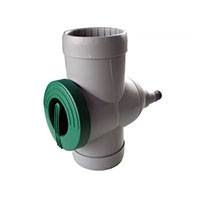
- filtering gutter collector: it fits on the downpipe (Ø 68 to 110 mm) and filters the water before the tank, with a stainless steel filter.
- lid with PVC inlet and 2-inch filter for 1000-litre tanks: choose the inlet diameter of your pipe (50/63, 63/75 or 75/90) among our 1000 L tank lids.
- anti-algae cover for 1000-litre IBC tanks, to limit algae in stored water.
Also browse all our IBC 1000 litre tank fittings, valves and accessories and gutter collectors.
Share this content