Accessoires IBC 1000 litres
 Couvertures Chauffantes
 Raccords Plomberie
 Bidons / Futs et raccords
 Semences
 Produits Phyto
 Jardin
 Espaces Verts

 Barbecue - Braséro - Cheminée
 Entretien
 Fluides & Climatisation
 Arrosage
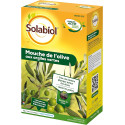
Natural Treatment with Green Clays: The Organic Solution Against Olive Fly in 2026
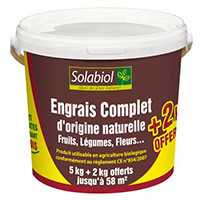
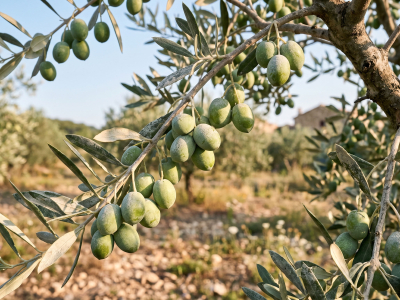
Modern olive cultivation faces major challenges, particularly the olive fly which can destroy up to 80% of a harvest. In 2026, biological solutions are gaining popularity among individuals and professionals concerned about preserving the environment. The Solabiol natural treatment with green clays represents a high-performance ecological alternative that revolutionizes olive tree protection without compromising on effectiveness.
🫒 UNDERSTANDING THE OLIVE FLY THREAT
The olive fly (Bactrocera oleae) constitutes the main scourge of European olive cultivation. This pest insect attacks developing fruits directly, compromising both the quantity and quality of the harvest. Females pierce the olive skin to deposit their eggs, creating galleries that irreversibly damage the pulp.
The reproduction cycle intensifies during warm months, from June to October, with activity peaks varying according to climatic conditions. A single female can lay up to 400 eggs during her lifetime, explaining the rapid spread of infestations. Larvae develop inside the fruit, causing premature drop or rotting on the tree.
The damage is not limited to quantitative loss. Punctures promote the development of fungi and bacteria that alter the taste of olive oil. For organic producers, this problem requires solutions compatible with their specifications, excluding conventional chemical insecticides.
🌿 THE NATURAL GREEN CLAY REVOLUTION
The Solabiol treatment exploits the unique properties of green clays to create an innovative physical barrier. This biomimetic approach is inspired by natural defense mechanisms observed in certain wild olive varieties. The formulation based on selected clays forms a translucent protective film that disrupts the egg-laying behavior of insects.
The studied particle size of these clays guarantees optimal adhesion on the fruit surface, even after moderate rainfall. This green technology fully preserves photosynthesis and olive respiration, unlike plastic films or synthetic waxes. The absence of chemical adjuvants makes this treatment compatible with certified organic agriculture.
The effectiveness relies on a double mechanism: visual deterrence that modifies fruit recognition by females, and the mechanical barrier that prevents ovipositor penetration. This preventive action proves more durable than traditional curative treatments.
Green clays form a protective film that physically prevents flies from laying eggs on olives. This natural barrier remains effective for several weeks after application.
Usable in organic agriculture according to current regulations, this treatment respects the strictest specifications while maintaining optimal effectiveness.
The 100% natural composition preserves biodiversity and presents no risk to beneficial insects, birds, or mammals.
🚀 PROFESSIONAL APPLICATION PROTOCOL
The effectiveness of Solabiol treatment largely depends on the precision of the application protocol. The optimal period extends from the beginning of fruit enlargement until veraison, generally between June and September depending on regions. This time window corresponds to the phases of maximum vulnerability to fly attacks.
Preparing the mixture requires precise dosing: 20 to 25 grams per liter of water to obtain the optimal concentration. Constant agitation during preparation guarantees homogeneous clay suspension. Using quality water (neutral pH, low hardness) significantly improves treatment adhesion and persistence.
Application is performed by fine spraying, favoring cool hours to avoid rapid evaporation. Coverage must be uniform over the entire canopy, with particular attention to sunny areas where flies concentrate their activity. Renewal every 15 to 20 days maintains protective effectiveness throughout the critical season.
⚡ OPTIMIZATION ACCORDING TO OLIVE GROVE TYPE
Application strategies vary considerably according to the scale and type of operation. For individuals owning a few ornamental or productive olive trees, manual treatment with a pressure sprayer allows precise application control. This approach is perfectly suitable for urban gardens where the proximity of dwellings requires additional precautions.
Medium-sized family olive groves benefit from carried or towed sprayer equipment that significantly reduces intervention time. The fine atomization obtained by these machines optimizes clay distribution while limiting product consumption. Treatment planning is organized around favorable weather conditions.
For intensive professional operations, integration into an integrated pest management program maximizes results. The association with pheromone traps for monitoring fly populations allows fine adjustment of intervention periods. This approach reduces the number of treatments needed while maintaining a high level of protection.
🔬 COMPARISON WITH ALTERNATIVE METHODS
Evaluation of different approaches to fighting olive fly reveals the distinctive advantages of green clay treatment. Conventional chemical insecticides, although effective in the short term, raise increasing environmental and health questions. Their use in organic agriculture remains prohibited, limiting options for certified producers.
Solutions based on Bacillus thuringiensis or spinosad represent interesting biological alternatives but present limited selectivity. These bioinsecticides can affect certain beneficial insects useful to the olive ecosystem. Solabiol treatment, through its purely mechanical mode of action, fully preserves beneficial fauna.
Cultural techniques like early harvest or controlled grass cover provide complementary support but are insufficient during strong parasitic pressure. Integrating clay treatment into these holistic programs creates lasting protective synergy. This global approach fits perfectly with sustainable development approaches promoted by agricultural organizations in 2026.
Multitanks Expert Advice: To maximize the effectiveness of Solabiol treatment, regularly monitor weather conditions. Avoid applications before forecast rains and favor stable anticyclonic periods. A detailed logbook of interventions facilitates protocol optimization for future seasons.
📈 RESULTS AND EFFECTIVENESS MONITORING
Evaluation of Solabiol treatment effectiveness is performed through several complementary indicators. The percentage of attacked fruits constitutes the main metric, measured by weekly sampling on a representative sample of 100 olives per test tree. Optimal results show a 70 to 85% reduction in attacks compared to untreated controls.
Harvest quality improves significantly with this natural protocol. Organoleptic analyses reveal remarkable preservation of fruity aromas and notable reduction of bitterness linked to parasitic attacks. These qualitative benefits translate into superior commercial valorization, particularly appreciated in premium markets.
Long-term monitoring demonstrates effectiveness stability without resistance phenomena, unlike conventional insecticides. This action durability constitutes a major economic advantage for operations that can plan their investments over several years. The absence of residues also facilitates access to the most demanding export markets.
Share this content