IBC 1000 L accessories




 Heating jackets



 Fittings


 Drums, jerrycans & fittings


 Seeds
 Plant protection & biocides

 Garden



 Green spaces & municipal



 Barbecue, fire pit & fireplace

 Cleaning & care

 Refrigerants & air conditioning


 Watering


World's Fastest Online Shopping Destination

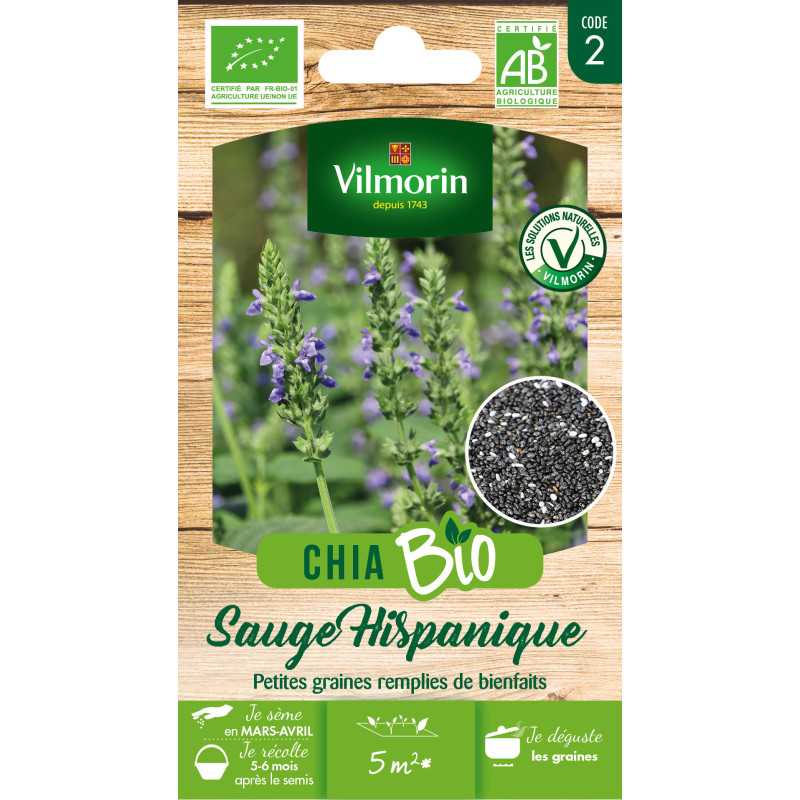
Organic CHIA Seeds Vilmorin (Reference: 3454542) - Discover this variety of Spanish sage native to Mexico, famous for its small brown seeds with their many nutritional benefits.
This annual plant also offers magnificent mauve flowers and stands up perfectly to drought. Ideal for gardeners who want to grow their own superfoods in their organic vegetable plot!
 Safety guarantees100% secure payment
 Shipping PolicyResponsive and attentive after-sales service
 Returns PolicyFast and secure delivery
Organic CHIA Seeds Vilmorin - Spanish Sage (Reference: 3454542) - This exceptional variety of Spanish sage, certified organic, lets you grow at home one of the most prized superfoods in the world. Native to Mexico, chia was already cultivated by the Aztecs for its remarkable nutritional properties. Vilmorin, a French reference in seeds since 1743, now invites you to rediscover this ancient plant in your garden.
Chia (Salvia hispanica) appeals to gardening enthusiasts as much as to followers of a healthy diet. This annual plant produces small brown seeds with a neutral taste but exceptionally rich in omega-3, fibre, protein and minerals. The harvested seeds can be eaten raw, added to smoothies, yoghurts or salads, or used as a natural thickener.
Beyond its nutritional qualities, chia has an undeniable ornamental appeal with its magnificent mauve flowers that attract pollinators. This dual food and decorative function makes it a perfect plant for edible gardens, urban vegetable plots and areas devoted to permaculture.
Spanish sage belongs to the Lamiaceae family and stands out for its remarkable drought resistance. This adaptation allows it to thrive even in arid conditions, which makes it an ideal crop for Mediterranean regions or particularly dry summers. The plant can reach 1 to 1.5 metres in height and develops the square stems typical of the Lamiaceae.
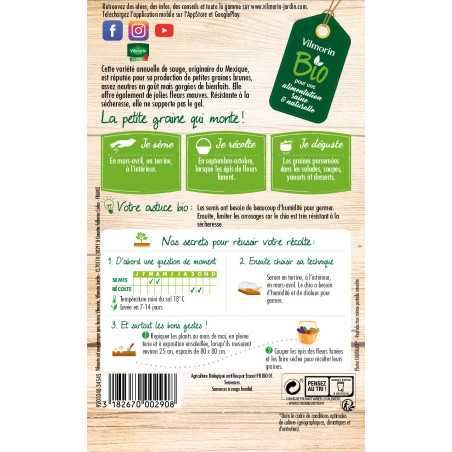
However, chia does not tolerate frost and must be grown as an annual in our latitudes. Its seeds germinate easily at a temperature of between 18 and 22°C, and the plant likes sunny positions. The growing cycle extends over about 120 to 150 days from germination to seed harvest.
Chia sowing is ideally done in spring after the last frosts, either directly in open ground or in pots for later transplanting. Prepare a well-drained, slightly sandy soil with a neutral to slightly alkaline pH. The seeds, which are very fine, must be sown on the surface or covered with just a few millimetres of fine soil.
Keep the soil moist but not waterlogged during germination, which generally takes between 7 and 14 days. Space the plants 30 to 40 cm apart to allow optimal development. Once established, the plant needs little watering thanks to its drought tolerance. The seed harvest comes in autumn, when the spikes turn brown and the seeds come away easily.
To get the most from your chia crop, respect the good plant pairings. This plant thrives particularly well alongside brassicas (cabbages, radishes, rocket), carrots, oregano, French marigolds, strawberries and tomatoes. These pairings make better use of the space and can contribute to biological control of certain pests.
Conversely, avoid pairings with the Allium family (garlic, onion, leek) and cucumbers, as these neighbours may prove unfavourable to the development of chia. In permaculture, include chia in your food guilds, where it will play the role of a tall productive plant, giving partial shade to lower crops. Remember also to set aside a few plants for seed production and others for harvesting the young leaves, which are edible and delicious in salads.
| Details | Specifications |
|---|---|
| Botanical name | Salvia hispanica |
| Family | Lamiaceae |
| Plant type | Annual |
| Mature height | 1 to 1.5 metres |
| Exposure | Full sun |
| Cold resistance | Not hardy (does not tolerate frost) |
| Soil | Drained, neutral to alkaline |
| Sowing period | Spring (after frosts) |
| Growing cycle | 120 to 150 days |
| Spacing | 30 to 40 cm between plants |
| Flower colour | Mauve |
| Certification | Organic Farming |
Specific references
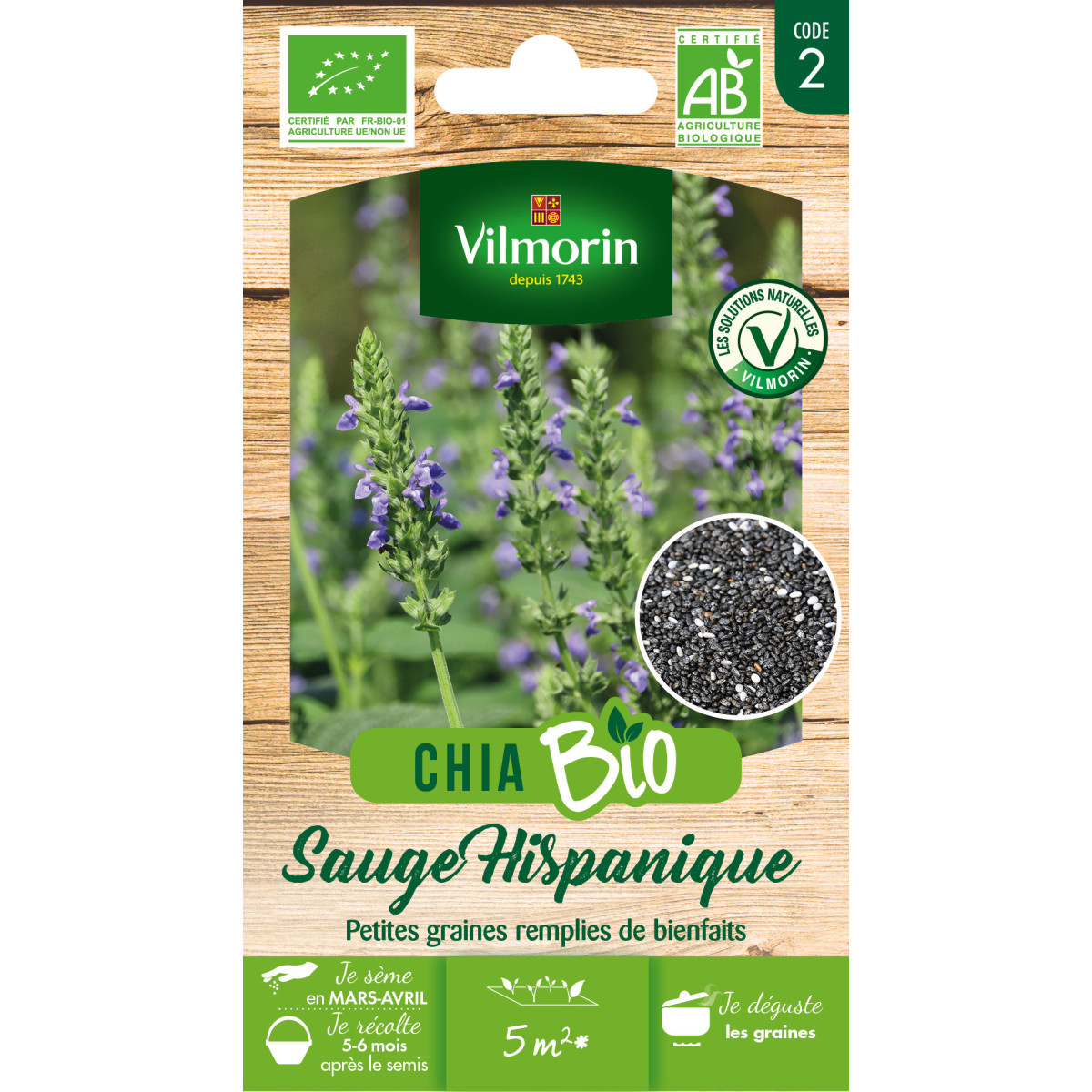
Organic CHIA Seeds Vilmorin (Reference: 3454542) - Discover this variety of Spanish sage native to Mexico, famous for its small brown seeds with their many nutritional benefits.
This annual plant also offers magnificent mauve flowers and stands up perfectly to drought. Ideal for gardeners who want to grow their own superfoods in their organic vegetable plot!