IBC 1000 L accessories



 Heating jackets

 Fittings


 Drums, jerrycans & fittings


 Seeds
 Plant protection & biocides

 Garden



 Green spaces & municipal




 Barbecue, fire pit & fireplace
 Cleaning & care

 Refrigerants & air conditioning

 Watering


World's Fastest Online Shopping Destination

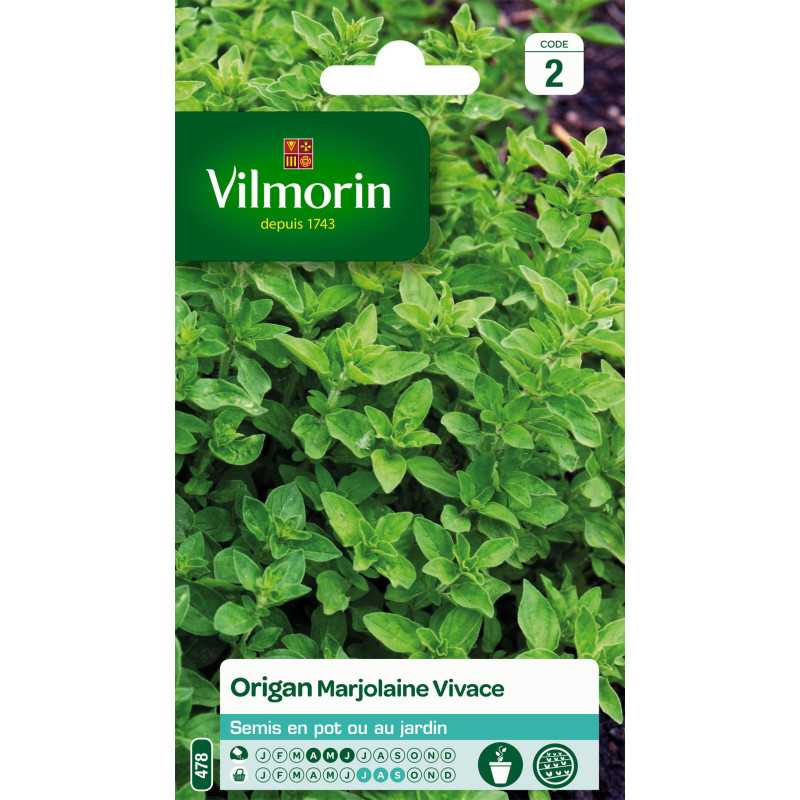
Perennial oregano marjoram seed packet Vilmorin (Reference: 5876746) to grow your herbs easily. This perennial, nicknamed « joy of the mountains », offers an intense fragrance and an authentic flavour to enrich your cooked dishes. Ideal for vegetable plots, planters or containers, it goes perfectly with vegetables and encourages their growth. Simple to grow in a sunny position, with a generous harvest from the first year.
 Safety guarantees100% secure payment
 Shipping PolicyResponsive and attentive after-sales service
 Returns PolicyFast and secure delivery
Perennial Oregano Marjoram Seeds Packet Vilmorin (Reference: 5876746) represents the excellence of herb seeds for amateur and professional gardeners. This perennial variety, known since Antiquity by its Greek name of « joy of the mountains », is an essential of herb gardens. Vilmorin, a French reference in seeds since 1743, guarantees optimal germinating quality and respected varietal authenticity.
Perennial oregano marjoram turns your garden into a genuine natural pharmacy and aromatic larder. This versatile plant thrives just as well in a traditional vegetable plot as in urban planters or containers on a terrace. Beginner gardeners appreciate its hardiness and its tolerance of difficult conditions, while passionate cooks value its intense, lasting aroma.
This herb excels at accompanying vegetable crops. Planted near tomatoes, courgettes, aubergines and peppers, it encourages their growth while naturally keeping certain pests away. Permaculture and organic farming professionals systematically include it in their rotations for its natural repellent properties and its ability to improve the taste of the surrounding vegetables.
In the kitchen, oregano marjoram enhances Mediterranean dishes, pizzas, tomato sauces, grilled food and marinades. Its fresh form develops more delicate notes than the dried form, allowing it to be used in digestive teas and wellness infusions.
This variety of Origanum vulgare selected by Vilmorin has a remarkable longevity, with a lifespan of 4 to 6 years in optimal conditions. The evergreen foliage withstands frosts down to -15°C, making a harvest possible even in winter in temperate regions.
The mature height varies from 30 to 60 cm with a spread of 40 to 50 cm, forming dense clumps with dark green oval leaves of about 2 to 4 cm. The summer flowering produces small pinkish-white flowers grouped in terminal corymbs, much appreciated by bees and butterflies.
The germination rate above 75% ensures even emergence in 10 to 21 days depending on the temperature. The seeds, less than 1 mm in diameter, need surface sowing to optimise germination. This variety shows excellent drought resistance once established, thanks to its deep, branched root system.
The concentration of essential oils reaches its maximum just before flowering, with particularly high levels of carvacrol and thymol, giving this variety its recognised aromatic and therapeutic properties.
Sowing is done from March to May for a harvest in the first year. In cool regions, favour sowing in pots under cover from March, with transplanting after the last spring frosts. In the south of France, direct sowing in open ground from April gives excellent results.
Prepare a light, well-drained substrate mixing compost, sand and garden compost in equal parts. Sow broadcast on the surface without covering the seeds, then firm gently and keep the moisture constant by misting. The ideal germination temperature is between 15 and 20°C.
Thinning takes place at the 6-7 leaf stage, keeping the most vigorous plants spaced 25 to 30 cm apart. Final planting out is done when the plants reach 8 to 10 cm in height, choosing a sunny position with at least 6 hours of sun a day.
Maintenance is limited to moderate watering in the first year, after which the plant becomes self-sufficient. An organic mulch protects the roots in winter and keeps the soil cool in summer. A rejuvenating cut at the end of winter stimulates regrowth and thickens the clump.
The harvest is staggered from April to October, cutting the leafy stems preferably in the morning once the dew has evaporated. For drying, hang the bunches head down in a dry, airy place.
Get the most from your oregano marjoram by pairing it strategically with other Mediterranean herbs. Create a herb spiral together with thyme, rosemary, sage and lavender, which share the same requirements for drained soil and a sunny position.
In permaculture, plant the oregano along the edge of tomato and aubergine beds to benefit from its repellent properties against aphids and whiteflies. This pairing also improves cross-pollination by attracting beneficial insects.
For economical propagation, take softwood cuttings in June-July or divide the older clumps in spring. This technique quickly gives you several plants identical to the mother plant.
Experienced gardeners recommend pinching out the flowers regularly to favour leaf development and keep the foliage tender. However, leave a few flower stems to feed the pollinators and to collect seeds for future sowings.
For container growing, choose a pot at least 30 cm deep with effective drainage. Mix compost with 30% sand or perlite to avoid root suffocation. An application of diluted organic fertiliser once a month during the growing season optimises development.
For the best storage, freeze the fresh leaves in ice-cube trays with a little water or olive oil. This method preserves the aromas better than traditional drying. You can also prepare an aromatic salt by mixing the dried leaves with coarse sea salt.
| Details | Specifications |
|---|---|
| Botanical name | Origanum vulgare |
| Plant type | Perennial herb |
| Sowing period | March to May |
| Germination time | 10 to 21 days |
| Mature height | 30 to 60 cm |
| Spread | 40 to 50 cm |
| Exposure | Sunny |
| Soil type | Drained, chalky, dry |
| Cold resistance | -15°C |
| Harvest period | April to October |
| Lifespan | 4 to 6 years |
| Culinary use | Fresh or dried |
Specific references
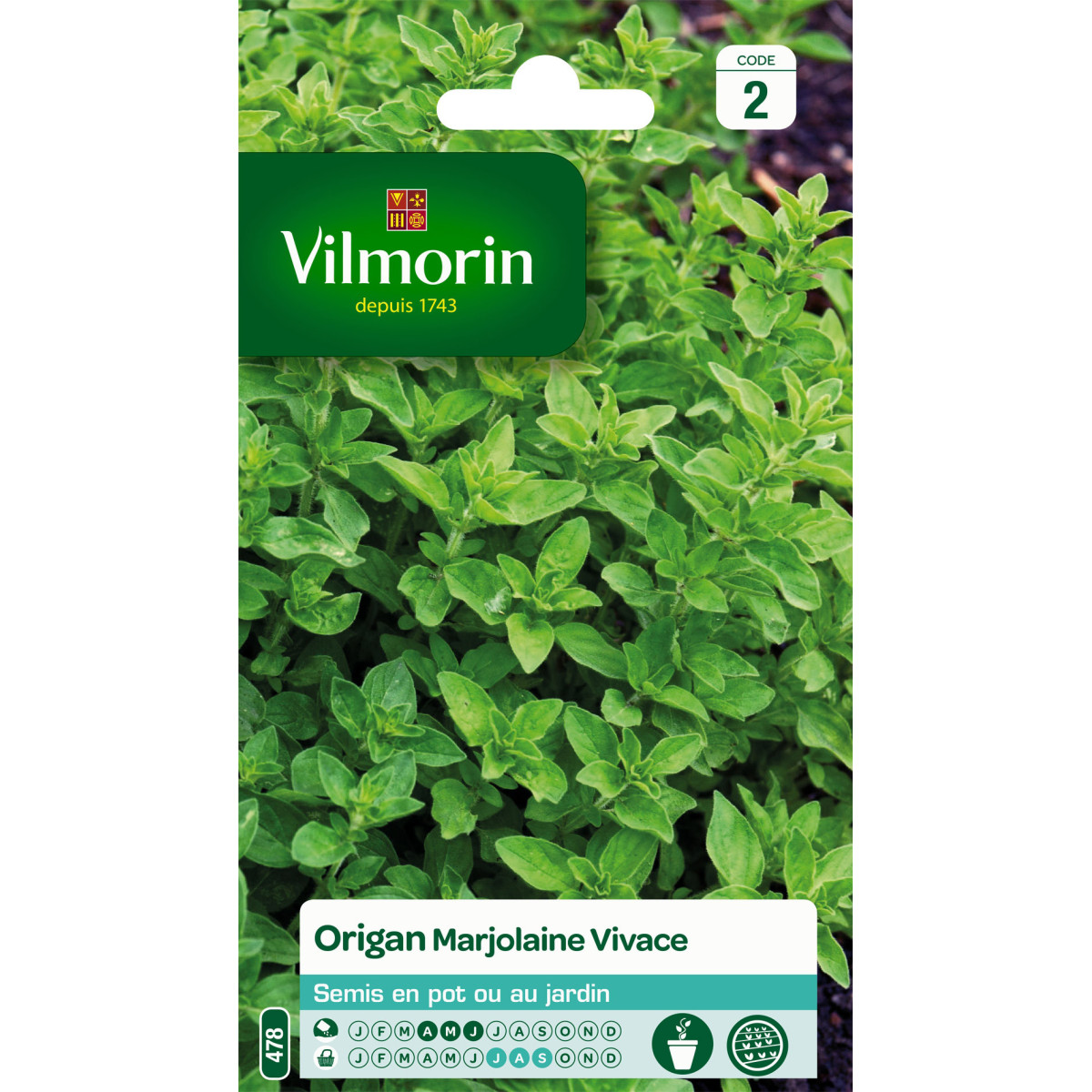
Perennial oregano marjoram seed packet Vilmorin (Reference: 5876746) to grow your herbs easily. This perennial, nicknamed « joy of the mountains », offers an intense fragrance and an authentic flavour to enrich your cooked dishes. Ideal for vegetable plots, planters or containers, it goes perfectly with vegetables and encourages their growth. Simple to grow in a sunny position, with a generous harvest from the first year.