IBC 1000 L accessories




 Heating jackets




 Fittings

 Drums, jerrycans & fittings

 Seeds

 Plant protection & biocides




 Garden



 Green spaces & municipal



 Barbecue, fire pit & fireplace


 Cleaning & care

 Refrigerants & air conditioning


 Watering


How to Successfully Grow Strawberries from Seed: Complete 2026 Guide | Multitanks
Who can resist the promise of fresh strawberry harvest from the first days of June? While strawberry is France's favorite fruit, it is too often bought in supermarket punnets, far from having the authentic taste of terroir. In 2026, the trend is back to the roots: growing your own strawberries from seeds. This process, although requiring some meticulousness, provides access to rare varieties and yields plants of exceptional vigor. At Multitanks, we accompany you in this gourmet adventure by combining the best Vilmorin seeds, exceptional composts like Or Brun and technical irrigation solutions so that each seed becomes a feast.
CHOOSING YOUR SEEDS: WILD STRAWBERRIES OR 4 SEASONS?
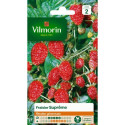
The success of your strawberry patch begins with rigorous genetic selection. Not all strawberries have the same culinary destiny. If you're looking for persistence and generosity, the 4 Seasons Supreme strawberry is your best ally. This variety is "everbearing", which means it will produce fruit in successive waves from June until the first October frosts. It's the ideal variety for families who want to nibble on fruit all summer long.
For gourmets seeking wild and woodsy flavors, sowing organic wild strawberry seeds is a sensory experience in its own right. Smaller, more fragile, but infinitely more fragrant, wild strawberries remind us of childhood forest walks. Its organic cultivation guarantees the complete absence of chemical treatments from seed, for worry-free tasting.
SOWING TECHNIQUE: STRATIFICATION AND LIGHT
Sowing strawberries cannot be improvised. The strawberry seed is a small pearl that needs a "thermal shock" to understand that winter is over. This is called stratification. Before sowing, place your seed packets in the refrigerator for a week. This simulated cold will break seed dormancy and accelerate germination once brought back to warmth.
Next, prepare your pots with a mixture of Or Brun universal compost, rich and light. Careful: strawberry seeds are photoblastic, they need light to germinate. Don't bury them! Place them gently on the surface of moist compost and barely press down with the flat of a spoon. Maintain constant moisture with a spray bottle and place everything in light, between 18°C and 22°C. Patience is required: germination can take between 15 and 30 days.
LAYOUT: THE RAISED BED, THE PERFECT SETTING
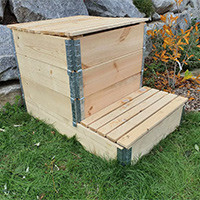
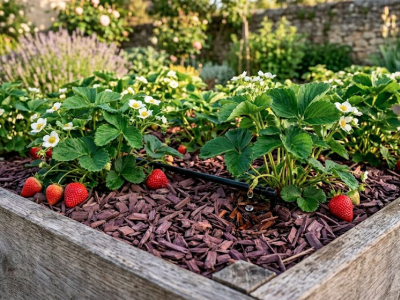
Strawberry plants hate having "wet feet" but require constant moisture. Growing in raised beds is the most advanced technical solution. It allows perfect control of soil quality and prevents strawberries from trailing in the dirt, which limits slug attacks and fungal diseases like gray mold.
Fill your raised bed with the Or Brun mixture and plan for 30 cm spacing between each plant. To handle your young plants during transplanting without damaging fragile roots, use your precision hand tools. A well-sharpened transplanter allows you to create a clean hole and install the "crown" (the base of the plant) right at soil surface level: too deep, it rots; too high, it dries out.
NUTRITION AND PROTECTION: THE SECRET OF SWEET FRUITS
Once established, your strawberry plants will need "fuel" to transform sunlight into sugar. Adding specific fertilizer is essential. Solabiol strawberry fertilizer is formulated to promote flowering and fruiting thanks to its richness in potash. One application at planting time, then a second after the first June harvest, will guarantee flavorful fruit until autumn.
Mulching, the non-negotiable step: For your strawberries to remain clean and healthy, they must never touch bare soil. We offer you two aesthetic and technical solutions: classic Or Brun natural mulch, or for a touch of color and superior thermal protection, Or Brun red wood chips. This mulch keeps the soil cool, limits evaporation and creates a physical barrier against slugs.
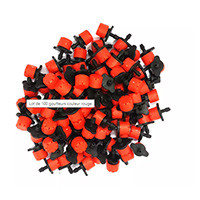
Expert tip: Watering strawberry plants must be surgical. Never wet the foliage or fruits with a hose, or you'll see powdery mildew appear. Installing micro-irrigation drip system hidden under the mulch is the guarantee of a vigorous plant and brilliant fruit.
MANAGING RUNNERS AND RENEWAL
During the season, your strawberry plants will produce "suckers" or runners. These are long creeping stems that seek to root and create new plants. If your goal is fruit harvest, cut them off! They unnecessarily exhaust the mother plant. If you want to expand your strawberry patch for free, let them root in small pots of Or Brun compost placed nearby before weaning them from the main plant in autumn.
Remember that a strawberry plant is productive for 3 years. Beyond that, its vigor declines. Thanks to regular sowing, you can renew one-third of your plot each year, thus ensuring constant production and superior quality.
CONCLUSION
Growing your strawberries from seeds is the ultimate stage of gardener satisfaction. It's a journey that begins with a small seed on Or Brun compost and ends with an explosion of flavors on the plate. By mastering stratification, offering your plants a well-drained raised bed and automating watering at the base, you ensure a summer 2026 rich in gourmandise. Don't just eat strawberries anymore, live the experience of their birth. To your seeders!
How many plants to delight your family?
Share this content