IBC 1000 L accessories
 Heating jackets
 Fittings
 Drums, jerrycans & fittings
 Seeds

 Plant protection & biocides


 Garden

 Green spaces & municipal
 Barbecue, fire pit & fireplace
 Cleaning & care
 Refrigerants & air conditioning
 Watering
- New


World's Fastest Online Shopping Destination
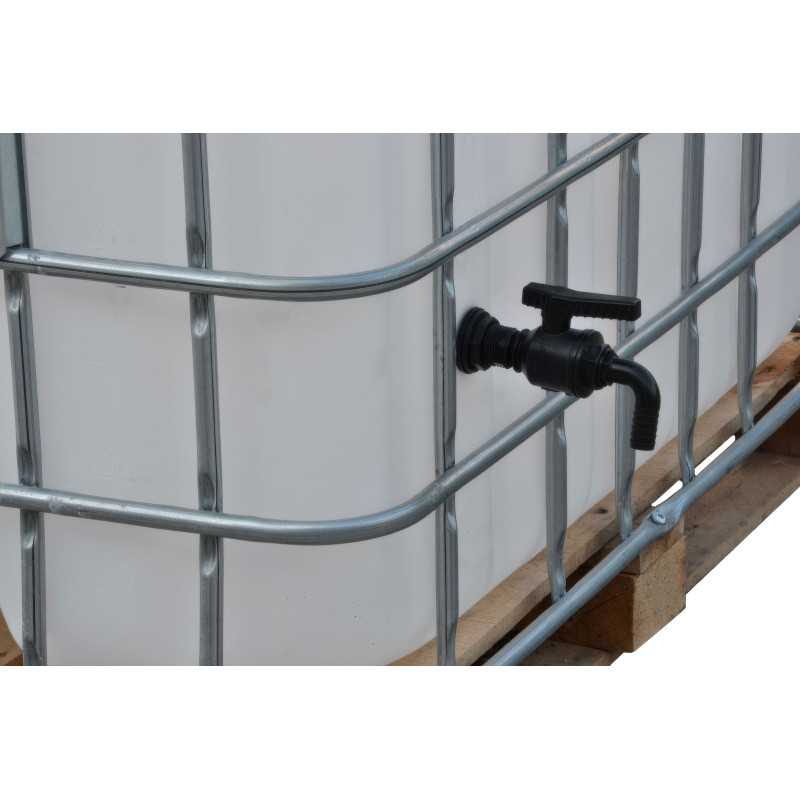
The compact model in the range, and the most affordable. Its bulkhead fitting reduces from 1 inch to 3/4 right at the wall : everything that follows is smaller, lighter, less bulky.
Outlet through a 20 millimetre hose barb elbow, the diameter of the most common garden hoses.
 Safety guarantees100% secure payment
 Shipping PolicyResponsive and attentive after-sales service
 Returns PolicyFast and secure delivery
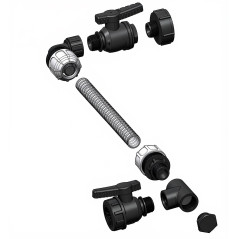
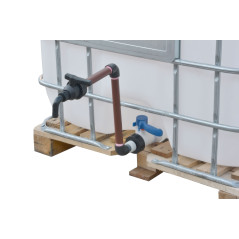
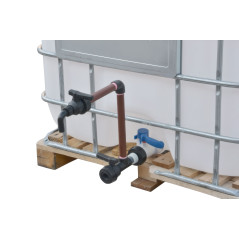
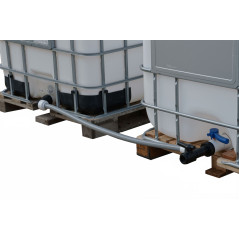
A discreet water outlet on a 1000-litre tank. Reducing bulkhead fitting 1 inch to 3/4, ball valve and 20 millimetre hose barb elbow : the most compact set in the range, fitted entirely from the outside, and the one that protrudes least once in place.
This kit stands out through a particular feature that needs explaining rather than being passed off as a saving : its bulkhead fitting reduces right at the wall. It is fitted like the others in a 43 millimetre hole, with a 1 inch thread on the tank side, but comes out as 3/4 inch. All the fittings that follow are therefore one size smaller.
The benefit is first mechanical. A 1 inch valve at the end of a wall passage is a mass hanging from a plastic thread ; in 3/4, the same assembly weighs noticeably less and exerts much less leverage on the wall. On a flexible or already ageing tank, that really matters.
The benefit is then practical. The assembly protrudes less from the tank : it passes between two bars of the metal cage without having to aim, and it does not catch as you go by. On a container stored along a wall or in a cramped room, that is often what decides it.
Finally, everything that screws on behind is 3/4 inch fittings, that is the most widespread and cheapest format on the market : tap nozzles, garden quick couplings, watering timers. You will not be tied to a rare diameter the day you add something.
The hose barb elbow is 20 millimetres. It is not a number chosen at random : it is the inside diameter of the most widespread garden hoses, the ones found in coils in any garden centre. The hose you already have in the garage is very likely to fit on it.
You push the hose over the barbs and tighten a clamp. It is rustic, it comes apart, and it holds very well at the pressure that concerns us here : that of a tank standing one metre off the ground, a few hundredths of a bar. No need for a sophisticated fitting to hold that, and all the better : the day the clamp rusts or the hose hardens, the replacement costs a few coins and is found in any hardware shop, with no reference to hunt for.
The 90 degree elbow sends the hose downwards from the outlet. It does not form a loop that gets crushed against the metal cage, and above all its weight pulls the valve not outwards but towards the ground. It is the detail that makes a plastic assembly last : what breaks a run of fittings is almost never water pressure, it is the overhang of a full hose left hanging horizontally for months.
The wall of a 1000-litre container is two to three millimetres thick, and it is never truly flat : it is curved, sometimes ribbed, and it deforms slightly depending on whether it is full or empty. It is a surface on which a conventional bulkhead fitting with a flat gasket copes badly, because a flat gasket needs a flat seat to bear evenly.
The Quick Joint bulkhead fitting is built around this problem. It is not a flat gasket but a flexible rubber sleeve that tightening makes swell : it follows the curvature instead of putting up with it, and it makes up the few tenths of a millimetre that a moulded wall never gives straight. And because there is no counter-piece to hold inside, everything is tightened from outside, on a tank that stays in its place and can stay full.
In practice, that means you fit the fitting more or less wherever you like on the wall. You just need to avoid ribs, corners and welds, choose an even area, and check that no bar of the metal cage runs behind the future 43 millimetre hole.
This kit is the lightest of the three — 168 grams assembled — and it is an advantage that is underestimated. Everything that hangs at the end of a wall passage pulls on the wall permanently, and a container wall that has had a few summers of sun no longer has the flexibility of new. The lightest assembly is also the most durable on a second-hand tank.
Same bulkhead fitting and same 43 millimetre hole for all three kits in the range, on any 1000L tank. Only the outlet changes, and it is enough to tell them apart. The table reads from top to bottom like a flow ladder, from the most discreet to the most generous :
| Kit | Outlet | Connection | What sets it apart |
| 0101676 | 20 mm | Hose barb elbow | The most compact and the least bulky |
| 0101673 | 25 mm | Compression fitting | Comes off by hand, no clamp |
| 0101674 | 30 mm | Hose barb elbow and cap | The largest flow, double closure |
This one is the right choice if you water, if you fill watering cans or buckets, and if space is lacking around the tank. If, on the other hand, you intend to transfer the thousand litres in one go, take a diameter up : at 20 millimetres you would spend the morning on it, and it is not the valve that will slow you down but the cross-section of the hose.
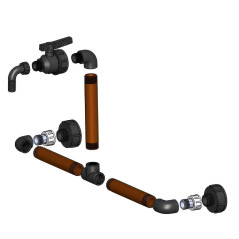
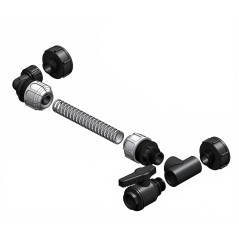
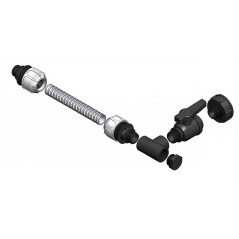
| Part | Role |
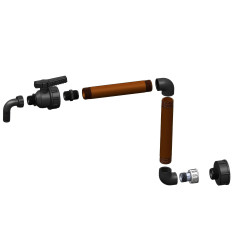
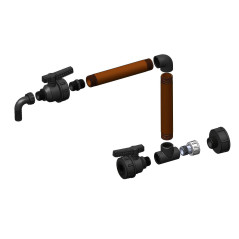
| Quick Joint male-female bulkhead fitting, 1 inch to 3/4 | Goes through the wall and reduces straight away |
| 3/4 inch ball valve, polypropylene, nitrile O-ring | Quarter turn, full bore |
| 90 degree hose barb elbow, 3/4 inch to 20 mm | Directs the pipe downwards |
The three parts arrive separately and screw into one another without an adapter. One point to watch when fitting : the reduction is made at the bulkhead fitting, so everything you add afterwards will have to be 3/4 inch, and not 1 inch as on the other two kits in the range.
| Details | Specifications |
| Reference | 0101676 |
| Brand | Bucchi — Quick Joint® |
| Outlet | 90 degree elbow hose barb, 20 mm |
| Valve | Ball type, quarter turn, 3/4 inch |
| Reduction | 1 inch on the tank side, 3/4 inch at the outlet |
| Hole required | 43 mm |
| Threads | Parallel gas ISO 228/1 |
| Materials | Polypropylene, EPDM seal and nitrile O-ring |
| Working pressure | 4 bar at 20 °C |
| Maximum temperature | 80 °C |
| Kit weight | 168 g |
Technical sheet
Specific references
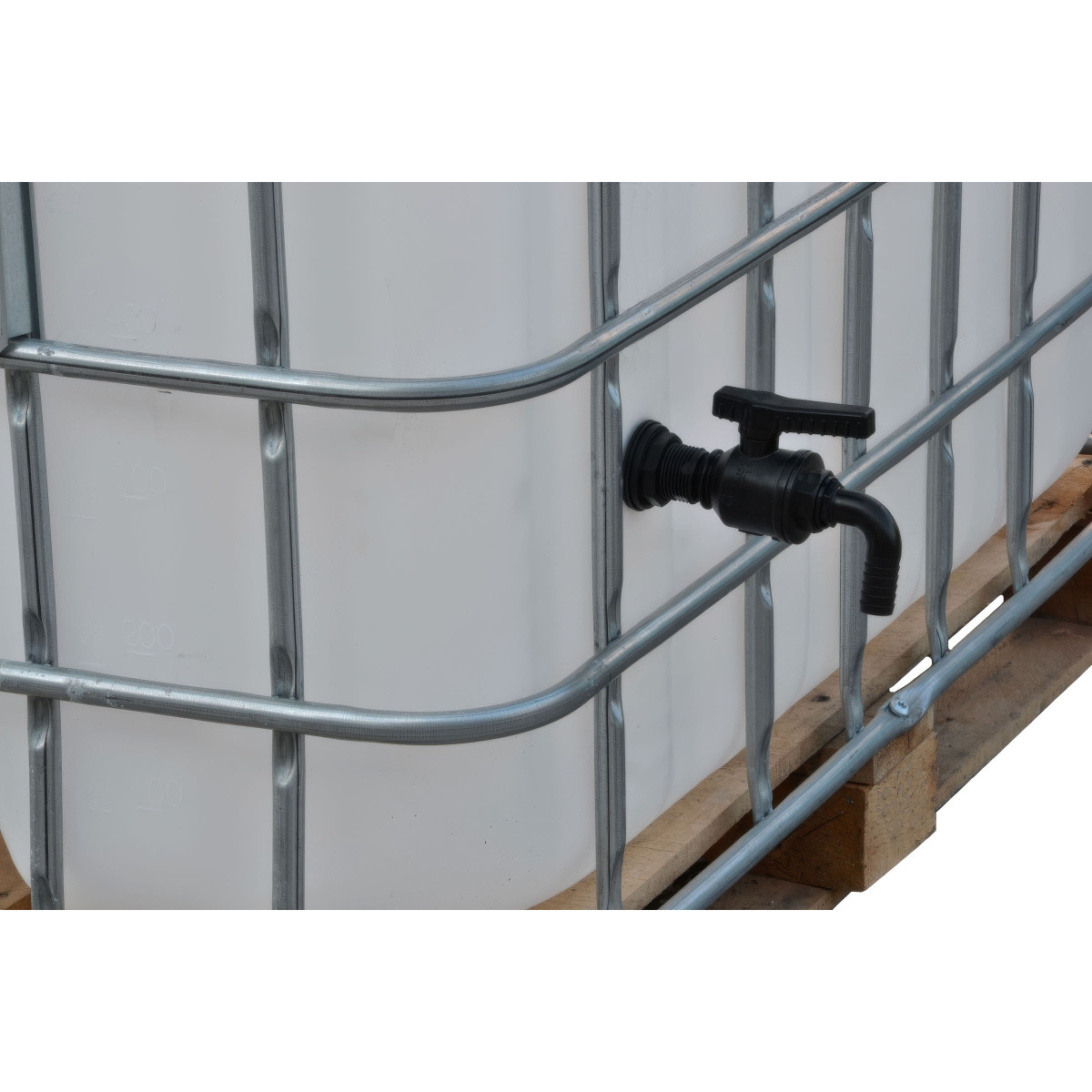
The compact model in the range, and the most affordable. Its bulkhead fitting reduces from 1 inch to 3/4 right at the wall : everything that follows is smaller, lighter, less bulky.
Outlet through a 20 millimetre hose barb elbow, the diameter of the most common garden hoses.