IBC 1000 L accessories
 Heating jackets
 Fittings
 Drums, jerrycans & fittings
 Seeds
 Plant protection & biocides

 Garden
 Green spaces & municipal
 Barbecue, fire pit & fireplace
 Cleaning & care
 Refrigerants & air conditioning
 Watering
World's Fastest Online Shopping Destination

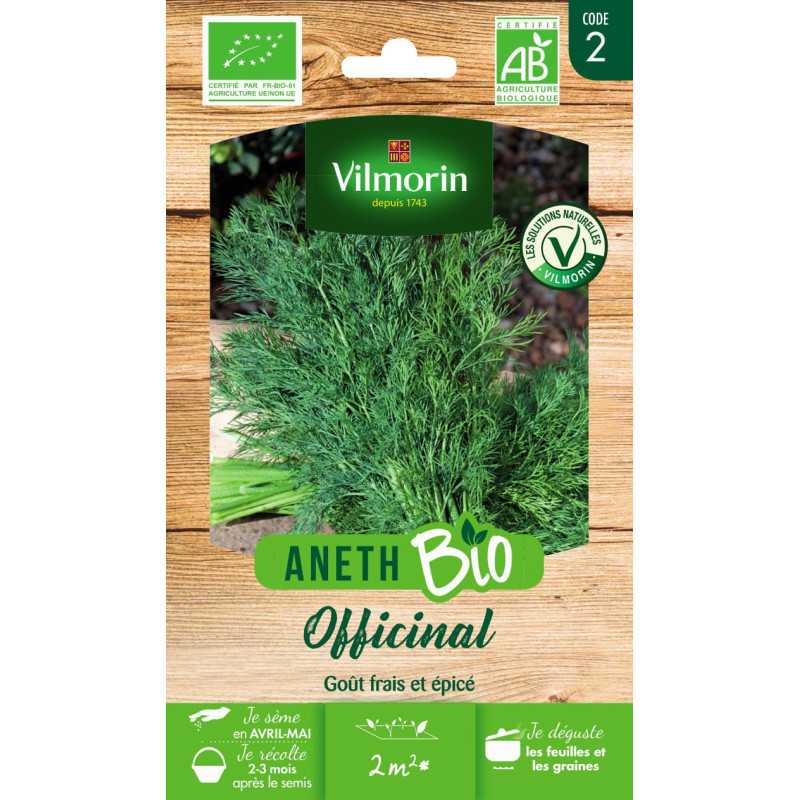
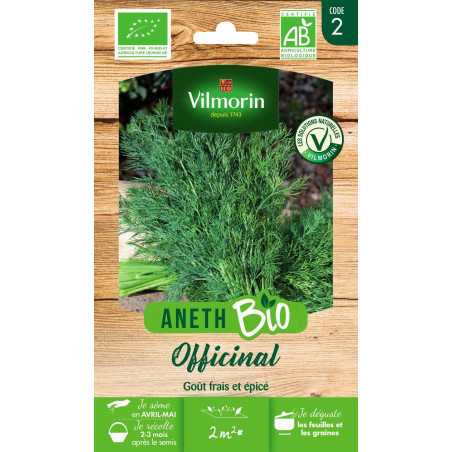
Organic Dill Seed Packet Vilmorin (Reference: 5870734) - An aromatic plant your garden and your kitchen cannot do without. This certified organic variety produces fresh leaves with a spiced taste recalling fennel and mint, as well as aromatic seeds perfect for pickles and preserves.
Ideal for beginner and experienced gardeners, this dill grows easily in a pot, a window box or in open ground. Harvest possible 2-3 months after sowing, for fresh herbs all season.
 Safety guarantees100% secure payment
 Shipping PolicyResponsive and attentive after-sales service
 Returns PolicyFast and secure delivery
Organic Dill Seed Packet - Anethum graveolens (Reference: 5870734) from Vilmorin represents the very best in organic herb seed. This annual plant, also known as false fennel, is among the herbs most valued in the kitchen for its unique scent and its many culinary uses. Certified organic, this variety guarantees environmentally respectful growing and herbs of superior quality.
Dill proves indispensable to anyone who loves to cook thanks to its exceptional versatility. The fresh leaves develop a spiced, refreshing taste, subtly blending the aromas of fennel and mint. They go perfectly with fish, creamy sauces, salads and traditional Nordic dishes.
The dill seeds, harvested when ripe, offer a more pronounced flavour reminiscent of cumin. They are the seasoning of choice for flavouring pickles, aromatic vinegars and preserves. This double use of leaves and seeds makes the most of your crop and widens your culinary options.
In the garden, dill plays a valuable ecological part. Its yellow flowers in umbels draw in pollinating insects in numbers, contributing to the biodiversity of your green space. This plant suits urban gardens in tubs as well as traditional vegetable plots, meeting the needs of town and country gardeners alike.
This Anethum graveolens variety has remarkable botanical characteristics. The plant develops upright stems that can reach 60 to 120 cm in height, carried by a sturdy tap root system. Its finely cut foliage, divided into hair-like segments, gives the plant its characteristically airy look.
The organic certification of this Vilmorin seed guarantees the absence of synthetic chemical treatments throughout the production process. This respectful approach preserves the natural germinating capacity and gives a plant more resistant to environmental stress.
Dill shows an excellent climatic adaptation to temperate French conditions. Its moderate cold tolerance allows early sowings from April, while its heat resistance permits extended summer crops. The plant copes with various soil types, though it favours well-drained ground rich in organic matter.
Sowing dill is best done in spring, as soon as the risk of frost has passed. For sowing in open ground, choose a sunny spot and prepare the soil by loosening it to a depth of 20 cm. Sow in rows 25-30 cm apart, covering the seeds lightly with 1 cm of fine soil.
Growing in containers suits confined spaces perfectly. Use pots at least 20 cm deep with a free-draining medium enriched with compost. Regular but moderate watering keeps the medium cool without excess moisture.
Germination usually takes 10 to 15 days at an optimal temperature of 15-20°C. Thinning proves necessary to keep one plant every 15-20 cm and encourage the best development.
Picking the leaves starts 6 to 8 weeks after sowing, taking the young shoots regularly. For the seeds, wait until the umbels are fully ripe, about 3 months after sowing. Harvest in dry weather to keep the aromas at their best.
Growing it alongside cabbage proves particularly beneficial, according to the Vilmorin advice. This natural synergy improves the growth of both species and contributes to the biological control of certain garden pests.
For a staggered production, make successive sowings every 3-4 weeks from April to July. This technique guarantees a continuous supply of fresh leaves throughout the growing season.
The best way to keep the fresh leaves is to freeze them immediately after picking, which preserves all the aromas. The dried seeds keep for several years in an airtight container away from the light.
Expert tip: avoid transplanting, as dill develops a tap root that is sensitive to handling. Go for a direct sowing in its final position to ensure the best growth.
In the kitchen, the leaves are best picked in the morning once the dew has evaporated, to benefit from the highest concentration of essential oils. Add them at the end of cooking to preserve their delicate flavour.
Round out your herb range with parsley, chives and basil to create a complete herb garden. These pairings widen your culinary options while making the best use of the growing space you have.
| Details | Specifications |
|---|---|
| Botanical species | Anethum graveolens |
| Growing method | Certified organic |
| Mature height | 60 to 120 cm |
| Sowing period | April to July |
| Aspect | Sunny |
| Spacing | 15-20 cm between plants |
| Sowing depth | 1 cm |
| Germination time | 10-15 days |
| Leaf harvest | 6-8 weeks after sowing |
| Seed harvest | 3 months after sowing |
| Soil type | Well-drained, rich in organic matter |
| Use | Aromatic leaves and seeds |
Specific references
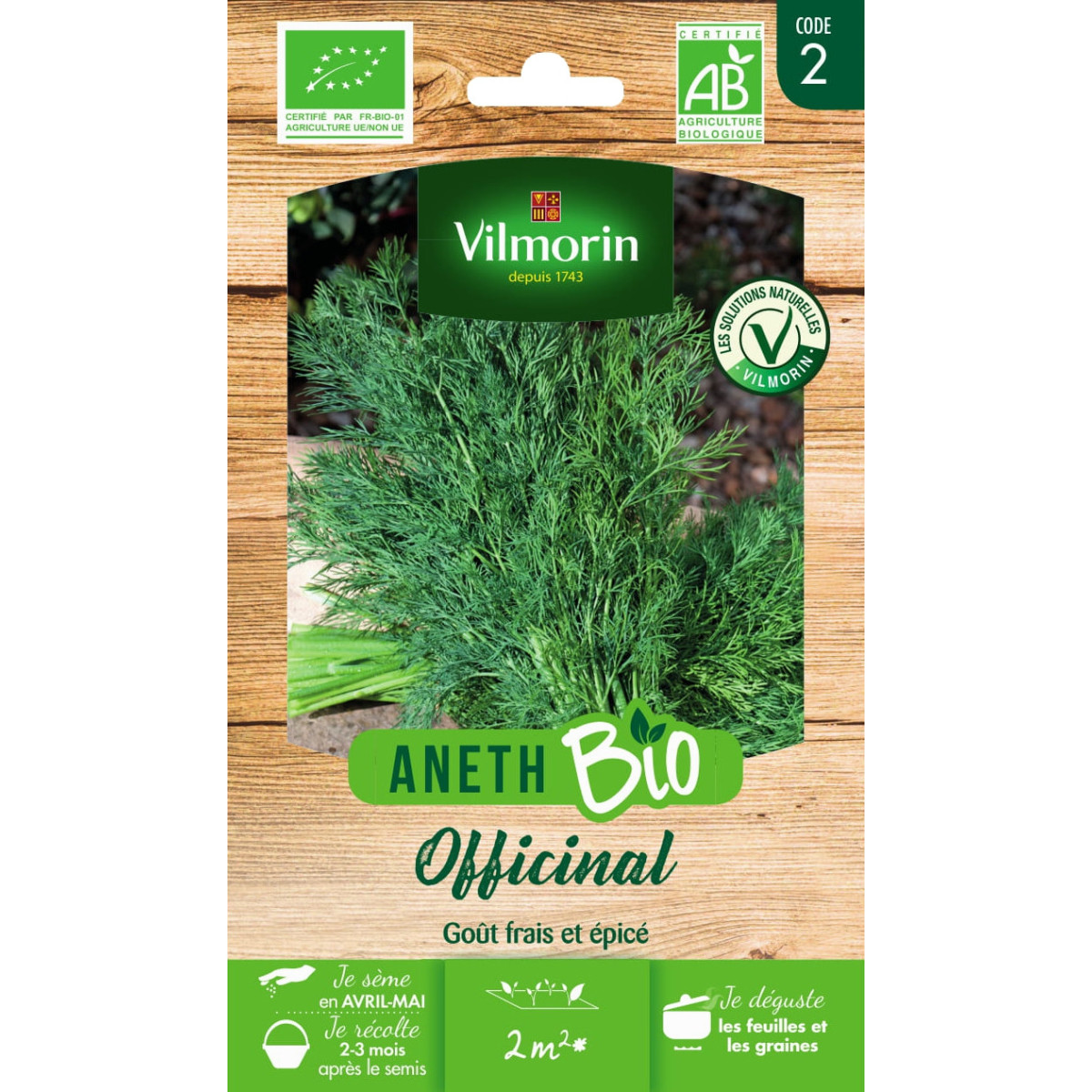
Organic Dill Seed Packet Vilmorin (Reference: 5870734) - An aromatic plant your garden and your kitchen cannot do without. This certified organic variety produces fresh leaves with a spiced taste recalling fennel and mint, as well as aromatic seeds perfect for pickles and preserves.
Ideal for beginner and experienced gardeners, this dill grows easily in a pot, a window box or in open ground. Harvest possible 2-3 months after sowing, for fresh herbs all season.